Nyonin aishu (1937)

4 12 2012

It seems as though I’ve spent weeks talking about Naruse’s productivity in 1935, mostly because I decided to see all of those films in a small window of time, but his productivity two years later was almost as impressive. He made this, Avalanche (which a certain Kurosawa worked as an assistant on), and Learn from Experience which was split into two releases. On the other hand, there doesn’t really seem to be as much “interesting” stuff going on, at least judging from this effort. It’s typical Naruse fare, and it might be his strongest condemnations of marriage, though the specific focus is obviously on the role of women in prewar Japan. It’s an impressive statement, though it feels a bit too on the nose, especially for a filmmaker who is known for fleshing out these situations.
1

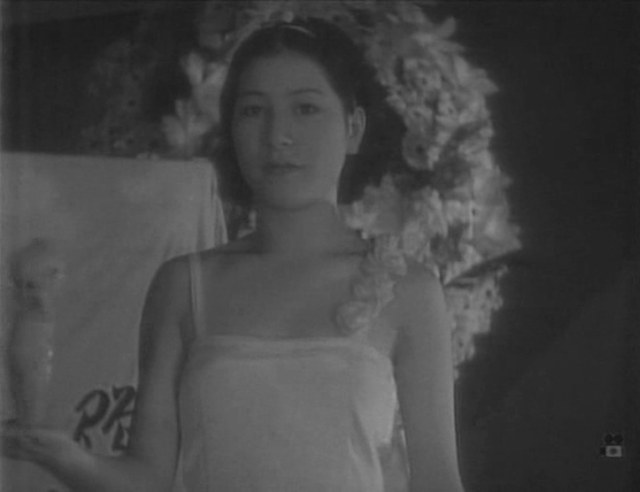
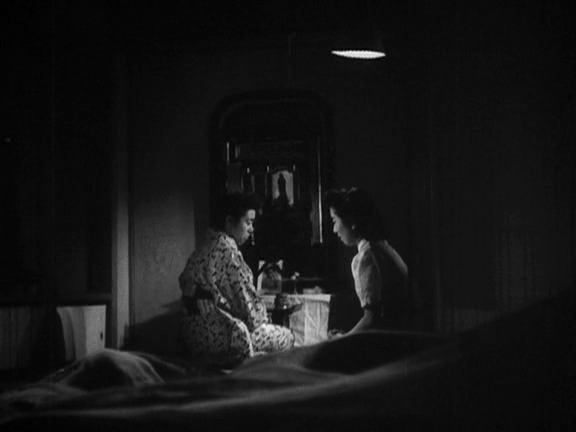
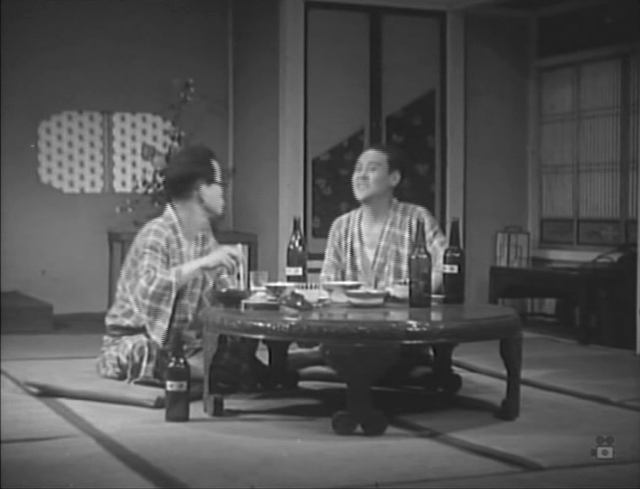
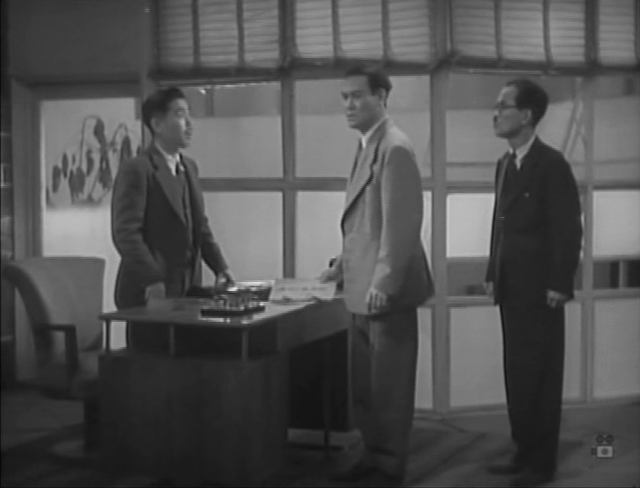
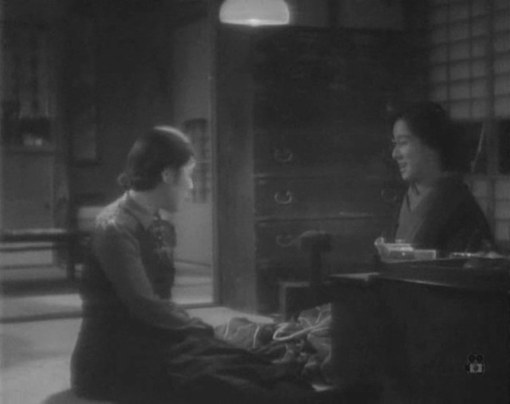
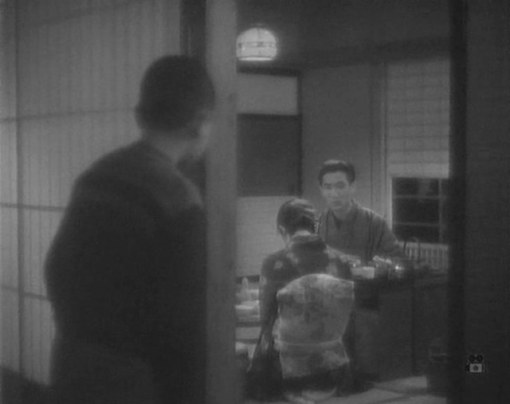
The film follows Hiroko as she struggles to transition to married and/or city life. This is no fault of her own, however. Despite the initial positive response she gets from her husband, the arranged marriage turns into something of a disaster. She seldom receives any affection and her husband depends on her most to serve and entertain any guests he might invite over. She quickly realizes how poorly she’s being treated but no one is open to listening with the exception of her cousin Ryosuke, who seems like the ideal partner now that she is trapped in a loveless marriage.
2

I mentioned before that this is a bit too on nose, mostly because Hiroko’s husband is so bland that we can see him as nothing but the enemy. Credit to Naruse, though. The husband never actively tries to mistreat Hiroko and there’s no physical violence. I often contrast Naruse with Mizoguchi in the treatment of women and this is a perfect reflection of their differences. To Mizoguchi, a woman being neglected or ignored would not be enough to motivate her to be independent. At times even, it feels like Hiroko is a bit quick to give up on her marriage (the film is, after all, only 75 minutes long) considering that she is still a stranger to her husband. She has a reasonable home with some financial protection in one of the biggest cities in the world, which is why her protesting is all the more remarkable.
3

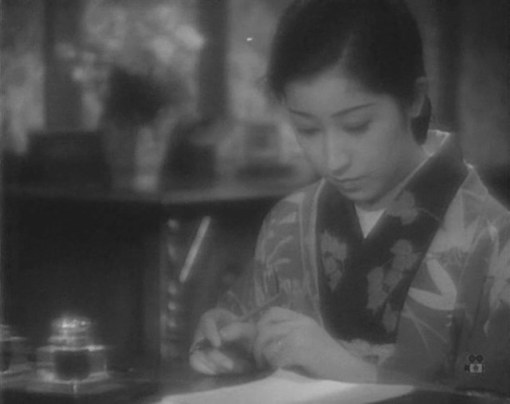
Several critics have found Hiroko an unsympathetic character, largely because she’s too self-aware of her own struggle. This is a pretty telling statement that their might be some enjoyment from watching individuals who don’t realize they’re marginalized. It’s a pretty gross statement, even as Hiroko’s intelligence might contradict with the story itself. She seems too smart to have fallen into such a miserable situation, which is filled with some rather simplistic peripheral characters which help contribute to her reaching a breaking point. These are all fair enough criticisms, as I’d say the film is far from being a masterpiece, but I think it’s an interesting exercise for Naruse exactly because he would revisit similar territory with a better touch of reality.
4

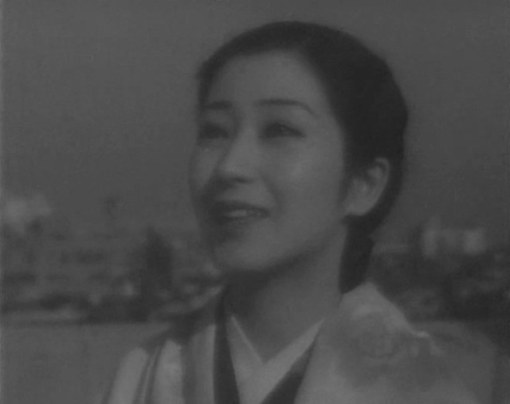
The film’s downfall would be that I’ve seen this material done by many other directors, including Naruse himself, and done better. This is kind of vague, but the Hiroko’s struggle seems like a very straightforward story, based more on the events, rather than a full living and breathing world with complete characters. One of hallmarks of Naruse’s films is great performances all around, where here the most notable one is Takako Irie as Hiroko. She is excellent here and in Mizoguchi’s The Water Magician but is probably best known for an appearance in Kurosawa’s Sanjuro. At this time, she was something of a celebrity. Her popularity unfortunately took a nose dive following the war and she kept busy by appearing in (mostly forgotten) kaidan movies. She’s fascinating to watch here, though as a woman who slowly realizes her independence. Not a great movie by any means, but an interesting step in Naruse’s career and arguably, a necessary one.
5


Saakasu goningumi (1935)

28 11 2012

Naruse’s fourth release of 1935 isn’t one of his best, but considering the role he was, this one doesn’t suffer a noticeable drop in quality. If anything, it’s just too unassuming and simple to really make a noteworthy impression. It’s essentially plotless, which is fine, but the episodic nature of the film usually works for the silly and upbeat tone for which Naruse is striving. Like all of his films from this year, it barely reaches an hour so it’s probably a worthwhile investment either way considering how short it is, but on the other hand, it’s probably only of passing interest to anyone who isn’t a Naruse superfan.

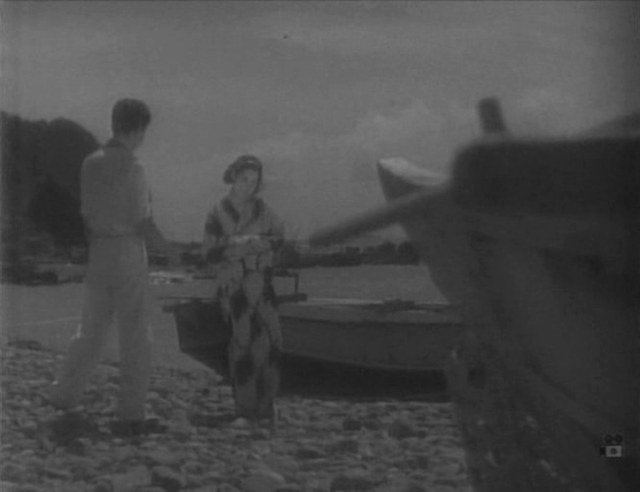
The story concerns a travelling jinta (brass band) that find their way to a quiet community at the same time as the circus. The male performers in the circus are on strike because one of them has asked to marry the circus owner’s daughter, but has been rejected. The travelling band is asked to fill in for them, and well, nothing resembling a narrative story line manages to emerge. Things happen (including a predictable accident towards the film’s end) and hijinx ensues, but the film’s structure never begins to develop an interest in conventional storytelling.

This is not a problem, though. Naruse hasn’t made a rich character study to make up for this, if anything the travelling band is sort of flat and boring, but he has established a community that is so rich that the underdeveloped characters don’t seem to matter much. Their dramas and romances unfold  in the middle of a isolated community that has enough vitality to carry the film to its short finish line. This seems like a pretty tough criticism, but it’s actually not. Naruse’s construction of the village is impressive in how he breathes life into it with virtuoso cinematic moments. This might be Naruse’s most technically accomplished film of 1935, and that actually is a pretty big claim.

The most inherent comparison here would be John Ford, his Judge Priest particularly came to mind. It is also a fairly unstructured film (though there is more of something resembling a plot) in which the biggest strength is the impressive atmosphere. It’s a weird, perhaps even corny thing to say, but both worlds (despite the harsh, real historical context of Ford’s setting) are full enough to make it feel like you’re spending time there. There’s the obvious difference in that Ford is dealing with a small town during America’s reconstruction period and Naruse is dealing with a small town that isn’t especially tied to reality, but they’re both very effective portraits.

This might be one of Naruse’s more experimental films, but it might be the lack of general storytelling principles that makes his usual pre-war era tricks seem more frequent and more impressive. There are several impressive quick panning shots that work like lengthy tracking shots. This was pretty typical in Japan at the time (though it was generally used to simulate zooming into a medium shot) but in this particular case, it seems like Naruse’s way of evoking a filmmaking equivalent of a trapeze performance, which is fitting considering the film’s content. It’s a nice technical exercise for a filmmaker who isn’t known for such formally driven moments, and the film itself is an enjoyable way to  spend an hour.


Kiseki (2011)

14 11 2012

A really strong effort from Korreda, but nothing earth-shattering and it’s certainly a bit away from being his very best film. It’s not fair to look at a film’s marketing and actually draw conclusions from that, but considering the advertisements for this, it’s easy to see that the intention was something of a fantastical realist thing for kids. It’s not completely ridiculous (though it does threaten to enter such territory on more than one occasion  but it isn’t the most fertile ground for a really amazing personal statement, either. It’s charming and fun experience with frequent shades of Koreeda’s brilliance.

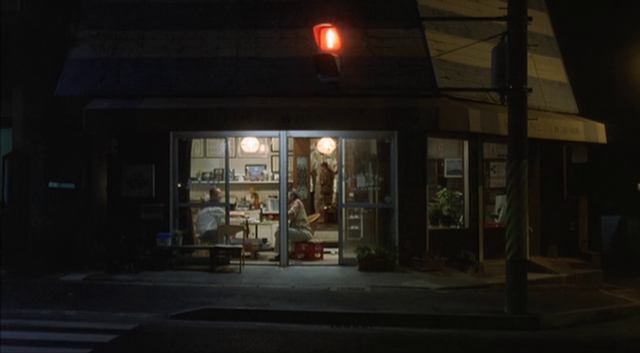
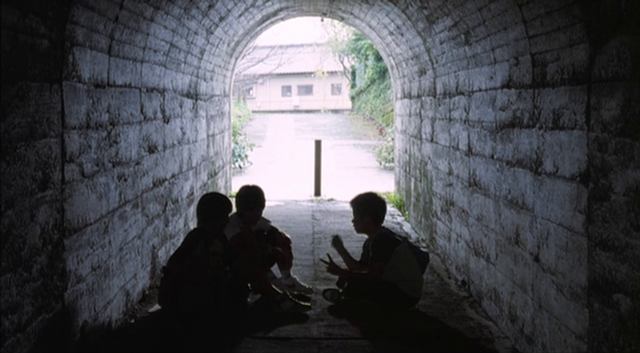
The story follows two brothers – Koichi and Ryunosuke – who are currently living apart. The former is the older sibling and he lives with his mother and her parents. The latter is the younger sibling and he lives with his father, a struggling musician who is able to take care of his son through child support. There’s a heavy implication that the parents separated bitterly. The seem irritated whenever one of their sons brings up the other spouse. In the mean time, Koichi escapes to his imagination. He hears of a new train line that will connect Kagoshima, where he currently lives, to Fukoka, where his younger brother lives with his father.

The train develops a mythology that fascinates Koichi. The rumor is that when two trains run by each other, they will do so at such a great velocity that anyone nearby will be granted a wish. This is his plan to save the family. It’s cute enough on paper, but it obviously takes on another level on screen. The separated parents aren’t the tragedy being played up here, but we do get flashbacks or just pure fantasies of both their happier moments together and the moments that likely reflected the decision to separate. Even their yelling matches seem slightly wistful when seen through the eyes of their two very young sons.

I’m not particularly fond of this “magical realist” approach, but Koreeda’s vision of it isn’t particularly grating. His focus is more on the “realist” part as there isn’t really anything magical except for the film’s clever conclusion, but still even the imaginative input from the two protagonist seems grounded in reality, if only because this is a filmmaker who knows how to make such a film. Yes, this is largely long(ish) static shots, definitely not feeling austere like Tsai, but certainly challenging the limits of what would be a straightforward children’s movie. There’s plenty of silly children doing silly children things, but it’s never jumps out of the film’s own framework. I mean, this isn’t a narrative-heavy film to begin with (which is a good thing obviously) but Koreeda’s children and their hijinx never feels particularly episodic, which can be good or bad depending on who you’re asking.

One unquestionably positive aspect of the film is the visuals. The cinematography is the work of Koreeda’s long-time collaborator, Yutaka Yamasaki. They’ve always made beautiful looking movies, but some of the earlier films are perhaps marred by DVD issues. It was a revelation when I saw Still Walking because I finally had an idea of what was missed in blurry and dark copies of After Life and Maborosi, though it’s worth noting the latter was actually shot by Masao Nakabori. Even expecting something special didn’t really prepare for some of the more impressive shots. There’s even a sequence involving the children smelling flowers that weirdly feels ripped from Malick and even though the steadicam sequence seems out of place in a film composed with mostly static shots, it actually fits in perfectly considering the sunset type of beauty represented throughout this film.

This is definitely not the first time I’ve wanted to write about a film but couldn’t muster much other than “the content is nice, but it REALLY looks nice.” I realize that isn’t a particularly helpful observation since there’s really only so many ways you can say a film looks good, but here I am backtracking, trying to reinforce the point of this film’s visual strengths. What I’m trying to say is, I guess it really is important. The story is charming, I guess, but I think the biggest compliment is that it manages to avoid all the traps of being a really mushy film about kids being upset about their parents splitting. More credit to Koreeda that he avoided the infuriating and insulting “kids show their parents they can love each other again” thing. The focus is still the kids, but they’re never the authoritative figures on the relationship between the adults and that’s accurate. But again, watch this movie because it’s gorgeous.


Osone-ke no ashita (1946)

12 11 2012

It’s no big surprise that even at the beginning of his career, Keisuke Kinoshita was a little didactic. I’d accuse his most beloved film, 24 Eyes as being guilty of this so it’s not a shocker to see a wartime family drama suffer from the safe thing. This is an openly pacifist film with a simplistic (if not accurate) depiction of Japanese’s militarism during the Second World War. It’s best as a family drama and includes some excellent performances, but it is obviously a bit too on the nose. I’d argue it’s the best of his that I’ve seen, but it still has some problems. A wonderful experience, but kind of an easy one.

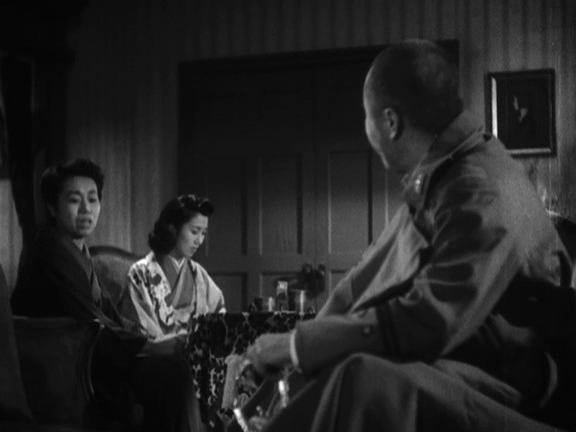
The film centers around the Osone family. Without a patriarchal figure, the family struggles during the wartime. The mother, Fusako, played by the wonderful Haruko Sugimura in one of her biggest roles, relies on the support of her brother-in-law. He’s extremely pro-military, which clashes with the liberalism of his now deceased brother. He openly tries to rearrange the political leanings of the family, even to the point of redecorating their house. The Uncle continues to reinforce his influence over the family by blocking his niece’s engagement after his nephew is sent to prison for being against the war. The other two nephews end up in the war and our quickly killed. Shortly after, the war has ended and the pacifist son has been released.

The film’s political agenda is very obvious as, in the face of popular pro-military sentiment, Sugimura’s character stands up quite eloquently against her brother-in-law at the film’s conclusion. But even before that, one has a pretty good sense of the film’s direction. When one of Fusako’s son is drafted, he stumbles home intoxicated and poignantly wishes he would die while pursuing his passion of painting. This is such a simple move on the part of the filmmaker to make the “liberal artist” die by being forced into the military machine, but the performances really do help the film’s ham-fisted (albeit, admirable) sentiments.

Haruko Sugimura isn’t exactly the lead in this film, as it ultimately comes off as something of an ensemble drama, but this is definitely one of her meatiest roles. She was frequently hidden in the middle of more extended families in her collaborations with Ozu and Naruse. The except would be the latter’s Bangiku (1954) which remains both her best and biggest performance here. She’s given not as much time here, but she still manages to be an excellent mother, downplaying the heightened drama of her brother-in-law and military strawman, as well as the tacked-on story involving the same brother-in-law’s interference with her daughter’s love life.

My feelings towards Kinoshita have not changed, if anything this film has confirmed my suspicions that he was nowhere near as subtle as Japan’s elite at the time. This is still a pleasant surprise, even with its ideology being a little too on the nose and its story a contrived manifestation of his views. He’s still didactic, but the performances here and a downplayed style definitely help it from getting into a territory of being exhausting. It probably also helps that this runs at an economic 80 minutes, in contrast to 24 Eyes, which is 156 minutes. A longer running time may have given more time to flesh out some characters which were definitely in need of it, but I’m not sure that’s the route that would have been taken. As it is, this a nice film and a must for any fans of Sugimura.


Ore mo omae mo (1946)

6 11 2012

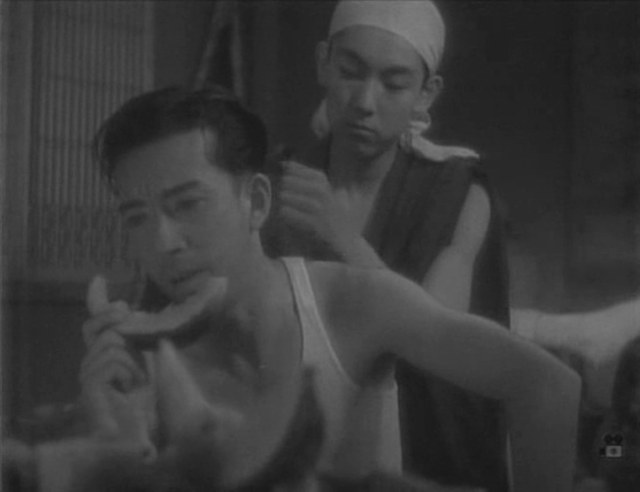
I decided to give myself a break from Naruse in 1935 by treating myself to a Naruse from 1946. I’d say something like how remarkable it is to be so different in 11 years, but I’ve already mentioned the difference between the films made in the same year. I’m finding myself thinking this with every other film I seen from him, but this one really is an anomaly. The fact that it is centered around two men should be more than enough evidence, but even then, it still feels like a Naruse film, with some gently humorous moments and fantastic performances.

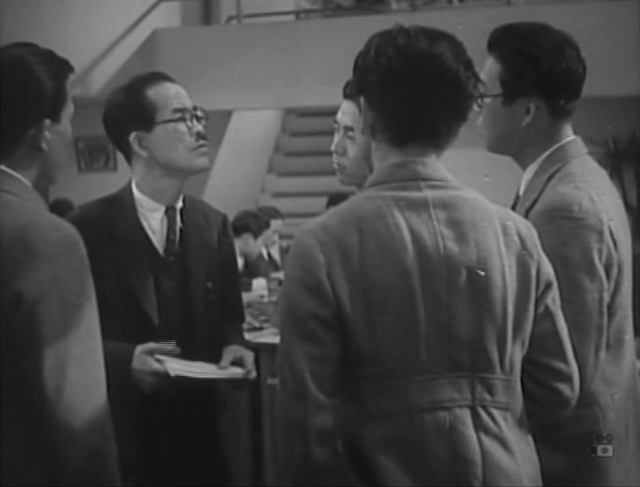
Aono and Ooki are best friends and co-workers. Their friendship is somewhat built around the fact that they’re both favorites of their boss. The boss often asks them to show up to personal parties to entertain, perform manual labor outside of work, and eventually, involves them within a black-market transaction. This all occurs under their noses as the two still see their boss as an outstanding individual. In the mean time, Aono’s daughters are looking into marriage. This becomes a problem when one of them finds a suitable match in a young man with a higher standing than Aono himself. To make things worse, Aono can’t find time to meet his daughter’s suitor until a company party, one which Aono has only been invited to because he and Ooki perform a humorous bit in kabuki-drag. The daughter is humiliated, which leads to Aoni and Ooki taking a stand.

While there is definitely some political weight in the proceedings, this is definitely a comedy. Aono and Ooki are played by Entatsu Yokoyama and Achako Hanabishi who made up a popular manzai (think a Japanese Abbot and Costello) act at the time. Neither one is really the straight man, instead it’s a role that seems to rotate in the situation. A sequence in which the two are forced to take care of their boss is played up for laughs in a Chaplin-esque manner. The two seem amazingly oblivious of how their being used, frequently reminding each other that they truly have the best boss in the world.

Seeds of doubt are planted throughout the film, though. One particularly impressive moment involves Ooki’s son practicing for some sort of Communist play, in which the protagonist’s “boss” sounds a little too familiar. It bothers Ooki that he requests that his son stop practicing and that his idealism will never be applicable when he graduates from college and joins the workforce. The irony here, of course, is that such politics are entirely applicable to Ooki’s life, he’s just a little too overwhelmed by his employer’s superficial generosity to understand what is going on.

Aono and Ooki ultimately turn around and take a stand against their boss in the film’s final sequence, where they accuse him of mistreatment and confront him about his shady background. Even this sequence has moments of comedy as Aono follows up Ooki’s realistic allegations with completely preposterous ones. Their point still gets through as their fellow coworkers send them off into the sunset with applause. They end up making their point by sticking together and fighting the powers that be together, rather than separately. This is representative of the “salaryman” dramas popular in Japan during the 1930s, but also depicts a type of “buddy film” genre that really never became a trend in Japan. Maybe it’s a bit of the boys from I Was Born But… grown up, but less pathos. It’s not a masterpiece, but it is a delightful and even sweet film from Naruse about male friendship, a topic to which he never really returned.