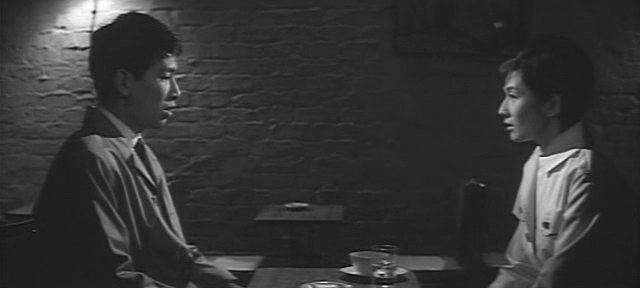
Uwasa no musume (1935)

5 11 2012

I’ve stressed before just how impressive 1935 was for Naruse, even without a knowledge of the film themselves, one has to admire the impressive feat of five films in one year. More impressive, especially to me, is the fact that all of these films (I’ve seen three so far) have almost no similarities. I recently looked at The Actress and the Poet and found a nice, low-key domestic drama that hints at something more impressive, a sign of things to come from Naruse. Wife! Be Like a Rose! is closer to the domestic dramatic masterpieces that The Actress and the Poets shows glimpses of, but it’s frankly been far too long since I’ve last seen it. A re-watch is definitely in order. Neither of those two films have much in common with this one.
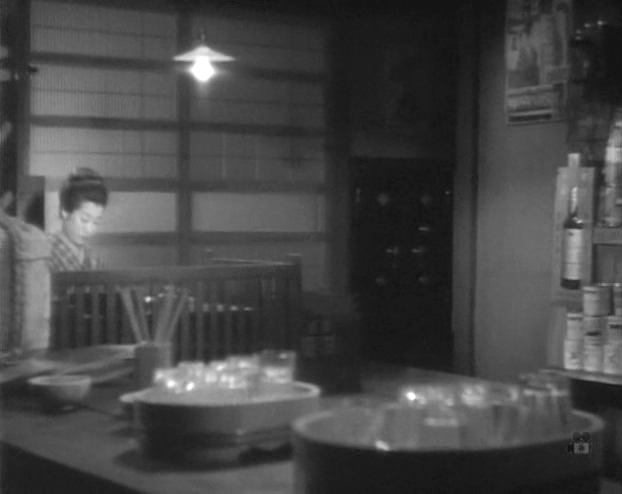
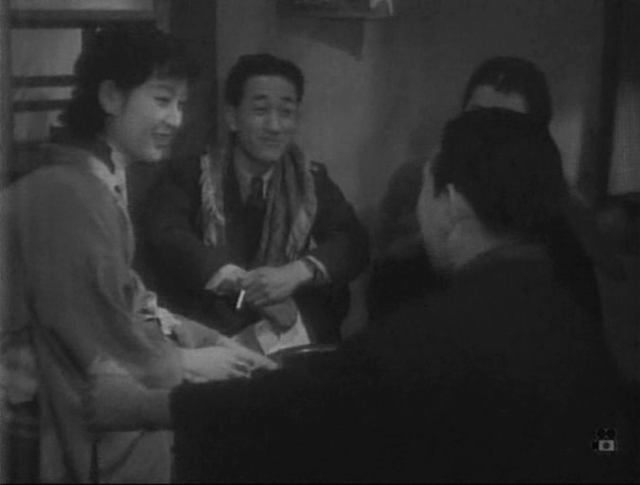
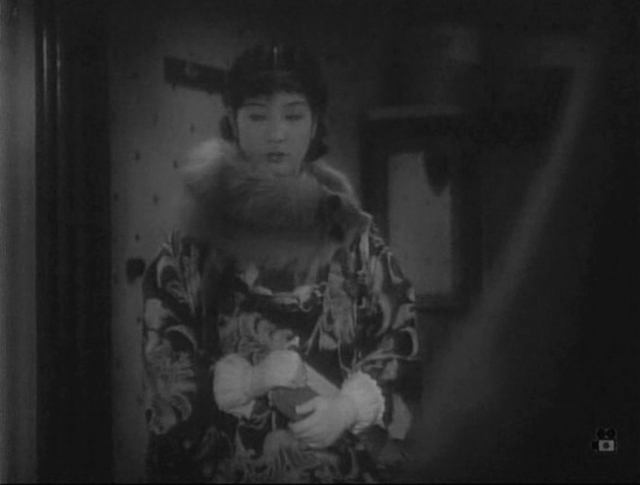
The story here seems pretty typical of Naruse and it’s worth noting that unlike the two other films from 1935 mentioned above, he is alone on the screenwriting credit. Two sisters, Kimiko and Kunie battle over Sato, an arranged match for the latter. Kunie is the more conservative of the two, a point which is represented by the way she dresses, her quiet demeanor, and the insistence from her sister that she’s too old-fashioned. Kimiko almost comes off as a parody of the type of “modern woman” (moga) that frequently appeared in Naruse’s work. She’s outspoken, (literally) loud, and frequently told by her uncle that she’s not “marriageable.” Her moga status is driven home by sequences like the one in which her record interrupts her grandfather practicing on a samisen. It feels a little too on the nose at times. 

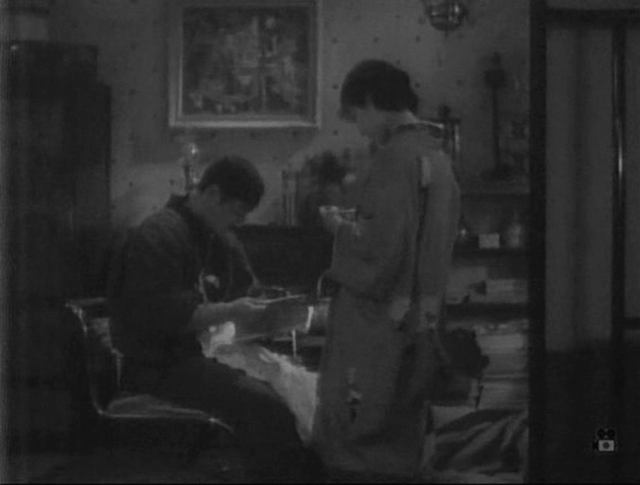
The Girl in the Rumor seems, superficially, to be cut from the same cloth as the aforementioned pictures, but even then, it shows sings of Naruse’s ability to be more experimental. It’s not his most outrageous work stylistically, but there’s a lot of interesting formalist stuff going on here that it considered rare for Naruse – the director whose lack of popularity in the West could be identified from lacking an easily identifiable style. There’s some interesting editing choices, some bordering on montage style that in light of the film’s finale feel like a hammer to the forehead of the audience. To his credit, though, these “powerful hints” so to speak managed to fly over my head and I was immediately blindsided by the film’s conclusion.
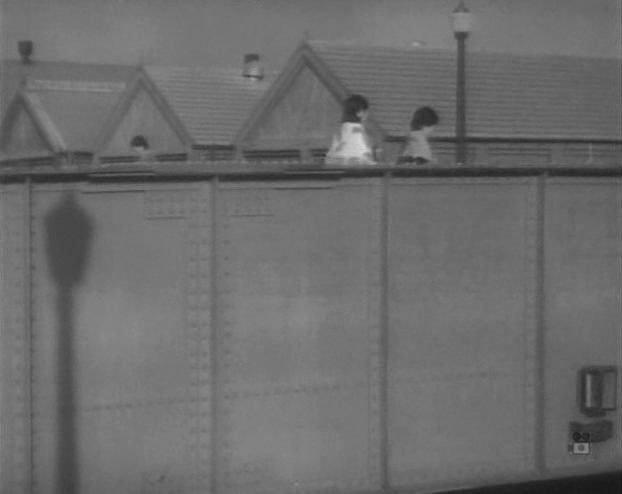
My interpretation of Kimiko sounds somewhat negative but it seems that Naruse made her (and most of the other characters) intentionally flat. She seems set up to be a moga straw woman. She progressive and modern, but she cannot accept the reality that her real mother is actually her father’s mistress. In an early sequence, tells her sister that mistresses are the lowest form of woman, ones who have fallen for the belief that they must always be serving men. It’s a particularly profound moment, suggesting a character almost entirely familiar with the vocabulary of modern feminism (most of Naruse’s woman aren’t) but it weirdly points to what looks like her downfall. She cannot accept an already marginalized member of society as her family member, even as the more conservative members have accepted her.
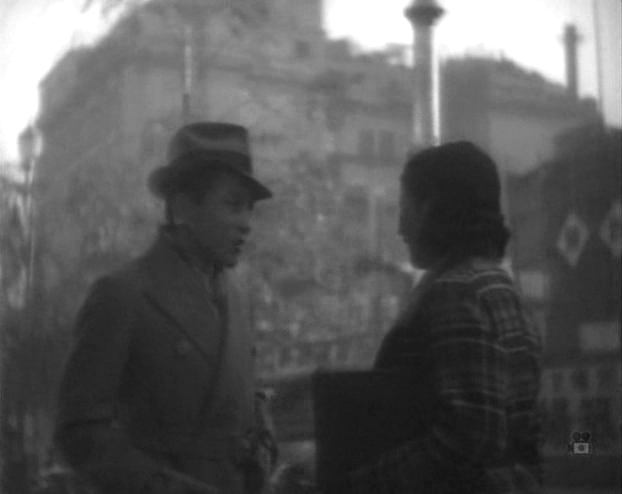
This is what the film builds towards for 55 minutes, but it immediately flips this resolution on its head. As the father lectures her on being accepting of her mother and requesting she apologizes to her sister for spending time with Sato, the police arrive. Throughout the film, we get some comic relief from the grandfather, who seems nothing more than a silly (possibly senile?) old man who drinks too much sake. He suggests a few times that something about the sake has changed and he’s right. He’s informed the police that his son (the father of the two sisters if you’ve lost track) has been purposely diluting the sake served in the family’s bar. He’s quickly rushed off by the police before he can have his fatherly moment of lecture his moga daughter. This diluting is what was hinted at in the scenes with the virtuoso editing. At 55 minutes, The Girl in the Rumor seems complete. A tight and economic thriller that parades itself as anything but for 54 minutes. A truly remarkable movie.


Joyû to shijin (1935)

29 10 2012

It’s hard to overstate Naruse’s productivity. For example, this was the second film he made in 1935 and it came out in March of that year. He would go on to make three more films that year,  including his most famous pre-war work, Wife! Be Like a Rose!  Both this and Wife! were adaptations from Minoru Nakano plays. This is definitely the lesser of the two films, never really shooting for anything beyond a domestic comedy. It gives Naruse a chance to spend time with some interesting enough characters, who could be seen as building blocks to some of his more powerful domestic portraits.

The title translates into English as The Actress and the Poet and the two are a couple. The actress is Chieko, played by Sachiko Chiba (who Naruse would marry two years later) is the main source of income. Her husband, the titular poet, feels emasculated by this situation. He spends his time gossiping with the neighbors when he’s not doing the house chores. The gossip leads to some amusing subplots, including one in which the poet, Geppu, gets intoxicated with a neighbor and his wife. It’s during this drunken back and forth that he the point of “a man should be the lord of his house” is introduced to him and it helps reinforce his dissatisfaction with the command of power in his own household.

The film’s final message does seem a little backwards, especially for Naruse. I guess, to his credit, he didn’t have much to do with the script itself but does seem kind of bizarre, at least as a first impression, but there could be something more impressive at work here. He still isn’t endorsing that every house needs a patriarchal figure as much as he is comically depicting how these male figures become so insecure in their positions as anything else but leader of the household, that they act out like spoiled children. The film’s finale has some implied physical violence against Geppu, and this comic portrait of female on male violence reoccurs much later in 1957’s Arakure.

The fight, although more of an argument is seen as something of a release. When Geppu and Chieko’s fight finally ends, she thanks the individual that sparked the argument, as it helped her understand how to be angry for a performance. There’s a lot of playing with fiction and reality throughout the film, and the involvement Naruse had with the film’s real actress, Sachiko Chiba only deepens this relationship. There’s a early sequence in which the couple seem to having a very violent altercation, but they turn to the camera and ask “how was that?” as the camera reveals another couple observing their rehearsal. It’s clever stuff permeating throughout the film, which mixed with Naruse’s trademark eye for domestic situations, is quite enjoyable.

One final thing worth noting would be that this is easily the most relaxed from Naruse at this point. It’s actually much more in line with his work from the 1950s, a closer representation of what many have attempted as characterizing as the “Naruse aesthetic.” Of course, much of the academic work around Naruse realizes that this is something of a fruitless discussion because he himself didn’t place as much emphasis on form as Ozu, with whom he is almost always unfairly compared. It’s pretty interesting though that just a year later, we’d see one of his most formally hyperactive works in Morning’s Tree-Lined Street. It seems he already knew how to accomplish the style that would be something of his trademark, but he still managed to play around formally.


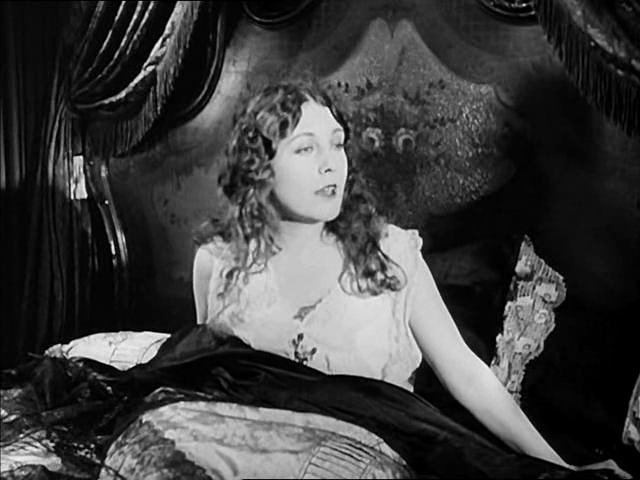
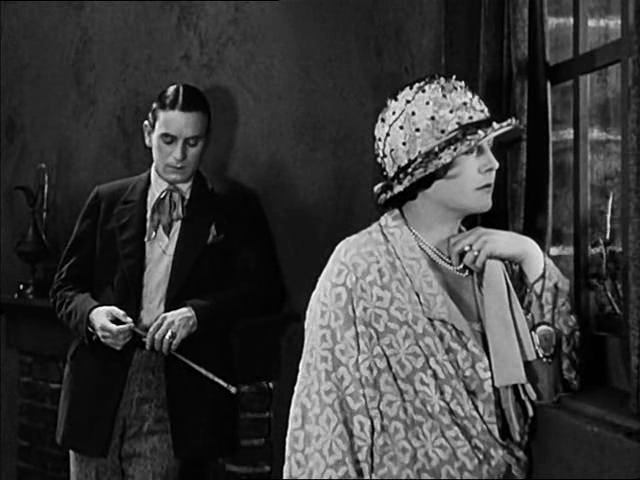
A Woman of Paris (1923)

29 10 2012

You have to give Chaplin a lot of credit here. At the height of popularity as a comedian, he decided to make something more personal and dramatic. Weirdly, this movie does have a hint of comedy to it, but it’s not the kind one would expect from Chaplin. Considering the tragic conclusion, it isn’t really strictly a “comedy of manners” either because it be hard to consider such a narrative of being a relatively upbeat picture, but there’s something unique coded away within all the Important Drama that sets the film’s overall tone. The presence of Adolphe Menjou obviously helps, but even without him there’s definitely still a touch of Lubitsch in here, though the similarities are not exactly the most striking.

Marie St. Clair plans to run away with her lover, Jean, but the parents of both work against their plan. They both end up in Paris a year later, but Marie is an comfortable situation with the rich playboy, Pierre Revel and Jean is still a struggling artist. The two reunite but Jean’s mother once again steps in, which further complicates Mary’s decision. She can struggle for happiness with a man she truly loves in Jean or she can be mistreated but still financially “taken care of” by Pierre.

Yes, the “love or money” dilemma doesn’t sound all that original or compelling, but Chaplin does get a lot of mileage out of the two lovers reuniting. It’s also forced and contrived, but it doesn’t feel effectively wistful, even as Chaplin himself doesn’t stress too hard on the past, instead directing his focus to the drama that leads up to the relationship’s heartbreaking finale. I guess, it’s worth mentioning that this is a spoiler, but Jean eventually kills himself in front of a extravagant party that Marie attends with Pierre. Up to this point, I was actually comfortable calling the film great, but the final minutes following the death turn out to be the most problematic.

Jean’s mother, who denied him her blessing in marrying Marie speeds through the grieving stage of her son’s death and develops a bloodlust. The haunting portrait that her son painted of Marie stands in the background like a deliberate reminder to her that Marie is responsible for her son’s death. Her vantage point is understandable but obviously wrong: Marie was living the Paris lifestyle and her country origins obviously shuns such behavior. That’s the reason she forbids her son from asking Marie’s hand in marriage, but she doesn’t manage to see that this is what drove him to suicide. She shifts the blame to Marie, but her thirst for blood dies off when she sees grieving over her son’s corpse. The film would be fine if it ends here.

It doesn’t, however and instead we’re given a sequence that leaves such a terrible taste in one’s mouth, that it may or may not ruin the film. Marie and Jean’s mother have started a life in the country, raising orphans (?) and fully embracing the country life. There is nothing inherently wrong with this, but the film’s final implication is that it was Marie’s lifestyle that ultimately hurt Jean. She came from the same background as him but her needs to be successful, even if it was by involving herself with a man she didn’t care for, were ultimately selfish. The film’s end celebrates the obedient life of a housewife and openly shuns the independence of the city life. Chaplin seems to have aligned himself with the politics of Jean’s mother, which seems so weird considering that she is something of a villain for most of the film. It’s a throwaway sequence and I wouldn’t be surprised if many forget the scene all together considering the emotional intensity of what comes right before, but it left a particularly bad feeling in my mind. It’s a very backwards message from someone who has been recognized as a progressive. It’s not a blatant statement, but it is upsetting one and it almost ruins what is otherwise a very impressive film.


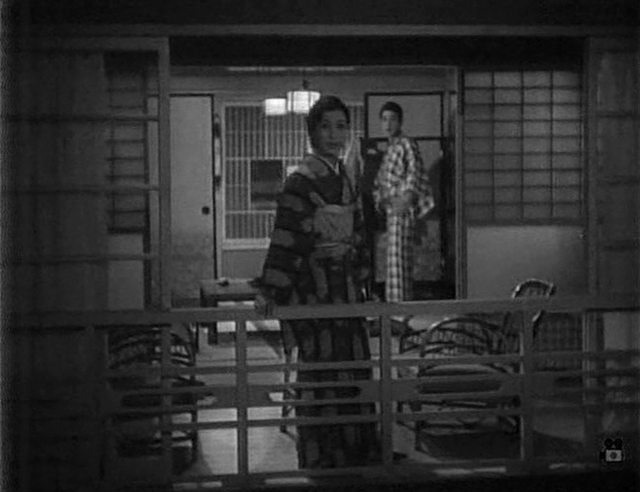
Ashita no namikimichi (1936)

28 10 2012

The 60 minute running time would suggest that this is one of Naruse’s breeziest films and it definitely is, but I don’t think the length is the only contributor. This is one of the last instances we’d ever see of Naruse attempting anything extremely stylized but it never manages to seem clunky or garish. There’s not really enough there to put it in the upper-tier of Naruse’s work, but it is such a delightful, little film that could work wonderfully as a introduction to Naruse’s work from the 1930s.

Chiyo moves from the country to Tokyo with the hopes of starting a career. She meets a friend there, but is greeted with nothing but bad news. Her friend is a “hostess” and warns her that work is hard to find for country women in Tokyo. She stays with the hostesses in their isolated community and casually entertains ideas of joining them, but is hesitant because she has a crush on Ogawa, a frequent patron of the bar. He shows an interest in her as well, but says the hostesses at the bar are not a pleasant group. She entertains a fantasy of running away with Ogawa, but her dreams are dashed when he announces that he has to leave for another city.

The film’s opening in the mountainous country definitely reminds one of Hiroshi Shimizu’s work, as does the unusual jaunty tone of what is ultimately an impoverished group of women. It wonderfully underscores the naive Chiyo, who may or may not have been familiar with the work of her friend before coming to Tokyo. She never really grasps the possible limitations that are facing her if she wants to continue living in the city. In her defense, it’s probably because Naruse never plays up the “seriousness” of the drama. There is a sole moment of extreme dramatic tension involving two arguing hostesses, but Naruse, almost like the anti-Mizoguchi doesn’t fall into the melodramatic trappings of a situation. This could easily go the route of the country girl moving to the city and being harshly struck by reality.

This isn’t to say Chiyo falls into a perfect situation. As she finally accepts a position as a hostess, she nervously drinks too much in the presence of Ogawa. The other hostesses warn her about the job, how miserable it will make her, but they tell her that happiness is possible within the arrangement. It’s a reoccurring motif of Naruse that the women oppressed or mistreated in his films still manage to find some glimmer of hope, perhaps a sense of inner peace is a far remarkable statement than again, what Mizoguchi often did. In Mizoguchi’s work, the heartache comes from the women ultimately being beaten out of the system, in the sense that they die. It’s a tragic scenario that resonates on paper, but Naruse’s route doesn’t resonate on paper. Instead, it works on a deeper level (to me anyway) because the true pain comes from the daily struggle of his protagonists.

I was struck by the connection this film shares with an American film of the same year, Lloyd Bacon’s A Marked Woman, which also depicts the plight of women working as hostesses but perhaps because it was based on real life events, is a much more sensational story. Even as this film can be grouped somewhat as a “fantasy” it seems much more grounded in reality, and it still manages to hold up as a communal portrait of sexworkers, where as Bacon’s film, which is a more self-conscious “social problems” feel seems more disjointed from reality through some unfortunate handling of the drama. It’s probably not a huge thing to say Naruse was better than Bacon, but it’s amazing how much better the Japanese workman was than the Hollywood workman, especially after Naruse’s Wife! Be Like a Rose! had been neglected by American critics when it was shown there. It’s food for though, I guess, but the most important thing is, this an absolutely wonderful film and a completely enjoyable viewing. 


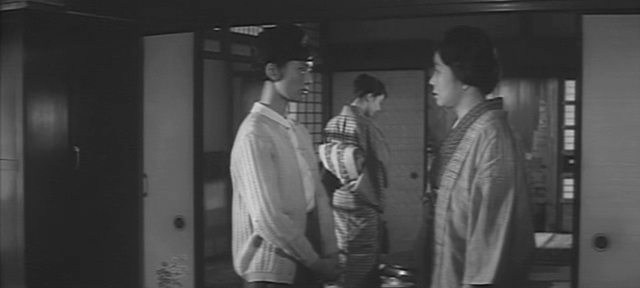
Onna no za (1962)

22 10 2012

The general consensus is that Naruse’s quality dropped off in the 1960s and while there are a few isolated masterpieces (Hourou-ki and Midareru come to mind) his batting average definitely took a dip following the 1950s, his most consistent and best decade. A film like this one, while perfectly fine and entertaining, does remind one that even in his most sublime moments, Naruse was still a company man. He considered himself one, never quite acknowledging his own work as art. A film like this one wouldn’t be the best example to convince him otherwise. It’s best selling point is most likely it’s fabulous cast, including Hideko Takamine (of course), Haruko Sugimura, and even Chishu Ryu appearing in his third and final collaboration with Naruse.

If the film never manages to hit home the way Naruse’s best work does, it can probably be credited to the episodic narrative, which never manages to establish a central protagonist. It seems like it might be Hideko Takamine if only because that’s what one would expect, but time is divided rather evenly. Takamine is a widowed mother living with her parents-in-law (Sugimura and Ryu) and runs a grocery out of their house. The family is extensive, consisting of daughters (and their major narrative contribution comes from the pressure to get married), another daughter-in-law, and a son struggling to raise his own family and run a noodle shop at the same time. All of these interconnected stories and they run together rather smoothly, just as one would expect considering Naruse’s “invisible” editing.

This is all enjoyable enough, and considering some of the content (the widowed daughter-in-law) and Ryu’s presence, it does feel like it’s revisiting some of Ozu’s territory. The most notable difference would be that this is one of Naruse’s Toho Scope films and his looser compositions (at least compared to Ozu’s famously tight ones) become more apparent when they’re given a wider canvas. It’s hard to marvel at the aesthetic of such a film, but an appreciation can be found in the fact that the composition are never intrusive. To some, this might seem like it is simply dull or devoid of style, but that’s arguably what Naruse is, albeit a unfair framing of his technique. In a way, this is a perfectly composed film, as Naruse manages to juggle the trials of the family and never once does it feel difficult to follow.

The film’s drama does take a sharp turn towards the very end, unfortunately. Sugimura’s estranged first son is introduced, and he impresses all the single women connected with the family before it is revealed that he is something of a con artist. The entire subplot seems a little too much, but it’s forgivable, which might not be said about the tragedy Hideko Takamine must endure in the film’s final quarter. It’s an unnecessary twist, and the kind of thing that Naruse managed to stay away from for most of his career. It shows in his and (Takamine’s) handling of the event, but the story wasn’t exactly one in which such melodramatic material is betraying what came before it. It’s a good movie, surely, but a misstep doesn’t really spoil it because it wasn’t exactly a masterpiece up to that point.

This is definitely worth watching, but it helps to have some context. It’s not going to be a particularly rewarding experience if you aren’t familiar with at least Naruse. Additionally, it helps to have some fondness for the performers, especially since Naruse is particularly difficult with applying a formalist auteur study. This isn’t a good place to start with him, and it’s not really the meatiest (so to speak) of even his 60s output, but it is another fascinating contribution in the overall narrative that was Naruse’s career. It’s company work, which means it doesn’t feel particularly important, but it’s really solid company work.