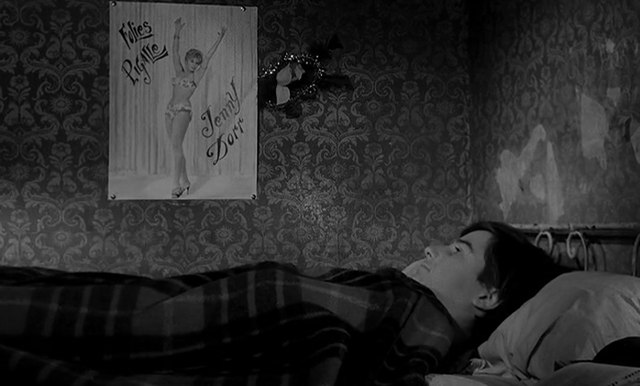
Zemma / The Good Fairy (1951)

21 01 2013

There’s nothing necessarily wrong with making wistful films, but the type of romanticism apparent in the films of Kinoshita has always been somewhat grating to me. The problem is not that it’s naive exactly, but his almost mystical realism seems like child’s play compared to the titans of Japanese cinema during the 1950s. This isn’t exactly a fair comparison, but there’s definitely something here that prevents a film like this one, which has plenty of things working in its favor, from really feeling like a bona fide masterpiece.
1

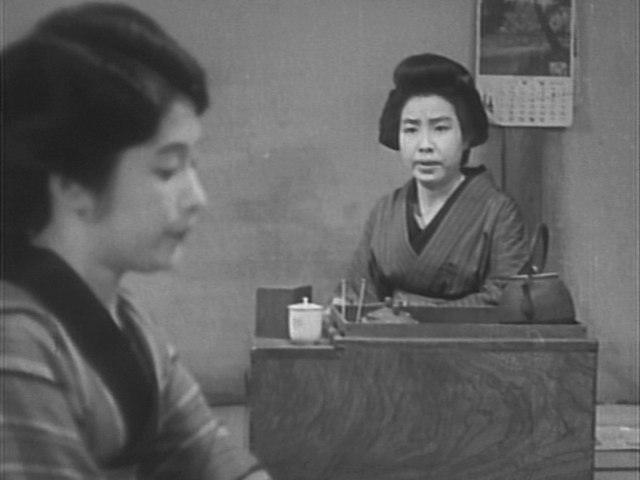
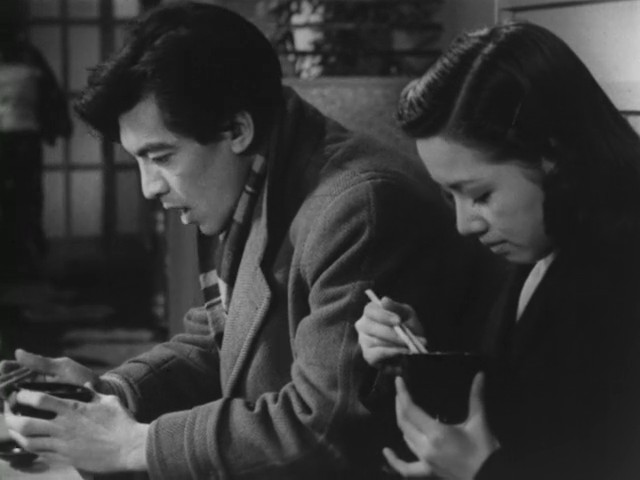
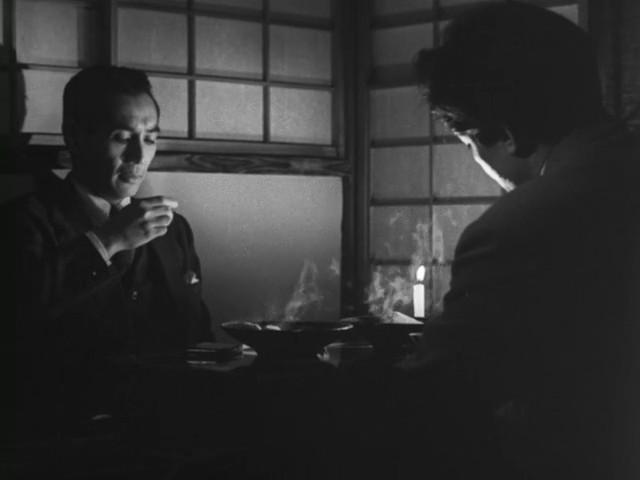
Nakanuma works at a newspaper and he’s investigating the disappearance of his onetime friend and potential lover, Itsuko. Itsuko left him many years ago for a comfortable existence with the much older Kitaura. Nakanuma sends a reporter, Rentaro to find interview Itsuko. She’s now living with Mikako and her father, played by the great Chishu Ryu. Rentaro falls hopelessly in love with Mikako, which puts both him and Nakanuma in a tough position. Their paper needs to put something out about Itsuko running away from her husband, but neither wants to betray the trust they’ve earned from their respective love interests.
2

Rentaro is played by Rentaro Mikuni, best remembered for his performances in Vengeance is Mine and The Burmese Harp, doesn’t fair too well here. He’s a bit too emotional and a bit too dramatic, perhaps an accurate manifestation of Kinoshita’s own philosophy considering his manipulative streak. Rentaro falls in love with the 19 year old Mikako and although she is played by a very charming Yoko Katsuragi (later in Scandal and Japanese Tragedy), her interactions with Rentaro don’t seem to be particularly romantic. They’re cute to watch together, but it doesn’t fit with the film’s extreme finale.

3

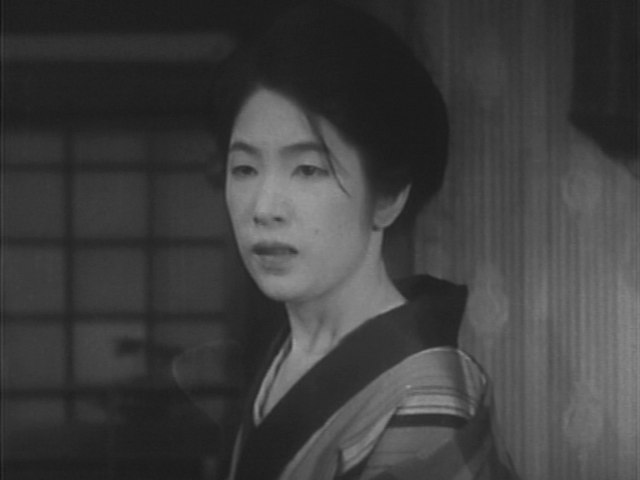
Mikako’s health gets worse, the illness that is hinted at towards the film’s beginning comes back in the end to give us our ridiculous conclusion. Rentaro’s questionable behavior is meant to be held up as the moral standard, as the characters around him show some flaws. The film tries to villainize Itsuko (played by the lovely Chikage Awashima) because she is somewhat motivated by money. However, a single woman in 1950s Japan, who is trying to escape the control of her unfit husband shouldn’t be blamed for some greed. Her means to money would be difficult if the proposed divorce were to ever go through. This is where Kinoshita tends to lose me,  directing his characters to single dimensions. It’s a shame too, because the fragmented way in which he tells Itsuko and Nakanuma’s love story is actually interesting. I wish he had explored that more.

4

Instead, he shifts his focus mostly to Rentaro and a b-plot involving Nakanuma’s current girlfriend, who he somewhat uses. Again, Kinoshita feels like he needs to build certain characters with a number of flaws so we can recognize that they’re bad, or an example of what the protagonist is fighting against, at least ideologically. It’s a little insulting really, because the characters seem like they could be interesting had they not been drawn with such broad strokes. Mikako, of course, because of her poor health is of course a martyr. Don’t get me wrong, her story is heartbreaking enough, but she’s reduced to being an embodiment of primitive small town-ness. Rentaro falls in love with her as much as he falls in love of the idea of escaping the city, which is a nice sentiment but compartmentalizes a character.

5

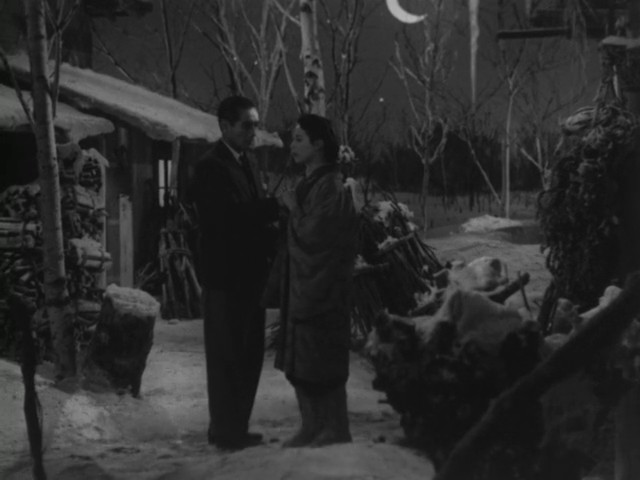
These things wouldn’t be nearly as frustrating if the film didn’t have so much in its favor. While Rentaro Mikuni is over the top, the performances from Chishu Ryu, Masayuki Mori, and Chikage Awashima seem to ground both him and the film to a much more tolerable level. The photography is absolutely excellent, even when a very fake studio set is used to depict the countryside. Hiroyuki Kusuda frequently collaborated with Kinoshita, and the photography in these films tends to be fantastic. In a way, this perfectly summarizes how I feel about this film as a whole. It magnifies much of what’s wrong with Kinoshita’s work, but it also magnifies the good things as well. It feels like a missed opportunity through my lens, but there are enough inspired moments to make this much more enjoyable than most of the filmmaker’s oeuvre.
6


Mikaël (1924)

21 01 2013

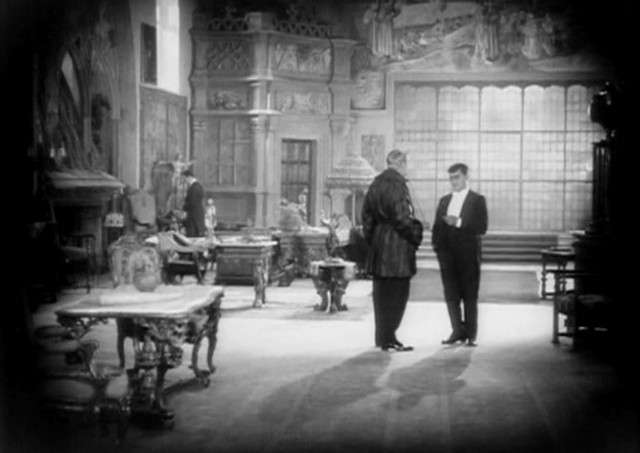
It’s worth mentioning before hand that I’m not a huge fan of Carl Dreyer. I admire his work more than I love it. I see the merit and can appreciate his craft, but his films tend to fall right outside of my wheelhouse. I think this is important to mention before I start talk about this film, which might not even be my personal favorite of his, but still a slightly different experience from his other works. I guess the biggest difference between a film like this one compared to Day of Wrath is that this one feels, at least to me, slightly more grounded to reality. It’s not a hard realism, but it’s not the “spiritual” film that writers assign to most of Dreyer’s best loved work.

1

Michael is an understudy and “adopted son” of Claude Zoret, a famous but aging artist. The two’s relationship is hinted at being romantic and physical, though obvious the age difference becomes a point of division, especially when Princess Zamikoff arrives requesting she be painted by Zoret. Michael falls hopelessly in love with her, spending less and less time with Zoret, even though the artist’s decaying mental state requires some attention. In the mean time, Michael begins stealing Zoret’s art and using them to help finance his new life with the Princess.

2

Dreyer deserves a ton of credit for the way he deals with the relationship with Zoret and Michael. Their romantic past is obvious, though obviously not materialized in anything physical, outside of holding hands. The film doesn’t have to spend too much time about establishing the fact that one of these men is in love with another man. Again, Dreyer deserves credit for not playing homosexuality as something bizarre. The few films from this era that do even acknowledge homosexuality, seem to suggest it’s some sort of disease. This is not the case here, and the film’s center comes from the heartbreak of Zoret and his acceptance of death. His relationship with Michael is treated as the non-issue that it should be, an intelligent move for even a modern film.

3

Dreyer’s personal intentions in making the film seem to underscore my sentiments. Even as the source material from Herman Bang was a more explicitly gay  text than the film, Dreyer did want this to be marketed as a “gay film” which suggests, one might argue, the intentions of the first “post-gay film” even as such a pseudo-genre had yet to get its bearings in the mainstream. Such gay films did exist, though, but I don’t want to linger on how Dreyer rejects those conventions.

4

Benjamin Christensen’s performance  as Claude Zoret really makes the film work. He watches the love that he and Michael share wither away as Michael’s interest shifts to Princess Zamikoff. The story sounds slightly melodramatic, and I’m not sure the film stays entirely outside of that tone, but the moments where Christensen is alone are remarkable. The most memorable of which is him on his death bed, waiting for Michael to arrive so he can inform him that he’s leaving all his art to him. His gestures are intensified (this is still a silent film after all) but the heartache comes from underneath the image, so to speak, still because of the fabulous performance but it is not a feeling that feels forced from the image.

5


Yogoto no yume / Every-Night Dreams (1933)

15 01 2013

1933 could be argued as Naruse’s best year. He only made two films, this one, and Apart From You (Kimi to wakarete) but they’re both masterpieces and the first really big steps for one of cinema’s greatest filmmakers. While he is doing something that is stylistically different from his work in the 40s, let alone his more acclaimed films of the 50s and 60s he is still working in primary Naruse territory. While this ends up being one of his darkest portraits, but even with such a dark tone, Naruse doesn’t sacrifice any of his trademark grace. At only 66 minutes, some might, on the surface, see this as not enough time to fully flesh out the characters, but in practice, this is one of Naruse’s richest films.

1

Sumiko Kurishima stars here and her presence is indicative of Naruse’s progress as a filmmaker. At the time, Kurishima was one of Japan’s biggest stars, billed as the “Queen of Katama” in reference to Shochiku Katama Studios. Her star status would fade with the years and she retired from acting in 1938 but returned in 1956 to appear in Naruse’s  Flowing. Here she plays a bar hostess named Omitsu, we’re introduced to her as she returns to her cities. She’s been looking for more “honest” work but has yet to find anything and she’s immediately greeted by the patrons who frequent the bars. The camera followers her (not literally) back to her home life with her son. She gets help raising him from her neighbors.

2

Omitsu is blindsided by the return of her husband, Mizuhara (Tatsuo Saito of I Was Born But… and Japanese Girls at the Harbor fame) who despite the couple’s split wants to make things work for the benefit of her son. Omitsu resists this idea at first, but as she’s in the process of throwing Mizuhara out, she has a change of heart and welcomes him back into her life. This doesn’t make things any easier, though. He helps with their son, but he struggles to find a job, with every opportunity ends up being another dead end. As Omitsu remains the only person earning money, he tries to persuade her into a new profession.

3

I read a review complaining that Naruse is covering old territory here, which from that argument even takes into account how early it was in his career. This is the dumbest reason to dismiss a film ever. Naruse frequently used women who were sex-workers because they all had individual stories to tell. They’re not all the same and saying so implies both a complete lack of interest from the viewer (which I think might have been the case with this reviewer) and casual misogyny. I say this as someone who spends probably too much time watching Naruse, but to see this film as just a retread of familiar territory is gross and wrong.

4

Omitsu’s story ends up being the most tragic of all of Naruse’s protagonist, bordering on Mizoguchi’s “feminisuto” with its tragic elements. The difference would be the tragedy is never in Omitsu herself. There is still hope for her, although the film does not provide an uplifting moment of realization for her. Such a sentiment would be cheap, unearned, and go against the grain of what Naruse works towards for the entire film. As many have observed about most of Naruse’s work, we’re confronted here with an oppressive life that isn’t simplistic: it’s reoccurring and mundane. It’s living from day to day.

5

There’s a little deviation from the aforementioned attitude here since Naruse provides a bit more drama than usual. It comes off as a bit more intense in this scenario because Naruse’s technique is far off from the relaxed and professional manner one associates with  him. Here, he is quite experimental and there is plenty of “technical vitality” in the camera’s movements. The average shot is four seconds long and those four seconds are usually pseudo-tracking zooming shots that recreate the sensation of receiving unbelievable news. This is certainly applicable here, where Omitsu is caught off guard by both her husband’s return and a violent accident involving her son towards the film’s conclusion. This could be seen as just sensationalistic on Naruse’s part, especially when it’s followed up with Mizuhara committing robbery and then suicide. In the film’s crazy final minutes, Omitsu comes to the relations, that she’s all alone again taking care of her son.

6

This film feels differently than the other films I would put on a Naruse “best of” short list (this film goes on such a list, for the record) mostly because of the hyperactive camera. It seems to mesh well with the film’s short running time, perhaps a result of a more kinetic cinematic style. It makes for a truly unique experience, one that anticipates the characters and emotions Naruse would continue to deal with, but presented in a manner that is far different from his best-remembered period of work.

7


Magokoro / Sincerity (1939)

7 01 2013

Naruse made two films in 1939, both of them are home dramas. The first, The Whole Family Works managed to slip through the grasp of the censors at the time and the result is one of Naruse’s favorite of his own films. The other film is this, which seems to have been very much affected by the censors. It starts out as a interesting discourse on class, then becomes a soapy melodrama (with some impressive poetic touches), and then becomes a gross and literal flag-waving celebration of the Japanese military. Most of the content seems to fit Naruse but the final direction is so dubious, it threatens to complete dismantle the potential shown at the film’s beginning.

1

Nobuko and Tomiko are pals at school, but with very different backgrounds. Nobuko has a safe, middle class home life, but she drops from first in her class to tenth.  Meanwhile, Tomiko, who lives with her impoverished single mother and grandmother, has risen to number one in her class. The two girls don’t seem particularly interested in competing academically but Nobuko’s mother is unsatisfied with her daughter’s marks. She goes to her daughter’s teacher for some explanation, but mostly to blame him with her daughter’s report card. During their conversation, she learns that Tomiko is number one in class and this leads her to an argument with her husband, Kei. Kei was once romantically involved with Tomiko’s mother, Tsutako. This conversation brings up a past that was never addressed and confuses the two young girls.

2

The film’s best moment come from the two young school pals, Nobuko and Tomiko. There’s something interesting going on with class politics here, as the more stable home seems to be the less wealthy one, though Naruse smartly doesn’t make it seem like being poor is better. It’s even brought up later  in the film that Tsutako is the better mother, another point of jealousy for the other mother. The discourse of class doesn’t last particularly long, however, as the film’s real plot becomes clear: Kei and Tsutako have a romantic history and they might still be acting upon it. There’s signs of this throughout the film and Naruse wisely keeps them subtle.

3

The biggest problem with this “scandalous” sort of story is that comes by dismissing a much more interesting story. Watching Nobuko and Tomiko be kids is both more interesting and better looking. There’s a tightness to the compositions during the “adult” material, but it never really saves a rather dull story. Naruse’s unfair treatment of Nobuko’s mother seems very odd, she’s very clearly marked as the bad character, where in reality it is her husband who might be the one committing infidelity. More importantly, there’s a un-Naruse poetry to the scenes involving the children. It looks like lost footage from a Hiroshi Shimizu film rather than anything else from Naruse. There’s some wonderful individual moments, which almost seems intentionally placed to pace the more dreary soap opera-ish content.

4

The melodramatic story isn’t nearly as problematic as the film’s final turn. Kei gets his draft notice and everyone seems to put aside their differences to send him off in a celebratory fashion. For a film with almost no mention or even hint of the military, it suddenly shapes itself into an overwhelming showcase for militarism. At this point, the film kind of loses its potential to be a truly great Naruse. Takako Irie, who would later appear in Sanjuro is very good here as Tsutako, making some of the more blandly photographed scenes. The real strengths here are the poetic outdoor sequences and the wonderful interactions between the two young girls, played by mostly unknowns. There’s a lot of elements that could have made up a great movie here, but they seem to have been squandered.

5


Boulevard (1960)

3 01 2013

One might think that following the success of The 400 Blows, Jean-Pierre Leaud would have been a big commodity in France. This is not the case, though, as this late effort from social realism veteran Julien Duvivier is his only credited role in between his famous first role and the next entry into the Antoine Doinel saga. Still, this feels like a very obvious attempt to capitalize on the success of Leaud’s debut performance, covering the same territory with teen angst. It’s still a nice effort from one of France’s most unfairly treated filmmakers, but this isn’t the film I would use to build an argument about someone’s greatness.

1

Fifteen year old Jojo has run away from home to escape his controlling stepmother. He manages to make ends meet with some odd jobs, and living on a roof overlooking Pigalle. His romantic interest, Jenny, is much older than him but he manages to convince himself that he’s a potential boyfriend. In the mean time, Jenny becomes involved with a former boxer, Dicky, who Jojo knows as a frequent to his father’s bar. He begins to take more of an interest in Marietta, a girl who is actually his age, but when money becomes an issue again, he might not have a way to finance a relationship.

2

I get the impression that one’s enjoyment of this film goes as far as they like JPL. Personally, I’m something of a fan so my enjoyment of this film probably goes further than it does for most. There’s an early sequence in which he gets drunk, which leads into a bar brawl. The scene is almost cartoony in its execution, Duvivier chooses to make everything intentionally wobbly, embodying the steadicam as a drunk’s shaky legs. It’s a silly scene as JPL himself stumbles around, but he seems to contribute a great deal of vitality to the scene, making it appear full of life and energy, as opposed to a silly, studio-bound attempt at realism.

3

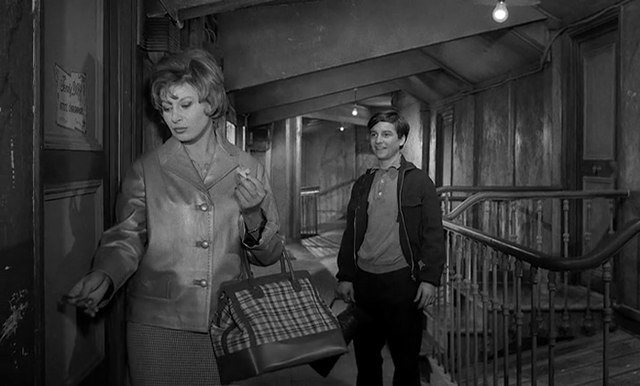
JPL is fortunately, surrounded by great talent here. Duvivier is not really going out of his way to make something formally exciting, but he manages to get performances from his actors that simultaneously downplays the drama, but manages to evoke the mental chaos of being a youth. Magali Noel, fresh off a role in Fellini’s legendary La dolce vita,  plays his first and older love interest. She’s probably best known for her collaboration with Fellini, specifically 1973’s Amarcord, where she’s lusted after by teenage boys the same way she is here.

4

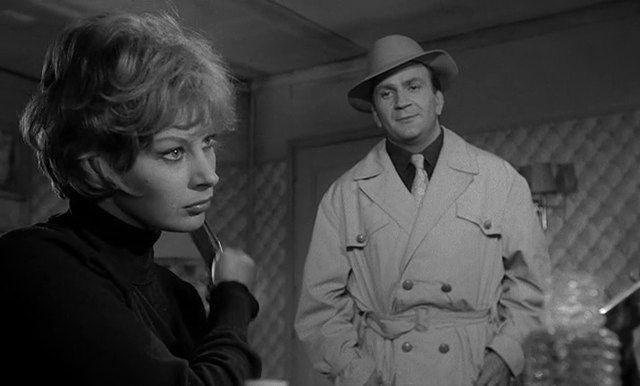
Leaud’s Jojo is rivaled by a washed out boxer, Dicky, played by a longtime French television actor Pierre Mondy. He’s largely unheard of outside of France, but some might remember him as Napoleon in Abel Gance’s The Battle of Austerlitz, which was released the same year as this film. Even less heard of is Monique Brienne, who plays Leaud’s younger love interest. This is her only credited screen role, which is a shame. She’s completely charming as Marietta, who is first ignored by Jojo on the grounds that she’s “just a kid.” We root for Jojo to finally notice her and he does, but his own stubbornness makes the relationship destined to fail.

5

The film’s conclusion is a little melodramatic. Being bullied by Dicky and seeing Marietta on a date with another boy, Jojo decides to jump from his roof of his tiny apartment. One can feel that Duvivier was trying to accomplish something as involving as the film that made Leaud famous but it never really comes close. The original Antoine Doinel was repeatedly neglected and ignored. It was through the experiences we saw him endure that made his story fascinating and what makes even the lightest entries in that series seem poignant. Here, Jojo seems oddly spoiled, a weird claim for a boy impoverished. His heartbreak is understandable but his teenage crushes don’t seem dramatic enough to really warrant something so dramatic. A film like Il Posto, which came out at around the same time deals with characters at a similar age but manages to depict those complicated teen feelings accurately and put them into a more meaningful context. Here, Jojo is close to being a brat crying wolf. This is understandable since many of Leaud’s characters could be bratty, but the martyr complex his character takes on here is ugly, especially when it seems to only come from him neglecting Marietta and her taking an interest in another boy.

6

The movie is still  charming, mostly because of Leaud’s bratty persona. There’s humor in the way his character constantly tries to perform both maturity and masculinity, but it’s so thinly veined that it’s more often cute. In one instance, he tells Dicky that he’s dating Jenny and that sometimes he has to hit her. This type of talk is terrible on paper, but knowing the character, such actions seem entirely unlikely. He’s simply explaining what he thinks masculinity expects of him. That seems like a comedic touch, but the film’s conclusion seems to support Jojo’s woman-shaming tendencies. As a group of friends try to talk him away from suicide he claims that “everyone is a bastard” and “all girls are bitches.” One of them explains that girls aren’t bitches, but they’re just girls, which seems to tickle Jojo’s funny bone. His weird misogyny seems to been validated and the film’s ending, which is meant to be life-affirming, is all of a sudden a lot darker.

7