Rikugun / The Army (1944)

10 03 2013

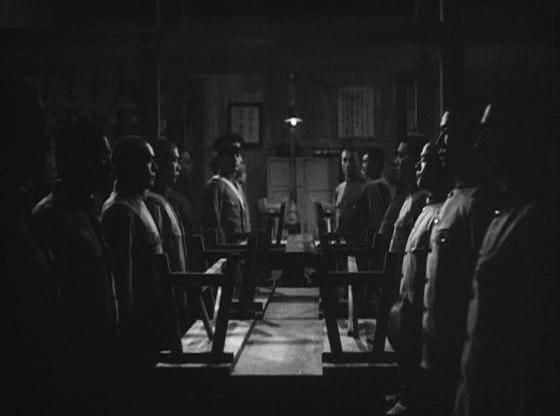
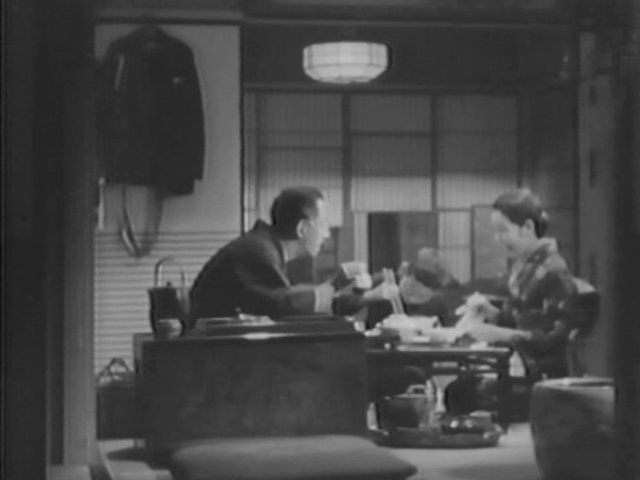
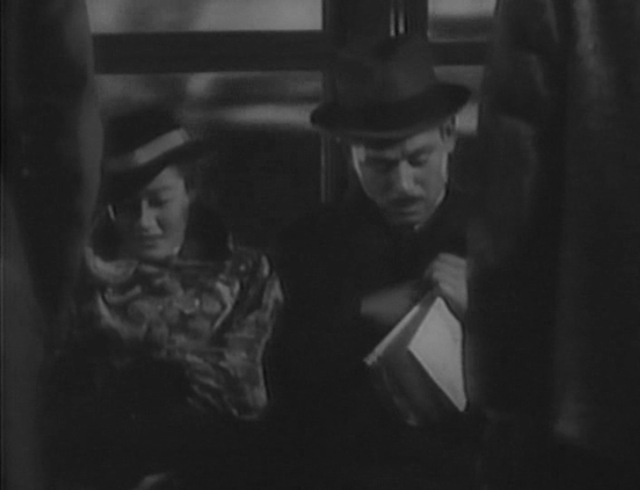
It might be some good luck on my part, but it seems that most of the WWII-era Japanese films I’ve managed to see haven’t seemed too propagandic.  I wouldn’t say they’re all subversive, but the restrictions that came into play in 1939 didn’t seem to trouble directors like Mizoguchi, Ozu, or Naruse. This film, one of Keisuke Kinoshita’s earliest efforts, is strikingly anti-war. Kinoshita’s pacifism would resurface, but it feels particularly strong here, especially because he’s projecting it in a film that was intended to be pro-war. It’s not exactly a great film, but it’s statement is particularly powerful considering the context.

1

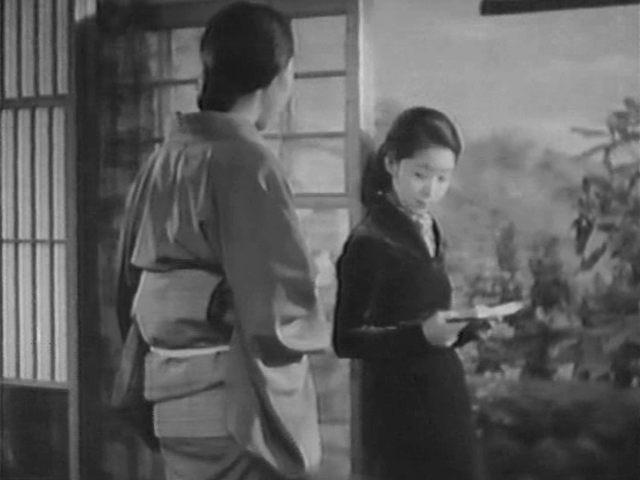
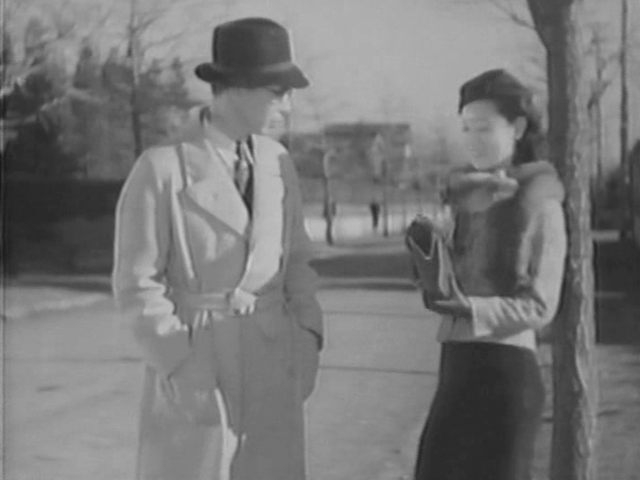
The story begins with a young Tomosuke, being taught about his (and everyone else’s) duties towards the emperor. Years pass, Tomosuke was involved in a war peripherally and he now has a family. We see him force the same values into his son, Shintaro, who he fears to be somewhat weak, much like the way he was. Still, through the constant preaching from him and his wife, Waka, Shintaro grows to an athletic young man. He’s called into the army quickly, in a role that we expect to be of greater importance than Tomosuke’s.

2

On paper, this probably seemed like an ideal setup for the government officials supervising the film, but Kinoshita takes approaches all the concepts of duty, honor, and so on in a (justified) negative light. There’s scenes where Tomosuke, played by Chishu Ryu somewhat out of his element in a “louder” role, micromanages his son’s behavior. Oddly, he’s critical of his wife, Waka (Kinuyo Tanaka) when she does the same thing. It’s all very much on the nose, which would be problematic and enough to dismiss a film in a different context. However, the fact that Kinoshita managed to make such an anti-war film out from a pro-war sentiment is impressive enough on its own, even if the film itself doesn’t seem exactly like anything great.

3

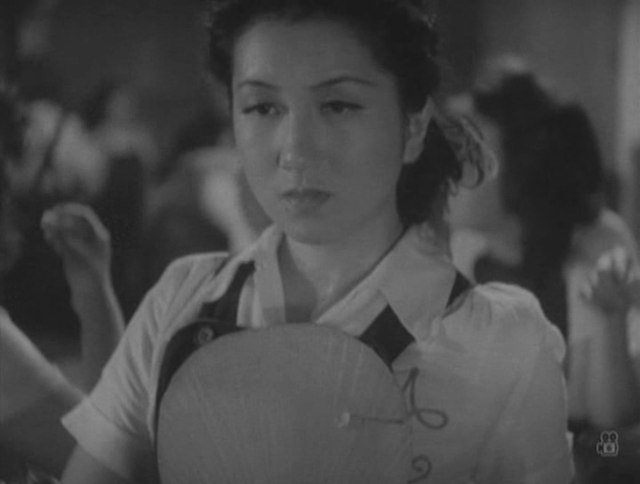
There are many inspired moments here. The film might be worth a viewing on the grounds that this is one of the few times (the only?) where we get to see Chishu Ryu and Kinuyo Tanaka be a married couple. Unfortunately, Kinoshita’s style doesn’t exactly give them time or space for performances they were capable of in the hands of much better directors. Still, Tanaka’s famous final sequence, while didactic, is absolutely wonderful. It begins with a minute-long static shot of Tanaka’s face, and then follows her as she tries to reach her war-bound son, in the middle of a military parade. This isn’t even the best film I’ve seen from Kinoshita but obviously, it’s hard to fault an effort as passionate as this one. Usually, this earnestness is a fault in his films, but he channels into a nice way here.

4


Shiroi yajuu / White Beast (1950)

6 03 2013

Mikio Naruse’s best films are ones begging to be revisited. One could say that this film, 1950’s White Beast is a film that begs multiple viewings as well, but it’s not because it’s a masterpiece. If anything, this film is a complete mess, one that conflates a social problems film with a completely sensational project more fitting to a more exploitative director. There’s an overbearing score and some obviously noir-inspired visual flourishes, making this film quite unlike anything else in Naruse’s oeuvre. There are moments where he achieves a poetry that is remarkable as anything in his more acclaimed films, and he flirts with making some actually progressive statements, but the whole thing is more of a fascinating misstep.

1

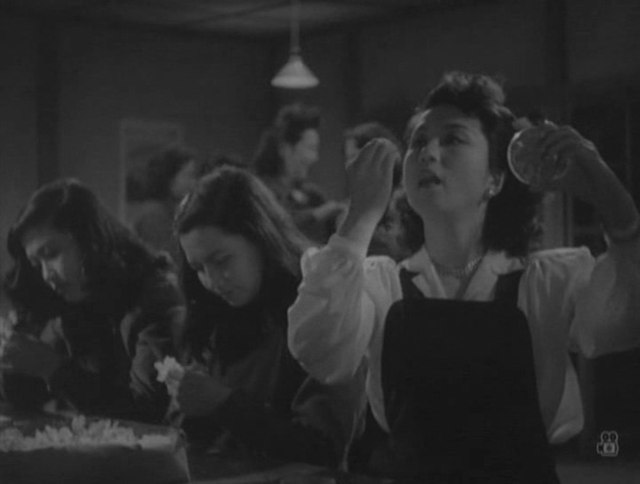
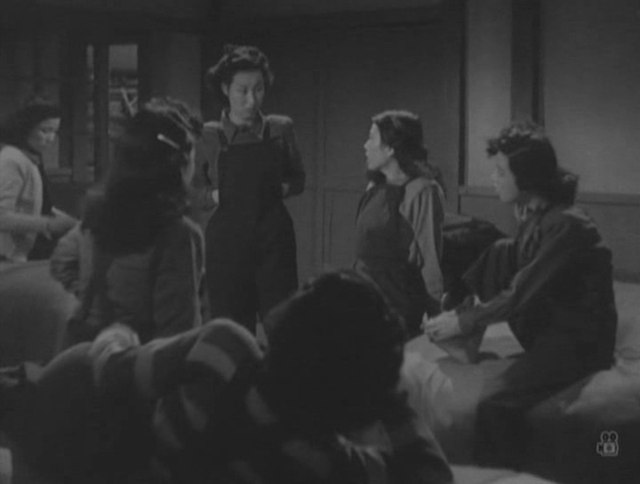
Yukawa, a presumed sex worker, is sent to a women’s rehabilitation facility. As the facility’s personnel explain, she’s not there against her will but she will be arrested and sent to jail if she tries to leave. Yukawa’s arrival works as something of a launching point, as her more refined clothes and fancy haircut bothers the other women in the facility. Yukawa develops an interest in one of the rehab’s staff members, Nakahara, who is an outside doctor. Yukawa gets close to Nakahara but it’s only with the intention of learning the extent of Nakahara’s relationship with Izumi, who serves as the director of the entire facility.

2

The drama that comes from the main protagonist, Yukawa, serves as something of a traditional main plot line, but Naruse weaves in multiple stories about several different women within the institution and with doing so, he doesn’t seem to unfairly divide his sympathies. Indeed, the strongest and most charismatic character is Yukawa, who is something of a fireball. She’s a femme fatale but she’s been stripped of her place in society and demoted to the ranks of the other sex workers in the film, who we are to presume come from a lower economic standing in Japan. This is where things start to get interesting with the film, while it does present its arguments under the umbrella of liberating sex workers, it takes on other contexts as the story unfolds.

3

Perhaps the most oppositional of these contexts in the implication of Yukawa’s homosexuality. Her interactions with Nakahara are eventually framed as being faked for a chance to get closer to Izumi, but the early sequences between them are convincing that Yukawa was completely interested in Nakahara from the very beginning. Sure, we get her seducing Izumi but not after her own proclaimation that she’s “not sick” – a reference to her profession before she joined the institution. Additionally, Yukawa explains her disgust with her sisters or inmates by comparing their antics to that of childish men, and she delivers a big blow towards the film’s end when she declares “I just can’t stand the hypocrisy of men.” Considering the conditions, Naruse probably never intended such a story but these moments should be considered, especially when they’re woven with the melodramatic fibers as they are here. This is the sort of film Parker Tyler would have loved.

4

As one might be able to deduce from what I’ve written so far, a lot of the film is driven by the Yukawa character. The performance by Miura Mitsuko might not be close to the usual high-standards in a Naruse film, but it is indeed memorable, albeit in a different fashion. The scene where she attempts to seduce Izumi (played by the legendary So Yamamura) borders on being comical as Mitsuko wiggles around on her bed in a desperate attempt to be sexy. It comes off as pathetic, but that might be the film’s intention. She’s become so conditioned to seduce, as a means for money, that she has worked it into her own life as a means of performing her femininity for a man she has a crush on. It fails and this is not a surprise, because there isn’t any way we’re going to see a filmmaker reward the tortured past of a prostitute in 1950. Her failure in seducing Izumi directly relates to her profession, as Izumi shows an interest in the more respectable Nakahara, who has the most acceptable profession, one in medicine.

5

I think there’s something to be said about the class distinctions between the sex workers and the doctor, Naruse seems very much concious of the fact that the doctor achieved her position starting in a more privileged background. We understand simply by the way the inmates dress that they’re coming from the bottom of the economic pool. Here’s another oppositional reading but one that gives the film it’s most progressive tilt: the institution itself is a metaphor for a patriarchal society. It claims to be protecting the women and helping them, but it pressures them to turn against each other and in one instance, it enables one of the members to be raped by her boyfriend. This sequence in particular is disturbing even as Naruse shows little. This is because Izumi tells the women in question that her boyfriend is probably sorry and that he really loves her. The cycle of abuse continues to turn thanks to the push of the institution’s director, who certainly doesn’t seem like an evil guy but such a sequence announces something more disgusting brewing underneath.

6

This is all taking some liberty with the story, which is mostly meant to being nothing more than sensational and stylish. Perhaps the last theory explained is going a little bit too fair but I think even within such salacious territory, Naruse very much knows what he’s doing. The film’s most wonderful moment is one of Naruse’s loudest from an ideological perspective. Some corporate gentlemen arrives at the institution to give the women a speech about their damned profession. He says that it’s not worth the money, and that it’s better to starve than to bring down all of Japanese womanhood. Yukawa breaks out in laughter and asks, “and who are our customers? You are! And your sons!” It’s a powerful moment and argument, perhaps the brightest moment in a film that struggles to find a perspective. It’s not Naruse’s most affecting work, but moments like this one make it a vital one.

7


Jinsei no onimotsu / Burden of Life (1935)

23 02 2013

It’s somewhat fitting that I saw this so recently after Shimazu’s A Brother and His Younger Sister as this effort from Gosho also represents the shomin-geki genre beginning to work itself up the social ladder. The family here might a little below the one in Shimazu’s film, but they are certainly middle class. It seems that towards the end of the thirties, the genre began to concern itself more with being character-driven home dramas. This is essentially what they always were, but there’s a level of privilege found in the families of these two films that isn’t the norm. It’s not overwhelming, if anything, it’s fairly subtle, but it’s worth noting.

1

Shozo and his wife Tamako exhaust themselves trying to pay for their daughters’ marriages and in the process, they seem to forget their much younger son, Kanichi. While his sisters are all young adults, one of whom is already a mother, Kanichi is still a young boy. The age difference seems to suggest his conception was something of a mistake. This sentiment is followed by Shozo himself who confesses such an opinion of his son night after night to his wife. After the elder couple marries off their final daughter, they are jubilant until Shozo realizes he still has to worry about his far younger son. He suggests that they don’t pay for schooling and send him out into the working world, which motivates Tamako to leave and take Kanichi with her.

2

Despite the 65 minute running time, Gosho seems to have a little fun with the structure of his film. One might think he needs to quickly devote his energy to the “main” story (the one I’ve described above) but he takes his time. Instead, he begins with a focus on Itsuko and her (comically) deceitful husband. This is something of a secondary narrative, but the storytelling strands in the film never feel like simplistic linear narratives. I mean, the film unfolds in a linear fashion but there isn’t the sensation, like there is in most films (even great ones), that the director is deliberately concerned with the pace of his storytelling. Nothing is rushed here by Gosho, and as cliche as it sounds, it really enhances the film’s realistic qualities.

3

There are also some pretty fantastic performances here. Tatsuo Saito plays Shozo perfectly: when he reveals just how much he doesn’t care for his son, we are stunned. As a peripheral character in the film even points out, it’s easy to see his side of things. The words he has for his son (which he never says to Kanichi’s face, thankfully) are so disheartening one would think that if Kanichi heard it, it would be the foundation for several years of therapy. Masao Hayama is likewise impressive as Kanichi, playing his hidden fears for his father’s presence off as something not so tragic. There’s a particularly heartbreaking scene where Kanichi plays with his friends. As supper time arrives, children begin to leave as their appetite gets the best of them. Kanichi encourages the few remaining to continue playing with him as although he is most likely as hungry as they are, he is willing to do anything to stay away from his father.

4

It’s important to note that never in the film is Shozo presented as being abusive to any of his kids or his wife, but this of course does not make his behavior remotely acceptable. In something of a hokey turn, he eventually realizes the error of his ways when, free from the restrictions of his wife, he explores the nightlife with some coworkers. The hokey turn comes when he spots a flower boy who reminds him of his son. There’s another crucial moment in this stretch where he talks to a barmaid. She calls him father, which of course triggers his fatherly duties. He asks her about this and the discussion leads to the barmaid’s age. She tells him she’s nineteen and we see something remarkable in Shozo’s face. The barmaid is presumed to be younger than any of his daughter and he realizes the preposterous nature of his actions. He leaves immediately afterwards.

5

The film doesn’t really have time for much more to happen outside of what I’ve described and a few episodes that do enhance the characters. This seems like a reduction of Gosho’s accomplishment, but it’s not. Even within such a tight frame, he squeezes fascinating characters from material that might have given us forgettable side characters in the hands of a lesser director. Itsuko is of particular interest, if only because she’s played by the legendary Kinuyo Tanaka. Although she collaborated with Gosho before in Madamu to nyobu (1931 – considered Japan’s first talkie), this is the earliest I’ve seen her. Perhaps it helps to be a fan of hers to begin with, but her performances here is nice and subtle. She has a wonderful moment where she asks her mother for money, and she plays off her mother’s concern with wits. Meanwhile, she sees through her husband’s white lie that would have given him an excuse to hang out with a pal. There’s an interesting bit of class politics there as well, as her husband refers to the family’s problems as “typically bourgeoisie” but nothing more is made out of this. Given the character’s comic personality, I think we’re supposed to scoff at his assessment rather than agree with it.

6


Ani to sono imoto / A Brother and His Younger Sister (1939)

13 02 2013

One is left wondering what might have become Yasujiro Shimazu had he not been succumbed to lung cancer in 1945. He was diagnosed in 1935 and his output suffered afterwards, up until his death. This film comes a little bit after his prime, which would have been the early to mid 30s. This is still a wonderful film, but it does represent Shimazu going outside of his usual territory. This is a still domestic drama, but he’s moved up from the usual lower middle class family to one that seems perfectly fine financially. Considering the social status of the protagonist, one can’t help but note a similarity with Ozu’s films of the 50s and 60s, especially when Ozu himself was still working with lower class families.

1

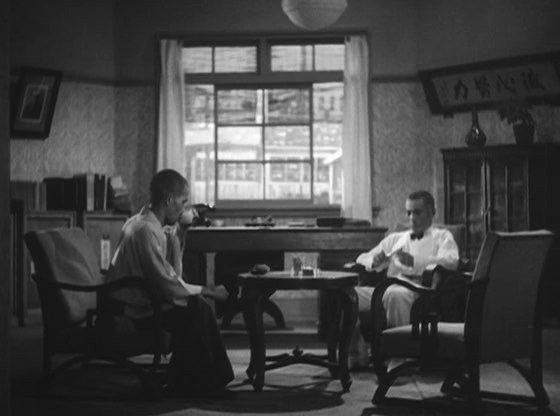
Keisuke works late hours at his job where he doesn’t get the attention he feels he deserves. He comes home very late to a house that he and his wife share with his younger sister, Fumiko. Fumiko is a perfect modern girl, who supports herself with a job as a typist. One day at work, she is confronted by a man who has obvious romantic intentions. She resists them, but the man stays active, sending her flowers on her birthday. Keisuke’s boss tells him of his nephew and his intentions to marry Fumiko. Keisuke is expected to pass along the marriage proposal, which his boss expects will be accepted, but Keisuke knows his sister better than that.

2

While this film does anticipate Ozu’s latter works in content, it’s very different in form. While Shimazu keeps most of  the action indoors, either in the home or the office, he doesn’t do it with Ozu’s rigor. In fact, Shimazu seems to lack a close aesthetic companion, being efficently low-key in most situations but has some more artsy flourishes, including some restrained tracking shots. While the camera movements aren’t exactly Mizoguchi (it might be worth mentioning that Mizo’s most technically accomplished film, Zangiku monogatari came out in ’39 as well) there’s still some impressive cinematography, which unfortunately tainted somewhat by the print’s conditions.

3

The biggest draw here might be the performances, though. Shin Saburi is pretty excellent, and there aren’t many opportunities to see him in a role where he’s this young but still has a larger role. The same goes for Chishu Ryu, who has a small cameo as a family friend. Kuniko Miyake’s role isn’t large, but her presence further contributes to the similarity with Ozu, as she appeared in a great deal of his work in the 1950s. Her role is ultimately a passive one, with much of the film’s material coming from the professional lives of Fumiko and Keisuke.

4

Michiko Kuwano is excellent here as Fumiko, laying out the framework for the “modern girl” type that became an important part of post-war Japanese fiction. Her independence is somewhat stunted by her admiration for her brother, and she’s apprehensive in telling him that she’s uninterested in the marriage proposal. She’s aware this might be costly for him, but he ultimately becomes the good guy. He immediately accepts her rejection, which ends in him getting fired. The film concludes with the family being sent off to Manchuria, and Fumiko mentioning that she won’t be courting anyone until her brother is in a comfortable financial position. She feels guilty about her brother being fired, but it hasn’t made her regret her decision to not get married. If anything, it has reinforced her resistance to the institution itself.

5


Jack and Diane (2012)

12 02 2013

One of the few things wrong with Bradley Rust Gray’s otherwise excellent 2009 feature, The Exploding Girl, is although it’s very grounded and beautifully photographed, it’s a bit too minimalistic for its own good. Not so much in form but certainly in content. While, I agreed it looked exactly like a film that would be a favorite of mine, it didn’t necessarily feel like one. One can’t call his followup too reserved, though. While I’m not quite sure of saying it’s entirely bonkers (there’s a wide range of idiotic IMDb commenters that have already done that for me), it’s definitely not a safe choice.
1

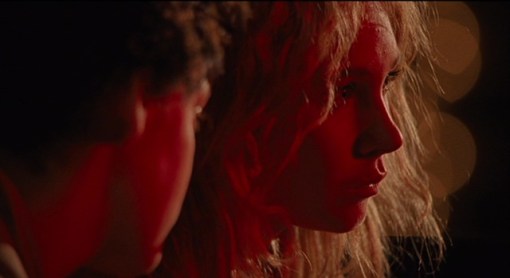
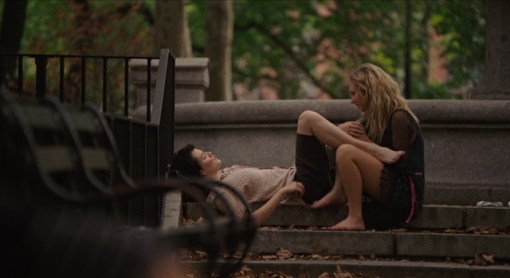
I intentionally made this a double bill with Ry Russo-Young’s Nobody Walks just because they were both released last year, both superficially “indie” films. In my writeup of that film, I mentioned feeling sort of self-conscious typing up a plot summary. I feel the same here too, but for the opposite reason. Where as that film sounds like there’ s too much going on when put to paper, this one feels like nothing is happening at all. Indeed, it is fairly plotless. Jack meets Diane, and they fall in love almost immediately. Like many great “young love” stories, the film’s driving force doesn’t come from obstacles set up by the narrative, but from the inner narrative of falling in love.

2

If the last sentence of that paragraph sounds silly, you might want to turn away now. There’s also a story buried deep away within the film’s fabric about werewolves. It’s ridiculous enough to begin with, but how rare it appears makes the film all the more befuddling. The film was always designed as a “werewolf love story” but maybe Gray’s intention was to always market it on the popularity of Twilight (Riley Keough’s resemblance to Kristen Stewart is another hint to this) and only give the audience the smallest amount of fantasy/horror elements as possible. The contributions from the Quay Brothers exist in the same sort of space as the horror content, except their stuff is actually sort of weirdly beautiful. It’s a really small part of the movie, though, and people fascinated by their abstractions should be wary that their work is sort of minor here.

3

While there is plenty of ridiculous stuff going on, stuff that may or may not be about werewolves, Gray still has the restrained beauty of his previous film. In a way, it fits perfectly with such bizarre flourishes. It’s sort of the American equivalent of the musical interludes in The Wayward Cloud. Perhaps more a accurate comparison from that same film would be the finale, because it is just as uncomfortable yet weirdly romantic to see the protagonists in that film consummate their relationship as it is to see either Jack or Diane turn into a werewolf and harm their lover. It doesn’t make sense at all, and these moments seem to occur outside of the film’s normal time and space, but they aren’t entirely terrible.

4

I don’t want to spend too much time focusing on Gray’s previous work, since I’d argue that this is his best movie, but it’s important to see where he draws on his past. The performances here are remarkably candid, even though the dialogue of the script itself is (intentionally) vapid. Gray intentionally came to my attention in 2006 with the release of So Yong Kim’s In Between Days, a film he wrote. The coming of age thing was overdone even then, but the freshness of his texts came from the unromantic and more honest depiction of growing up. While he’s operating with a love story here and I would argue that this film is totally romantic, the same honesty is present. It, of course, helps when the performances manage to ring as true as they do here.

5

Riley Keough, the more impressive of the two leads, has a particularly remarkable scene where she tries to share her (now deceased) brother’s mixtape with Diane. I risk losing any potential viewers by describing the way she struggles to confess her love for Diane in this scene. It’s definitely one of the realest thing I’ve seen in an American film in the past ten years. It feels very unprofessional in a good way (think Paranoid Park, which could serve as an aesthetic companion, as well) and like Gray’s restrained compositions, manage to ground a film that has it’s fair share of fantastical elements, maintaining its realism even in the face of something from another realm.

6

The film might be a disaster, a beautiful one, but it’s inconsistent implication of genre does make it feel a little unorthodox even as it consciously experimental and arty. I would argue to the people upset by this inconsistency that Gray’s heart seems to be in the right place. The really important parts of the film, the romance between the two protagonists plays out as gentle and poetic, even as the life the characters face seems like the opposite.

7

Gray makes wonderful use of the Flying Picket’s cover of Yaz’s Only You, which is known to  most as the closing song to Wong Kar-Wai’s Fallen Angels. It’s another fit comparison, a film that seems crude because of action/gangster imagery, but is actually one of the most wistful works in all of cinema. Gray’s film operates on a similar level, even as his ends with the song matched to an extended static shot of Diane’s face, the formal opposite of the speed-manipulated, saturated conclusion of Wong’s film. I’m at the risk of being too meta talking about the intertextuality of a song that’s already a cover to begin with, but it’s a perfect point of reference. Gray’s film is a similarly kinetic and crazy love story, even as it is more restrained. Make no mistake, this is still a personal and unique vision, it  just uses the same vocabulary as the previously referenced films. It’s a masterpiece on its own.
8