Metropolitan (1990)

16 01 2014

It’s always a struggle to begin these reviews, but I’m finding this to be especially the case with Whit Stillman’s debut, Metropolitan. There’s not a shortage of things to talk about, in fact, that’s what I’m wrestling with right now. Where do I begin with a film like this? I could talk about how it’s charming, and despite some stoic performances, is actually really amusing. But there’s more to what Stillman is doing beyond effective filmmaking. In a sense, I find this film “enjoyable” and “good” at least in the way I typically approach the medium but it’s sticking around in my heart in a way that I need to unpack in a way that’s different than usual. It’s a film that resonates with me deeply, and I think it’s related to what I’m going through in my life but I still can’t endorse all of it. Then again, sometimes great art isn’t that easy.

1

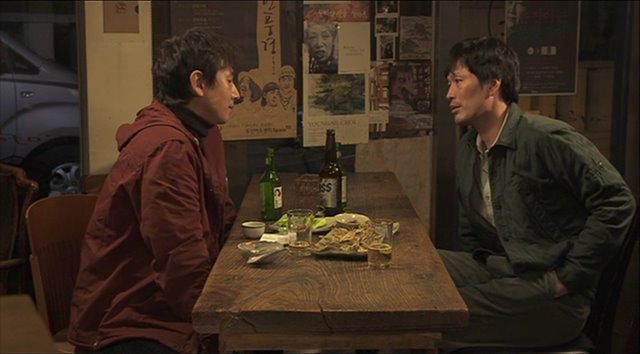
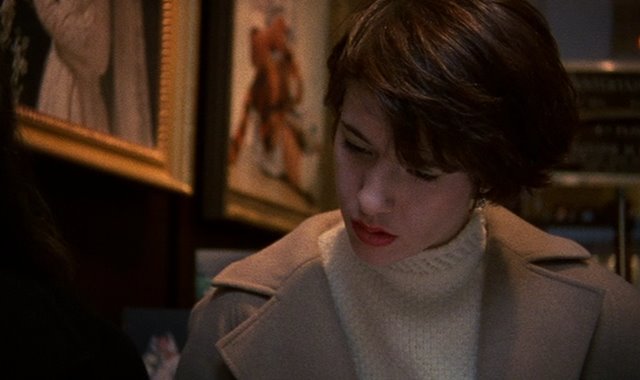
Tom finds himself at a debutante ball, something he is usually opposed to. Afterwards, he inadvertently winds up at a sophisticated after party. The party is populated by a number of self-identified U.H.B., or urban haute bourgeoisie. Tom keeps up a certain facade around the group, but he’s definitely just below them on the financial scale. He continues going to debutante balls with the group and continues meeting up with them at the after parties. In the process, he learns of the group’s distant connection with his ex, Serena, who he’s never really gotten over. However, someone else in the social circle, Audrey, has eyes for him.

2

Tom, the outsider of the group, is the film’s central protagonist. An alienated, anxious, heartbroken asshole so typical in serious art films. At the time of this writing, there’s a movie in theaters called Her and it has this type of protagonist. The “sensitive” soul whose been wronged, and we’re meant to sit with him as he figures it out. We feel for his every moment. I want to make it known that Metropolitan is not this kind of movie. Tom fits this mold, but he is not absolved of critique. All of the characters are unpleasant on some level, perhaps inherited by their privilege and obliviousness, and Tom is no exception. Sure, he makes less money and lives with his mom on the Upper West Side of Manhattan (which is sort of a thing to the rest of the group) but he still isn’t perfect. He speaks wisely about literature with Audrey, but thirty minutes or so in it’s revealed that he never really reads literature, he merely reads literary criticism.

3

Maybe the most crucial element to Stillman’s debut is the fact that he balances this critical view of his character with some admiration for them. Maybe it isn’t obvious to everyone, but there has to be something resemblance reverence or else he wouldn’t devote so much time to them. It’s a hard balance to explain, let alone achieve but basically the despicable nature of the characters doesn’t exactly humiliate them. We laugh at their woefully upper-class rhetoric and scoff at the victimization implied by a character like Charlie, but there’s something there. I hesitate to call it humanism, because the term makes my eyes roll but there’s something in them. It’s indescribable, they’re dorks and easy to hate but you’re compelled to follow them and it’s not quite a perverse interest in seeing the downfall that they vocally lament.

4

There’s an unavoidable level of artifice here, but it actually works in a perfect way. In one episode, Tom is amused that the group plays bridge. ” I couldn’t believe you’re actually going to play bridge, such a cliché of bourgeois life” he cries, with Nick retorting, “That’s exactly why I play. I don’t enjoy it one bit.” The performance of bourgeoisie doesn’t seem productive or logical, especially since we get so many hints that these are kind of entitled brats, but Nick’s performing of the identity (even though that is his identity, no matter how he asks) is a template for Tom. Tom’s performance of bourgeoisie has to be more convincing because he lives in a crammed apartment with his mother and has to rent his tuxedo. Maybe the most important thing to remember here is that these kids are still that, kids. I’m not going to claim they;re innocent or some bullshit like that, but they inherited this lifestyle and they seem either too eager or apprehensive about fulfilling the expectations. In talking about what she finds so attractive about Tom, Audrey mentions that he doesn’t always agree when it’s convenient. The formality of charming, easy-going conversation is somewhat lost on Tom, though he eventually adapts. In this sense, the film acts as something of an antithesis to Pasolini’s Teorema. In that film, an outsider comes in and shakes everything up, changes the perception of the elites. Here, an outsider invades the territory of the bourgeoisie and they eventually suck him up, if only because Tom, like the rest of the group, is actually brimming with anxiety.

5

The charm of the film rests in large part of Audrey’s shoulders. In this, I have my biggest problem with the film and weirdly, it’s a problem I might have with myself. She’s delightful and Tom’s repeated avoidance of her only makes her easier to like. I found myself repeatedly thinking “awww” and saying it out loud whenever her romantic intentions were halted by Tom’s own inability to get over his last relationship. My problem here comes from that fact that, like everything else, Audrey is obviously a construction from Stillman’s pen. She’s easy to fall in love with and the film’s conclusion is life-affirming, if not wish-fufillment. But isn’t it selfish? If nothing else it seems sort of cheap, maybe just a personal moment of realization that love stories are often crafted from the same, limited perspective, which is something I touched upon in my review of Our Sunhi. I don’t see Stillman critiquing this framing of relationships like Hong, but the artifice of it points to the fact that it might be something of a fantasy. This doesn’t cheapen the end of Metropolitan, it’s the kind of thing I needed in my life now, which I don’t expect everyone who reads this to fully understand. I mean, it’s real enough to me. Oh, it’s also really funny, that helps a lot.
6


Doro no kawa / Muddy River (1981)

13 01 2014

It might be hard to contextualize the state of Japanese art film in the 1980s. For whatever reason, it is the least accessible (in terms of distribution, home video release) and least interesting decade in the country’s film production, at least in the west. The golden age of the 1950s was a thing of the past, replaced with kinetic, chaotic, and “radical” aesthetic of the Japanese New Wave and Art Theater Guild that produced most of the “serious” films that came from Japan in the 60s and 70s. Muddy River, which is filmmaker Kohei Oguri’s debut, is a conscious throwback to the aforementioned “golden age” of Japanese cinema, a shomin-geki pastiche. It nails the visual style of that era, while introducing a uniquely quiet tone to the proceedings.

1

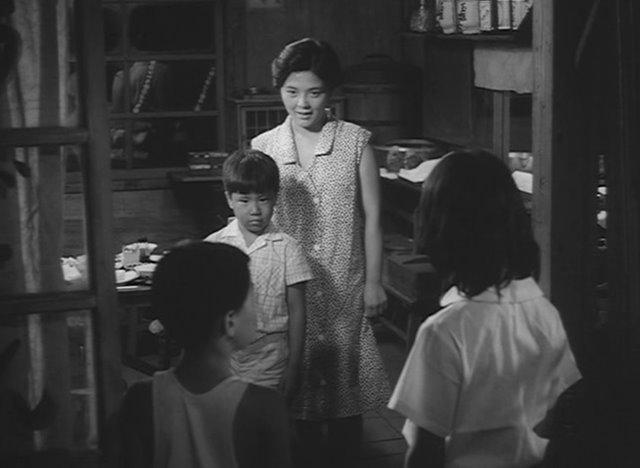
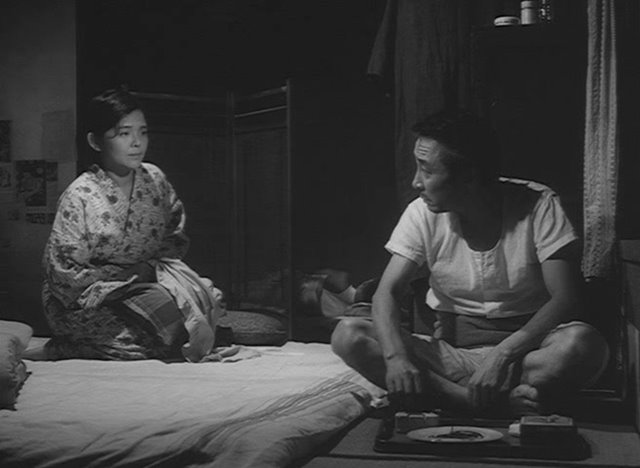
Nobuo lives with his parents in a noodle shop along the river. It functions as the family’s main source of income. He seems to latch on to relationship with other adults because he has no friends that are his age. Nobuo meets Kichi, a boy who seems to be his age. Despite their shy personalities, the two start something of a friendship. Kichi lives in a houseboat along the river with his sister, Ginko and his mother, who we never see. Because of this assumed neglect, Nobuo invites Kichi and Ginko over to his house, both of whom fit in well with Nobuo’s parents and the family’s noodle business. Nobuo’s father promises he’ll take the two boys to an upcoming festival, but then he disappears.

2

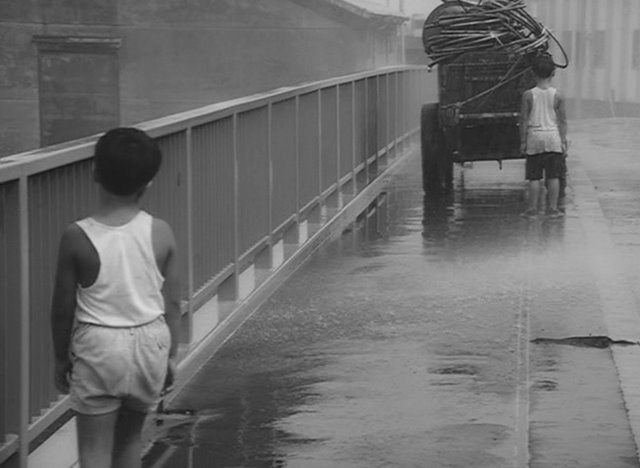
Most of Oguri’s debut is a slow-burn, with excellently photographed frames quietly building into a sequence. However, the film’s opening is as jarring and electrifying a sequence as I’ve ever seen. It follows the aesthetic of the rest of the film, but it is so quick and precise in its commentary. We begin with a shot of the noodle shop, Nobuo greets the guest, a man who drives a horse cart. He’s upset by the visible injury of the man’s ear, but the man erases the tension by offering Nobuo his horse cart. “I’m going to buy a truck” he says, which is followed by some musing on the progression of technology. A few moments later, oncoming traffic jolts the horse, and the cart crushes and kills him. In this short sequence, we get a pretty clear political discourse. Not that the rest of the film is particularly outspoken, but this discourse does mesh with the rest of Oguri’s vision. The horse cart man (which is how everyone refers to him as) is done in by the very thing that prevented his financial demise. Man’s hopeless labor is what keeps him alive, but it is also this labor that kills him, quite literally. The illustration is blunt, and maybe the reason for the scene is more about pathos than politics, but it is representative of the film’s other labors. Pardon the pun, but their work barely keeps them afloat.

4

It’s worth mentioning that Oguri’s motivations here aren’t one-dimensional, they aren’t strictly related to politics. It’s no surprise that such a political image opens a film that could be categorized as “humanist” when one considers that he is channeling Ozu, Naruse, et al. Those two filmmaker, and a few of their brethren have never been categorized as political filmmakers, but in their work I do see critiques of social infrastructures, but their salience comes from the fact that it’s all woven into something that’s grounded in reality. Yes, “humanist” or whatever, but political because it is personal. Oguri is working from the same template. One might argue that this more importantly a film about disappointment, anguish, and other emotional sensations that aren’t as easy to read, analyze, and study. However, I think they’re are connected.

5

This is a film told from the perspective of a child and because of that we must assume some naivety. Time is constructed in a opaque way, so we don’t know how time has passed in the film’s duration, but it is a pretty crucial period in Nobuo’s life. In the film’s running time, he confronts death twice, and sex once. It’s interesting that these events are all abstractions of living and loving. I mean, grizzly freak accidents aren’t how we’re meant to encounter our mortality and discovering your best friend’s mother is a sex worker isn’t how we’re meant to discover sexuality. Is there anything inherently wrong about learning about life this way? In Oguri’s hands, these aren’t transgressive moments, but instead common “coming of age” fodder. He frames these moments with such care and grace that their impact on Nobuo isn’t sensationalized. He isn’t quite sure what they mean, and the film isn’t going to force what it should mean to him.

6

“Coming of age” tales aren’t traditionally framed as stories about the socialization process, but Oguri seems keenly aware that the two are related. The sadness felt by the adults, who are periphery characters, seems like a introduction to children that things aren’t going to be that amazing. Of course, Nobuo, Ginko, and Kichi aren’t particularly upbeat. Kichi seems the least aware of his situation, where as the other two children have come closer to the learning the “harsh truth” or whatever. In reality, I don’t think we just one day lose our innocence and become cynical assholes. It’s a gradual process, one that doesn’t always result in the same type of person. Nobuo is wrestling with his conditions, Ginko has peacefully accepted their limitations (and it’s broken her heart), while Kichi tries to outwardly reject it. It’s important, I think, to clarify that none of these children are meant to represent stages of maturity. Such an idea would undercut the film’s grace, as it is not a work meant to make declarative statements about the unrest of daily existence. We know it’s there, Oguri knows it’s there and we haven’t found the “right” answer to endure the daily struggle. It sucks being a kid, basically.

7


Our Sunhi (2013)

7 01 2014

I could probably tell you what it’s like to have your heartbroken, but in doing so I would be making a gigantic assumption. The assumption that all experiences are the same, and while having your heartbroken might feel the same to everyone, the context of how that happened is very different. I don’t mean in the case that everyone has their own story, but instead that my perspective, as a straight, white, cis male isn’t the only one in the situation. There’s countless films, yes even art films, that will impose this perspective. The sad dude isn’t the only participant in this situation, though, and Hong Sang-Soo’s latest, Our Sunhi, is one of the most crucial examples I can think of that tries to decenter the perspective of the failed romance narrative.

1

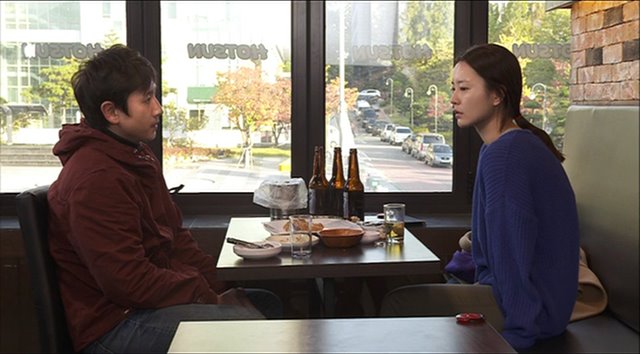
Sunhi, a recent college graduate, returns to her place of higher learning. She’s interested in getting Professor Choi to write her a letter of recommendation. Although he confesses that she was his favorite student, his letter, written in 30 minutes, is unimpressive. She continues to hang around campus, hoping to get him to write something more flattering. During that time she runs into an old flame, Moon-soo. After several drinks (as per usual for Hong) it’s revealed that he’s still very much in love with her, while she is more ambivalent. She also runs into her mentor, Jae-hak, who has been harboring a crush on her as well. Again, she proceeds with drinking.

2

The American title here is particularly fascinating, Our Sunhi, which implies a plural possessiveness over the film’s central protagonist. The perspective is obviously that of the three men in love with her, Professor Choi, Moon-soo, and Jae-hak. The language here indicates the downfall of all their romances, as their possessiveness is not particularly compatible with Sunhi’s intentions to go to grad school in America. This isn’t to say that the three men in the film are particularly unpleasant. They seem nice enough, and with the exception of Moon-soo (when drunk), Sunhi enjoys their company. They’re all attractive enough too! One might ask what’s her problem, but the reality is that love isn’t an solvable equation, it isn’t a game show with correct answers or “right” behavior. It’s a weird and dumb and amazing thing that is often inexplicable. Hong isn’t implying there’s something transcendent about romance, but the opposite. It’s banal, but it still functions in a way that cannot be predicted.

3


So what’s the big deal then? Hong’s just made another movie about how emotions and people are complicated, right? Well, yes, he has, but I do think there’s something political to be found in his musings. The film’s most telling bit of dialogue comes from Jae-hak, who asserts that women are realistic, and men are too emotional. In the western world, the inverse statement is often accepted as conventional wisdom. Women are visceral, men are logical. However, we have plenty of evidence of the opposite here. It’s Moon-soo who seems a step away from tears in every scene. It might not be that either gender is inherently more emotional, but instead of our emotional relation to each other, which is of course crucial in the films of Hong and his hero, Rohmer. Both make films that are so particular in how heterosexual relationships function (and more often, fail) that they kind of have to be about gender because there’s so little room for deviation. The men in Hong might seem more emotional, but that’s because they are confronting women about their relationships and they don’t see anything outside of a romance as being worthwhile. So when the women say no, they cry.

4

Moon-soo is the most emotional character here and maybe he is really sad, but part of his heartbreak is self-inflicted. He only sees the romantic potential in Sunhi.  She sees him on the street while in a chicken restaurant. She invites him to join him, but he’s hesitant. He submits, but assumes she’s leading him and when his romantic intentions are spoken, he feels teased by Sunhi’s rejection. He can’t see his relationship with Sunhi beyond what happened in the past because in it, he possessed her. She was his Sunhi, and he can only assume that she says no because he did something wrong, or he’s inadequate. Maybe he is, but this assumption hurts his psyche, and doesn’t allow him to even account for Sunhi’s own feelings. The centering on the male in all romantic narratives forces a breakup to be seen as a problem to be fixed. You must correct your mistakes and then you’ll “win” her back. The friendship that Sunhi herself craves should be a win if Moon-soo does care about her. Now, I’m not an idiot. I understand it’s perfectly reasonable to not get over someone. It’s happened to me, but I am suggesting that heartbroken dudes aren’t doing favors for their own pain by centering the relationship on themselves. It’s possible that’s why things didn’t work out in the first place.

5

I don’t think anyone has called Hong a political filmmaker, but I do think there’s something political happening in a film like this. Sure, it’s about relationships but at the risk of sounding banal, the personal is political. In this case, Sunhi’s unease is caused by coming into contact with men who see her being “to date.” These are the nice men of the world. They want to caress her, make her feel nice, take care of her, etc. Their intentions are pure but that doesn’t make them saints, nor does it mean Sunhi should date any of them. The revolutionary impulse in Hong is that he provides us with relationships that aren’t tragedies because they don’t work out, but instead tragedies because the heartbroken men never learn and thus, women like Sunhi go through a cycle of men who are perfectly nice but still come at the potential relationship with a skewed perspective. I see this shit everyday among well-meaning male peers who want to “get a girlfriend” assuming it’s a thing you make happen. Hong’s achievement here is showing men that are lonely because they won’t be loved and contrast it with the far worse prospect: being a woman and wanting to be consumed whole by men for the sake of love. Maybe he hasn’t decentered the “lost love” narrative from men, but he has tried to make a film that suggests there’s another participant in a breakup and that participant is like, another human being. I don’t see that a lot.

6


Investigation of a Citizen Above Suspicion (1970)

4 01 2014

Awhile back, I was deeply impressed by Elio Petri’s The Working Class Goes to Heaven , which while not earth-shattering, showed some hints of radicalism that was often separated from conventional narrative filmmaking in Europe at the time. This earlier effort feels a bit less complicated, it basically tracks a fascistic, disciplined, and ideal embodiment of police force. It’s political implications seem pretty cut and clear, especially when the nameless detective’s opposing figure is a young radical. However, as with the other Petri film, I think there’s a lot of (perhaps unintentional) stuff to unpack here. Yes, this is a well-crafted thriller and the surface of its political commentary is interesting, but I find the deeper I dig into Petri’s world, I start to find the most fascinating elements.

1

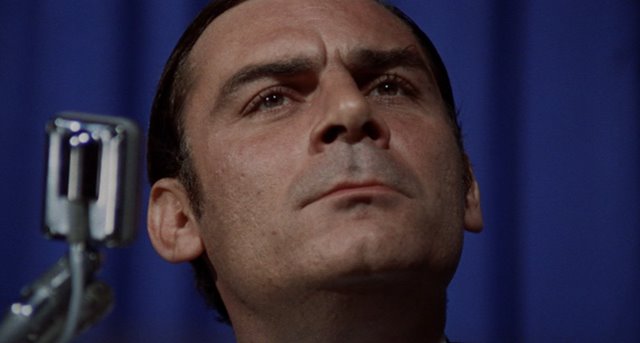
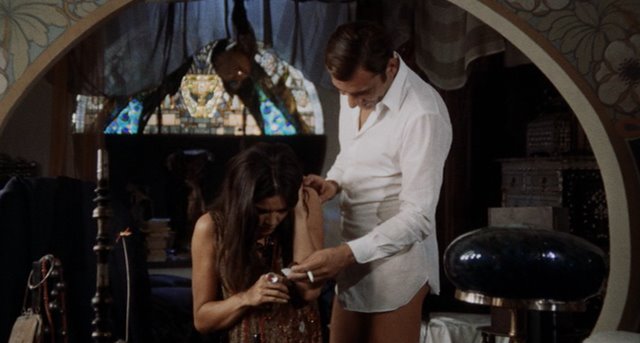
A nameless inspector visits a mistress. She playfully asks him “how will you kill me this time?” before the two engage in sex. The jarring foreplay becomes a reality in less than a minute. He cuts her throat, then proceeds to leave her apartment, intentionally leaving behind signs of his presence there. He arrives at the police station, and it becomes evident that the man has enjoyed great success in his profession. He’s been promoted from the head of the homicide division to the political division. He gives an impassioned speech where he cries for repression to held maintain the order of the public sphere. In the mean time, he begins investigating the murder of his mistress, with the belief that his place in the law also puts him above it.

2

On the surface, we have a film with a very explicitly stated idea: that the agents of law do not adhere to the law and thus, their power breeds absolute corruption. The inspector himself sums this all up towards the film’s conclusion: “[It’s] a disease I probably contracted from my prolonged use of power.” This is not the most revolutionary sentiment, but what many perceive as the charm of the film is that is able to be so critical of power but do it in an entertaining way. Sure, maybe it’s not actually that far from Scorsese’s Wolf of Wall Street, but the main discussion of that film is whether or not it condones or condemns its toxic wielding of power. There is no question about it in Petri’s film, the protagonist is absolutely the villain. Some might say this is a problem with the film, it’s too didactic. I’m not inclined to disagree on this, but the film itself has a lot more to offer beyond its direct insinuation that state power is, well, bad.

3

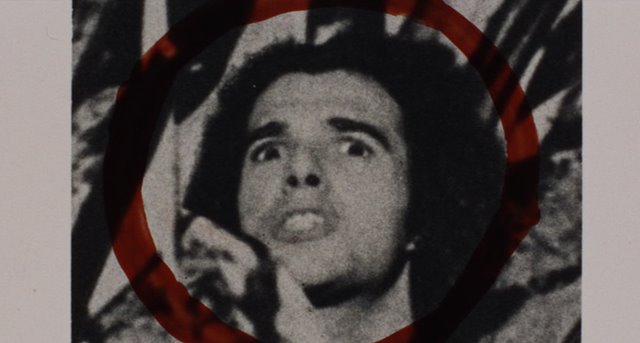
In his essay on the film, Evan Calder Williams mentions that the lack of any female presence in not only Petri’s film but in other radical films of the period is a limitation and a problem. He’s absolutely right. The two Petri films I’ve seen have zero female characters with any agency, and while I acknowledge this as the problem it is, I find it saying something interesting in this particular case. The nameless inspector here murders his mistress, and one of the contributions to this act is his jealousy of her new relationship with a young radical, Antonio Pace. Pace knows the inspector is the murderer, but instead of being outraged, he seems almost gleeful. Upon recognizing him as an agent of the state, he begins to smirk. He’s not at all upset or distraught that he’s lost his lover, he’s ecstatic because her death is just more information to throw against the police state.

4

In this particular case, we can see why Pace and the inspector are so careless with their lover’s body. She is a charming enough character, but the film never grants us much beyond some flashbacks that just go to reassert that she’s kinky and critical of the inspector’s masculinity. The film comes down to a personal standoff between Pace and the inspector, their showdown has taken place on the body and blood of a woman, and neither particularly cares about said body’s destruction. I think there’s something to be said about this, because it insinuates that in the face of other oppressed groups, radical leftist men are just as likely to silent said voices as the state. This isn’t to say that I, myself am critical of the radical left, but instead of the men who constantly assert their status as such but only show interests in the institutions that affect them.

5

There’s actually other things to take away from the nameless inspector, like that he’s haunted by his inadequate masculinity or at least his inability to perform in the private. He is, after all, the most disciplined of figures but in the context of real human interaction, particularly affection, the regulated body and mind isn’t enough. In the film this ends up being represented as “haha the fascists are bad at sex” which sounds a little more trivial and more satirical. I’d hate to place this in the field of satire, though, because the word is often associated, to me at least, with uncritical liberal musings on culture. Here, we have an incisive critique of the police state, and toxic masculinity being a part of its opposition as well. This idea is sort of important to me, because it still seems relevant today. Yes, authority is bad, but as inspector himself says “Authority makes me the father and you the children” and the gendered power dynamic does not dissolve just because you’re a leftist.

6


Rakudai wa shitakeredo / I Flunked, But… (1930)

22 11 2013

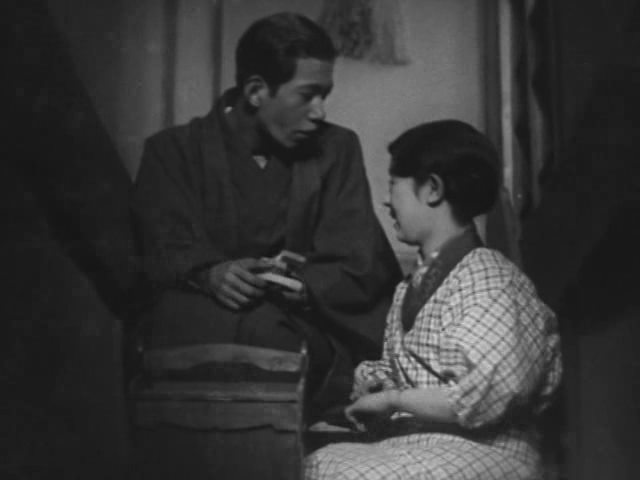
In my reviews of That Night’s Wife (1930) and The Lady and the Beard (1931) I argued that there was something vital to be found in tracking Ozu’s progress as a filmmaker. In both of those films, the social commentary that he would refine and quietly mold into his most engaging  and affecting portraits of the human conditions. I Flunked But… is another effort that will appeal to completists, but I hesitate in making an argument that it’s worthwhile for anyone else.  Ozu has made a clever comedy here, one that can easily resonate with a lot of young people who feel like their life is missing direction. However, the film itself also lacks a direction. It’s fun, but it doesn’t achieve much outside of this.

1

Takahashi and his friends are preparing to pass their final exams. In lieu of studying, they’ve devoted their efforts to cheating. The best way seems to be printing the answers on the back of a t-shirt. However, this plan doesn’t work out when the shirt is question ends up in a load of laundry. Most of Takahashi’s roommates pass, but he doesn’t. However, the prospects for either aren’t exactly promising. Those who do graduate receive nothing but rejection letters and daydream constantly about their days in college. Takahashi is stuck in limbo, waiting for next semester, but he does get to live off his parent’s money in the mean time.

2

I will give Ozu some credit here, he has hit close to home with a film about post-graduate malaise. Of course, the film’s protagonist is stuck in school, but we do see and empathize with the struggles of the individuals who do pass their final exam. It rings true to me because I’m graduating from college in a month and I can sure I know as much about my future as the recent graduates in this film. Just by depicting this phenomenon, Ozu strikes a personal cord, though his film is not particularly concerned with fleshing out these anxieties further. Instead, they just sort of sit at the surface and provide the context for most of the comedic bits.

3

The greatest fault of all these Ozu comedies is that, when they are funny, they are so in a really corny way. It feels like a bit of an unfair accusation considering that’s his intention, but it also makes everything feel a little bit old-fashioned. The broad comedy works a bit smoother than it would in one of John Ford’s “comedic” films, but the result is sort of similar. Harold Lloyd is a more appropriate reference point, as it is his influence that is so most prevalent in most of these early efforts. However, it’s not exactly my thing and the films seem consciously designed to distance itself from any pathos potentially derived from the material. When the film ends, we see the graduates daydreaming about being at college and it’s all supposed to be cute and silly. Here’s where one could ask “great, now what?” but to be fair, Ozu isn’t exactly interested in working through their struggle, or painting a richer picture for Takahashi.

4

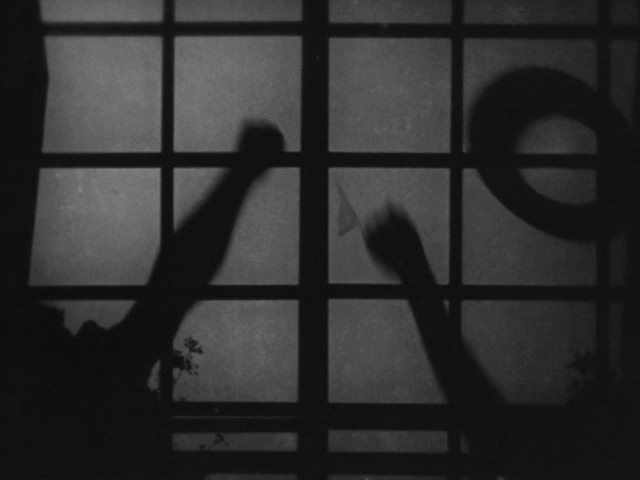
From a technical aspect, Ozu is on to something here. The quick tracking shots are again, disorienting for anyone well-versed in his celebrated signature style from the later years. However, he does actually provide nice, sensory-driven closeups. They don’t serve a transitional purpose like his pillow shots, but they are strikingly similar in composition. There’s some not very subtle suicide imagery here (a shadow of a noose, an emphasis placed on the sharp edges of a pair of scissors) which one could argue refutes the claim that the film isn’t serious enough. I’d counter by mentioning that these visual touches are fleeting and if nothing else, feel sort of maudlin. One never gets the impression that Takahashi truly feels that hopeless, and these flourishes then just seem too self-serious. Still, it’s Ozu so I’ll argue always that anything he does matter, if only in framing his career more accurately. This is enjoyable enough, but nothing special. Exciting developments were on the way from the master, this just feels like something he needed to get out of his system.

5