Girls About Town (1931)

18 03 2014

Unlike your typical classic Hollywood fan, I’m a little less accepting of some of sexual politics we’re expected from the era. This seems like a generalization, but there is a impulse in some cinephiles to accept certain elements of a film as a sign of the times. To use an example from this film, a 1931 effort from George Cukor, the presence of black maids. The “backwardness” of certain classic films does risk, at least to me, their potential to be enjoyed or even to be watched by me. However, my larger point is that this backwardness sometimes comes in something superficial yet still serious. Cukor’s handling of sexual politics is actually ahead of his time, especially when one considers the heteronormative moralizing that still saturates the multiplex to this day.

1

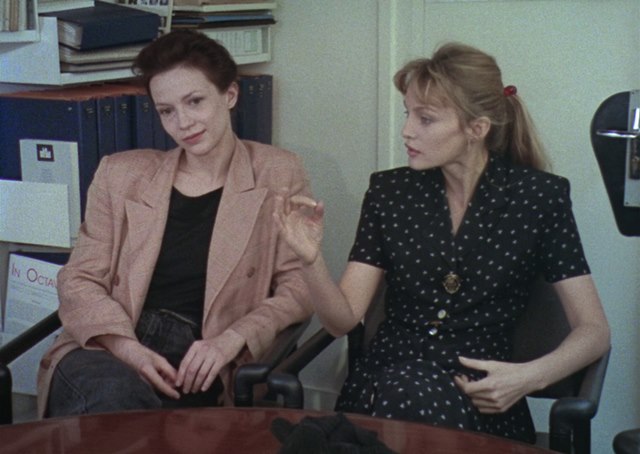
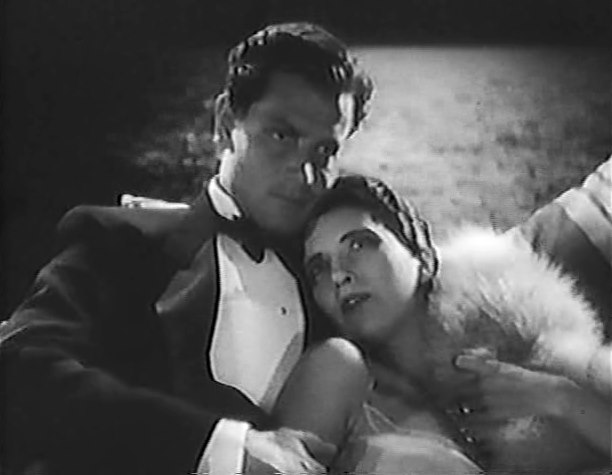
Wanda Howard (Kay Francis) and Marie Bailey (Lilyan Tashman) are both regarded as professional gold-diggers, though both would reject such categorization. Still, their nights in Manhattan are financed by a revolving door of boring yet wealthy men from the Midwest. After the night of big spending, the two are able to dismiss their respective suitors before anything more serious starts. Wanda is growing weary of the lifestyle, perhaps craving something more authentic, but Marie thrives off of it and suggests the two go on a cruise where they’re sure to stumble upon more men. Wanda begrudgingly agrees, but on the cruise, she meets Jim Baker (Joel McCrea), a man whose face is as attractive as his wallet.
2

I guess I think it’s important to clarify that I think the constructed “gold-digger” identity is not only an unfair, but a blatantly misogynist one. There are women who might get romantically involved with a man with only financially stability in mind, but I don’t find anything disgusting or gross about this. I, like Cukor, instead see this as a resourceful, perhaps even reasonable route for a group who is told upward mobility is possible but is never given a chance to figure this out. One scene artfully illustrates the situation for a young woman in 1931, and it resonates now. Supposed millionaire Benjamin Thomas announced he’ll pay upwards of a thousand dollars to any young women who can dive into the ocean and retrieve a golf ball. Of course, the balls immediately sink to the ocean and no is able to retrieve them. Marie actually succeeds but then discovers that Thomas isn’t all that rich. He can’t pay her.

3

The Thomas character in particular, played by Eugene Pallette who frequently played rude ogres, does much to shift the focus of the gold-digger dynamic from blaming the women who are trying to survive to the men who are not only easily manipulative but totally aware of what they’re about to get involved in. The term itself “gold-digger” never focuses on the men who are equally complicit, instead casts them as the victims to the cold women. The patriarchy shames the women that have managed to find a cheat in a system, one which allows them to use their own sexuality for capital gain. Pallette’s performance as Thomas is one of a stumbling and stubborn man, the goofy type to be the “victim” in this situation. He becomes the subject to criticize, not just because he’s unfaithful but he’s even more of a liar than either so-called “gold-digger.”

4

Cukor’s meditation on sexual politics doesn’t end on a well articulated hypocrisy involved in crying about women interested in money. In their first scene together, Jim and Wanda agree to “pretend” that they really like each other. After the agreement, the camera cuts to some hijinx involving Thomas and Marie, but then it comes back. Jim and Wanda seem to be deeply in love in that sort of stupid, yet kind of perfect way people fall in love in Hollywood movies. They express an ache in their hearts for each other, but Jim breaks character. He laughs as Wanda proclaims that she’ll cook breakfast for him every morning. The charade was just that, but of course the two told us that ahead of time. Wanda is still hurt, but their beautiful Hollywood meeting was all fake. Maybe it’s cynical and bitter to suggest that all of love and romance is performative, but Cukor includes this tidbit to suggest that some performance and some dishonesty is involved in love. It’s not just Wanda and Marie pretending to love rich men, but instead a man like Jim hiding behind insecurities, ultimately a fear of being hurt because he’s opened himself up. It’s why people are told to play it cool and often, the failure to do so results in the potential romance dissolving.

5

Now, this all seems like a lot to take from a 70 minute, pre-code film that can be described tonally as light-hearted. Cukor doesn’t present his musings on relationships as the heavy, “important” ideas that they could be, which is what makes them all the more staggering. All of what I describe above is enclosed in a short film that moves quickly and shows few signs of being schmaltzy or sentimental. Maybe as it loses something as it stops to flesh out Wanda’s ex-husband as suffering from poverty, but it’s a quick and smooth visualization of the life pushed upon her if she couldn’t find a stable and wealthy man. Even when the film tries to morally cry out against “loose” or “manipulative” women it manages to craft an imbalance world that leads to these unfair categorizations and shows the men as not exactly faultless and innocent.

6


Knock on Any Door (1949)

17 03 2014

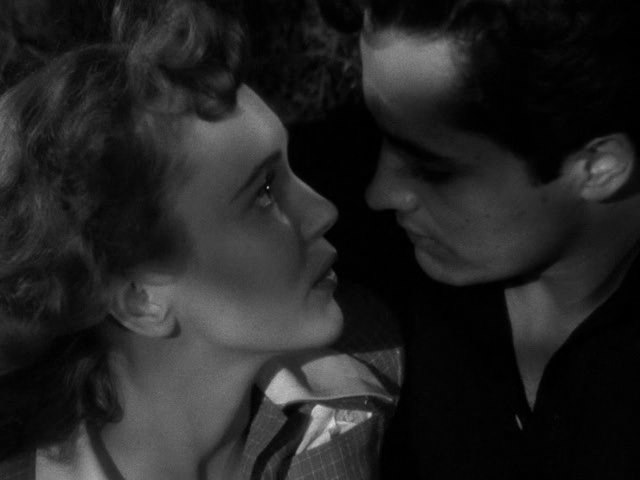
Nicholas Ray’s interest in wayward youth tends to yield some of his best efforts, most notably Rebel Without a Cause and They Live By Night. This early effort, coming after They Live By Night, speaks to this interest and its central argument is an admirable one. Ray could be chastised for his bluntness, but the film’s discourse, the idea that the impoverished are unfairly criminalized is sort of stunning and remarkable, especially considering the era in which it is argued. I do not fault Ray for his bluntness, as I don’t think “subtle politics” is inherently smoother to digest, but this film ultimately pulls up short because it betrays the central argument. It ends up eating away at his own idea. He himself indulges into criminalizing poverty, but the fact that the film manages to illustrate this argument in an artful enough way (yes, parts are indeed hammy) means it is absolutely worthy of attention.

1

Nick Romano has a criminal past, which doesn’t make it difficult for the police to pin the murder of an officer on his hands.However, he swear he didn’t do it. He calls his lawyer, Andrew Morton, but he’s fed up with Romano constantly getting in trouble. Some silent stares from his social worker wife, Adele, convinces him to go to bat for Romano for one more time. The trial begins and Morton uses his opening statement to describe his relationship with Romano, how they met, and just what exactly the two went through in the past six years. The idea is that Nick Romano can’t be seen as innocent unless the proper context is established, because all signs already point to his guilt.

2

From a pure storytelling perspective, there is something I admire about how Ray structures his film. The opening hour is basically an extended flashback of Romano’s difficult adolescence as told by Morton to the jury. Then, the film immediately switches gears to a tense and sweaty court case. Traditionally, this could be viewed as sloppy filmmaking, but to me it shows Ray’s own youthfulness. It’s jarring, but the sloppiness is endearing to me. The film seems to work on its own level, one that is indeed forceful with social commentary, but at least doesn’t mask its discourse in a film that is typical and orthodox. On the contrary, Burnett Guffey’s cinematography is spectacular. The film frequently positions its subjects in the corner of the frame, almost as though they are spectators in a showing of the film itself, reinforcing the idea that crimes are not something performed in a blender. Instead, there are an influx of factors. It sounds like an attempt to dissolve responsibility, but he wants to re-center things on the individuals who are never criminals, but are deeply complicit in criminalizing certain groups.

3

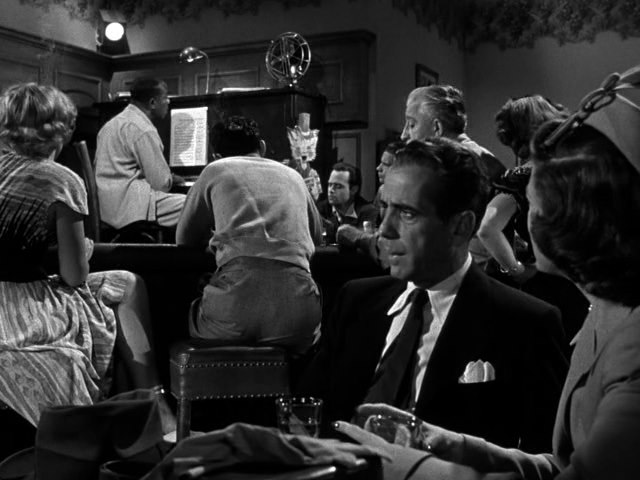
I think what Ray is ultimately arguing here is not only insightful, but kind of ahead of his time. Morton’s closing remark is one of Bogart’s most dominant yet engaging moments as a performer. Many might see his argument as either far too eloquent or a boring tirade too simplistic in grouping his critique against “society.” Instead, there is something banal about saying society is the real criminal, but the film’s text extends its critique to something deeper. Perhaps, Bogart’s passionate final defense shows hints of an acknowledgement of hegemony, though that word obviously never reaches his lips. Ray using Bogart as a mouthpiece might seem like an error, one that wouldn’t be expected in a filmmaker that was championed by Manny Farber.

4

Ray’s biggest mistake is not being on the nose with his politics. Sure, it does bring the film to a halt at times but it doesn’t feel unnatural. Instead, Ray betrays his own politics. The film’s most crucial mistake comes twenty minutes in where we learn that the Romano family, reeling from the death of their patriarchal figure, has moved to the “worst neighborhood in town, arguably in the entire country” to quote Morton. The film wants to suggest that the poor are unfairly criminalized, but this very scene does the exact same thing. Instead, it seems to suggest that it is only interest in arguing the innocence of Nick Romano, not that of the other criminalized bodies entrenched in poverty. He’s just misunderstood and is unfairly thrown into a dog eat dog environment, but the rest of inhabitants are just pawns in reinforcing the discourse of an evil society. Of course, the film’s titular plea, to “knock on any door” suggests some sympathy for all, but Ray’s less pointed political moments reveal the holes in his argument. Later in the film, Kid Fingers, a well-known homeless man is mocked by Morton on the stand for the delight of the jury. Ray seems to forget his own point when its convenient in forming the idea of Romano’s innocence. He doesn’t apply this revolutionary thought to all of his subjects, instead reveling in the same unfair criminalization that he seems interested in rallying against.

5

Through all of this, I do find Ray’s idea to be one that is at best, admirable and worst, just woefully executed. This is an efficient film, with wonderful photography and a nice performance from Bogart but neither of those two elements are missing from his masterpiece two years later, In a Lonely Place. The unique quality here, the thing that would be the pull is Ray’s attempt at a socially-conscious film. Where he does succeed in some places, he ultimately winds up being something of a hypocrite. Sure, this doesn’t look particularly good with the film’s already forceful politics. The latter bothers me less, because I instead see it as eagerness on the part of a young filmmaker. Some of the film’s “flaws” in a sense are more beneficial (at least to me) than others, but I can’t forgive some of Ray’s more hypocritical moments.

6


The Stuart Hall Project (2013)

3 03 2014

It’s hard to discuss Stuart Hall’s importance to me without embarrassing myself in one of two ways. If I tried to accurately provide a context to how influential he is to me, it would sound mushy and hyperbolic. If I wrote about him with any less reverence, I’d be selling him short. One of Britain’s most important cultural theorists, and more importantly, one of the pioneers in cultural studies, his words have crossed my eyes countless times throughout my life as an academic. A film about his work and his life would have to be cumbersome if it were fit everything in. However, that’s not what is being attempted here.

1

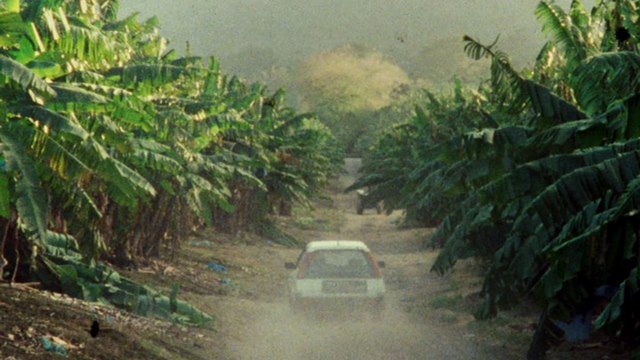
Director John Akomfrah samples from Hall’s numerous interviews and television appearances. While in America, he was most likely to be seen in a citation for a research proposal, he had some celebrity status in England. This is important because the film’s style ignores that of the conventional informative documentary. There are no planned interviews, no talking heads photographed like portraits trying to contextualize Hall’s life. Instead, the film is centered almost entirely on his voice and his words all effectively recycled by archival materials. The focus is not on Hall’s work in cultural studies (someone interpreted as strictly popular and low culture) but one of the opposing forces that inspired him to fight back.

2

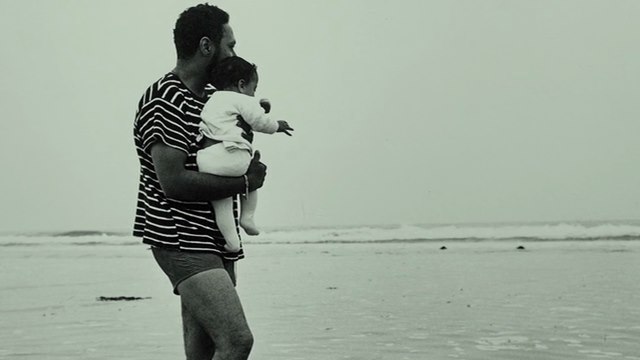
The Stuart Hall Project is not a good introduction to Hall. The film’s form is closer to that of poem, than of something purely informative and functional. From that perspective, I do acknowledge that this is a film that isn’t transcendent. It doesn’t cut through one’s own knowledge or lack of knowledge about Hall and create something beautiful. If one is to meet Hall through Akomfrah’s film, they will be confused and overwhelmed, perhaps occasionally latching on to his musings via voice over. He does narrate his timeline, from his upbringing in Jamaica to his adult life in England, and the constant questions of identity that such a history poses. Hall’s questions of identity are important enough when one reads him, but they encounter a second, poignant edge when quotes like “I can’t go back to one origin, I have to go back to five” echoes through the empty space in images that Akomfrah has collected from archives. We live in a world where politics and “real life” are acknowledged as separate, but this film provides the fabric that weaves the two together. Hall’s calm and peaceful demeanor speaks of his intellectual and academic standing, but his words express a frustration, even heartbreak.

3

It would be easy to call Akomfrah’s “work” into question here. The observations made in the film are not his (though, he most likely shares some of Hall’s sentiments) and neither are the images. He hasn’t exactly made a film in the way one thinks of that process conventionally, but he has made something beautiful none the less. At the very least, a film would have to be twenty hours to cram in everything crucial about Stuart Hall’s work. Again, this never seems to be the intention. Akomfrah has, instead, crafted a love letter. It won’t make sense to those who don’t know Hall or even to those who don’t make a certain connection with his words. However, for those of us who do love Hall and who took his passing to heart, here’s a film that alludes to his importance, without feeling too wordy or unwieldy.

4


Koibumi / Love Letters (1953)

25 02 2014

While Kinuyo Tanaka is one of the most celebrated figures of Japanese cinema in the west, her role has only been represented to us as a performer. Her tragedies with Kenji Mizoguchi, such as Sansho the Bailiff and Ugetsu, are well-regarded as classics, but they only represent a small part of her career. The “Bette Davis of Japan” had been working since as an actress in the 1930s, and she wasn’t always tasked with playing the sacrificing maternal figures that Mizoguchi saw of her. In the 1950s, she began her career as a director herself. A Keisuke Kinoshita screenplay certainly isn’t the most promising element for a film, but Tanaka brilliantly underscores his usually schmaltzy currents. The result is one of the most brilliant debuts in all of cinema and unfortunately, its mostly forgotten.

1

Still feelings the affects of the war and the American occupation, Reikichi Mayumi struggles to make ends meet. He picks up a job writing love letters, a large majority of his customers are Japanese sex workers, trying to contact the American men who loved them during the occupation. Reikichi’s experience with translation makes him a perfect fit for the job, but one day, he comes in to contact with Michiko, the woman he loved before he was sent off to war. The war years were not particularly kind to her either, and the feelings the two once shared for each other seem to cause nothing but problems.

2

The screenplay here comes from the pen of one Keisuke Kinoshita. A filmmaker who, if you’ve paid any attention to this blog, I am not particularly fond of. Kinoshita’s films are beautiful, yet stupid, and hopelessly maudlin. The same kind of impulse works its way in here, but it is probably worth noting that Kinoshita’s screenplay is based on a Fumio Niwa novel. I’ve not read any of Niwa’s work, but the films that came from his work, Battle of Roses and The Angry Street seem to be in made in the same spirit as Kinoshita’s work, and both of those films were directed by otherwise masterful Mikio Naruse. Taking all of this into account, Tanaka carried a heavy load on this, her very first film. There’s an undeniable mopey, “sadboy” quality to the film’s protagonist, Reikichi, but even as Tanaka observes and registers his sadness, she does not make it the central point in her film.

3

Reikichi’s profession, a love letter writer, may remind one of the lead protagonist’s occupation in Spike Jonze’s Her. At the risk of being harsh, I’ll also be brief but Jonze’s film uses that setup for his one simplistic, male-driven, self-inflicted “heartbreak” fantasy. Tanaka’s film, which I think is important to note as “forgotten” does indulge in the male character’s sadness but the film does not meander it through it like thick, gooey emotional honey. Instead, she cuts through it and focuses on something far more interesting and heartbreaking: the status of Japanese women and their bodies during the American occupation. Sure, Reikichi being single but writing love letters for other people is ironic and heartbreaking, but not nearly as much as writing English love letters as a Japanese woman to an American soldier.

4

The relationship between the Americans and Japanese during the occupation is one that has yet to be explored in film, at least to my knowledge, but Tanaka’s film begins to chip away at the power structure that it erected. She wasn’t the only Japanese filmmaker in the 1950s to depict sex work, but importantly, she was the only woman. I’ll celebrate someone like Naruse for having the most fair and respectful portrait of such a profession, but his male status does mean that he himself never suffered from the power dynamic that is involved in such work. Tanaka’s tenderness to her women rivals Naruse’s, and is of course levels beyond what Mizoguchi was depicting at the same time. A film like The Life of Oharu examines the oppression involved in a patriarchial society, but it does so exclusively through sex work. This isolating insists that such an oppression might be tied to women’s voluntary involvement in the profession. Tanaka’s film illuminates us to oppression, but she does not see this gendered power dynamic as being informed by sex work. Instead, the existence of sex work being influenced by the power structure. To say this in a less complicated way, Mizoguchi tortures his characters and makes them martyrs, Tanaka allows them space to roam, to discover this restriction of spaces on their own.

5

Late in the film, Reikichi scolds Michiko for both her upper-class status and her lack of class consciousness. In this sequence, another tool of oppression in a capitalist society is given attention. The film later reveals that this image of Michiko as an upper-class woman is false and following the war, she too did sex work. The conversation is interesting because it is the only one that positions Reikichi as the oppressed. The fact that this is not the reality should say something about the other tools of oppression, the fact that they’re all linked even when one’s identity doesn’t reflect all of them. Reikichi is an honorable character but again, Tanaka does not afford him any easy pass. His profession as a love letter is founded on the need for (presumably impoverished) sex workers to make contact with the Americans who left him. His wistfulness and fantasies about Michiko could not even exist without this setup. Their romance, indeed a failed and tragic one, is only lived on the backs of laborers. He can take his own sermon on class to heart, he makes money from those “beneath him.”

6

The political potential in Tanaka’s debut is staggering, but it isn’t the end of the film’s merits. Its parallel on colonialism and sexism is relevant, even today, and is enough to make the film required viewing. Interwoven with all of this is a heartache of a melodrama. Sure, Reikichi and Michiko’s lost love is contextualized by the structures briefly touched on above, but it does not dilute their sadness. If anything, they work together in providing the dissolving factor in their relationship. Like her countrymen, Ozu and Naruse, Tanaka has made a film that is political because it is personal and vice versa. What it says about life is not restricted to “traditional Japanese society” (an Orientalist construct), it resonates in contemporary, western society as well.

7


L’arbre, le maire et la médiathèque / The Tree, the Mayor and the Mediatheque (1993)

5 02 2014

I hesitate to put even the most woeful of directors in tiny compartments, let alone do the same for directors I love. Yet, if I had to do this for Eric Rohmer, I would obviously say he’s a filmmaker interested in relationships. Heterosexual relationships in particular, and whether or not that means something romantic or strictly sexual varies from film to film. The Tree, the Mayor and the Mediatheque is a unique effort then because none of it is about coupling. The protagonists are already comfortable where they are it seems, and despite some quick allusions to divorce, there doesn’t really seem to be much of a problem with who is sleeping with who. Despite this, Rohmer’s interest lies in something similar. The etiquette of relationships shifts to the etiquette of political policy and the performance of progressive.

1

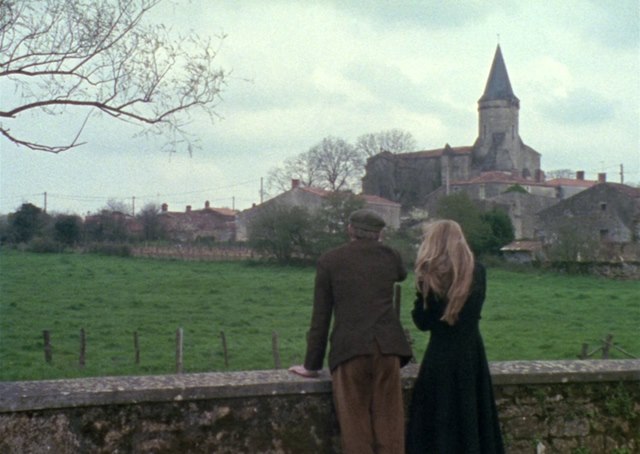
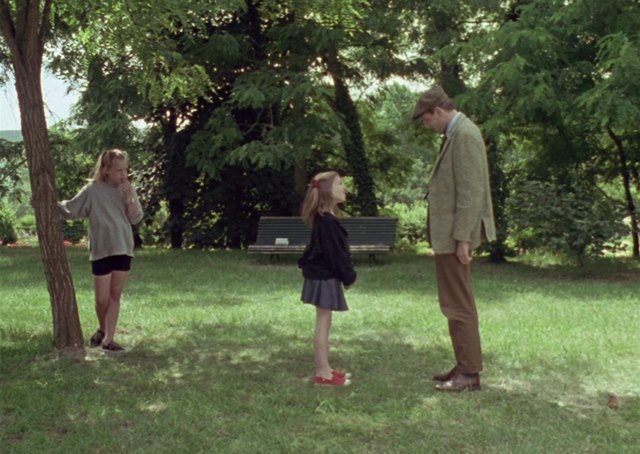
Julien Dechaumes is the mayor of a small French town and he’s worried about its prospects for the future. Thanks to some connections in Paris, he’s able to afford the town the opportunity of a media library, or mediatheque. He envisions a place where the inhabitants of this isolated town can congregate, read books, watch movies, and listen to music. He sees this library as a potential cultural landmark, one which will eventually pull people from the city to the country and maintain the population which is slowly descending. The plan seems ideal, but there’s one thing standing in his way: Marc Rossignol, a school teacher who values the landscape over structures.

2

The setup here seems sort of basic and unimpressive, but Rohmer throws in several ingredients that make the film not resemble a simplistic underdog activist against the modern, unappreciative politician. For one thing, Julien, by conventional narrative expectations, should have more say in the progress of the small town. He was born there and still lives there, in contrast to Marc, a city person who relocated to the country because he valued its idyllic beauty. In a more conventional script, the backgrounds would be flipped, Marc would be the faithful native and Julien would be the city person with no understanding of the landscape’s importance. In Rohmer’s world, these conflicts of the self serve as a reminder that the binary is hard to uphold when there’s contradictions on both sides. To be more clear, neither Julien nor Marc are given a vote of confidence from Rohmer. Instead, he’s more intrigued by the implications of what the two wrestle over.

3

Rohmer has examined the differences between spaces before. Full Moon in Paris sees Louise juggling her life in two apartments: one by herself in the middle of Paris and one with her boyfriend in the suburbs. The two serve as constructed differences in her own mind, even though they might be exaggerated. One represents her independence, the other perhaps a longing for something more stable. There’s no absolute in Rohmer’s investigation of spaces, because if one is to take any conclusion from his studies, its that their meaning comes from who inhabits them. Sure, there’s outside influences but most of their meaning comes from our own mental construction of them. This is an absolutely crucial point in The Tree, the Mayor and the Mediatheque because the crux of the script falls on the meanings Julien and Marc assign to a space. Marc, perhaps because he’s from the city wants the country to remain the same because it represents something opposing that city space. Julien, from the country, would rather see the evolution of this country space.

4

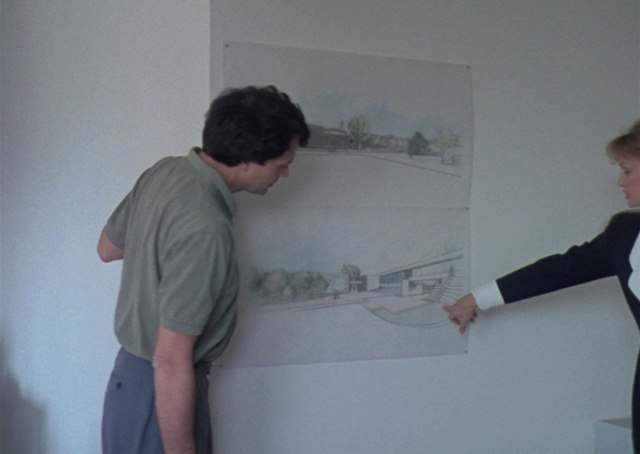
Early in the film, Julien and his lover, Berenice (the two are divorced with a child, but not separated) go into the city to discuss the media library with an architect. The design upsets Berenice because a parking lot is placed next to it. She’s irritated by the visuals of this, because it will seem inauthentic. She requests the parking lot be underground so as not to ruin the imagery of the building, which is designed to fit in with the rest of the town’s architecture. In other words, the media library will not be a successful imitation if it doesn’t hide something like cars. Berenice is also a city person and like Marc she doesn’t want a mental construction of what represents “the country” to be compromised by progress that would actually help it. The two are a perfect match, seemingly defending the integrity of the small town and taking on the position that they think all residents should have. They think this because it seems the most conscious of preserving its essence.

5

A small town like the one in the film would be “inauthentic” with a shopping mall. Or better yet, it would be tacky because of its falseness. Modern shopping malls came from somewhere, though, the arcades of Paris were once “sacred” land that transformed into a cityspace. Marc actually stumbles on the issue of his authenticity argument: “In ten years, the country will be the city.” Does the age of a setting lend its cred to authenticity? Seemingly yes, or do we forget that small, suburban shopping districts were all modeled after Madison Avenue, which isn’t any more or less authentic itself. It seems like a pessimistic point to make, but it is actually just one that demystifies reality: nothing is really authentic and there’s no deep “essence” to life. Everything is influenced, indirectly or not, by something. This is where the film comes back together with the rest of Rohmer’s work. His relationship films all comment on gender, the expression of which (especially in heterosexual relationships) is not always deep within our souls, but a product of our surroundings.

6