Angst vor der Angst (1975)

16 08 2010

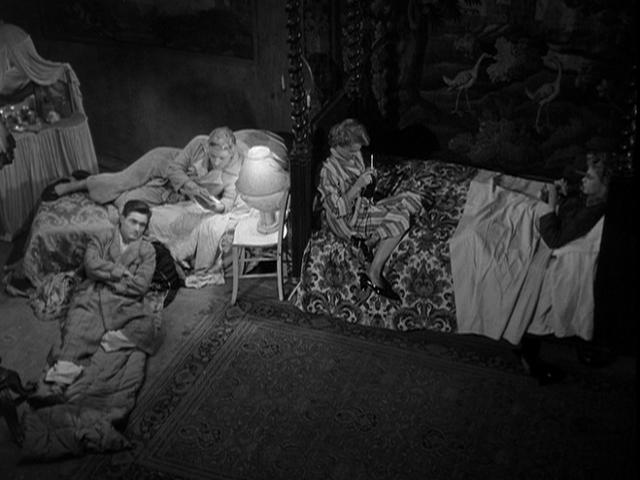
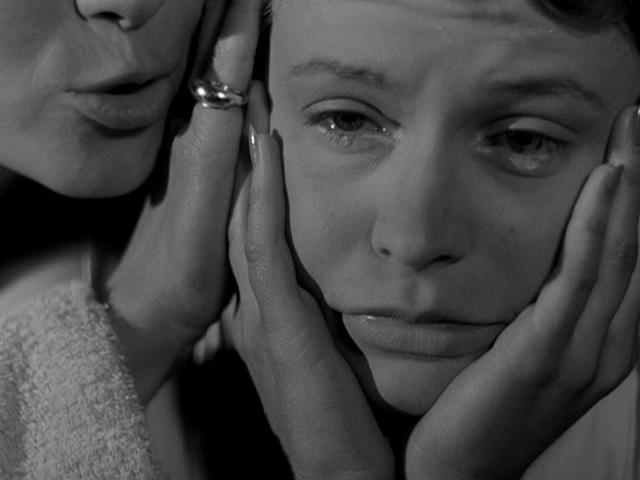
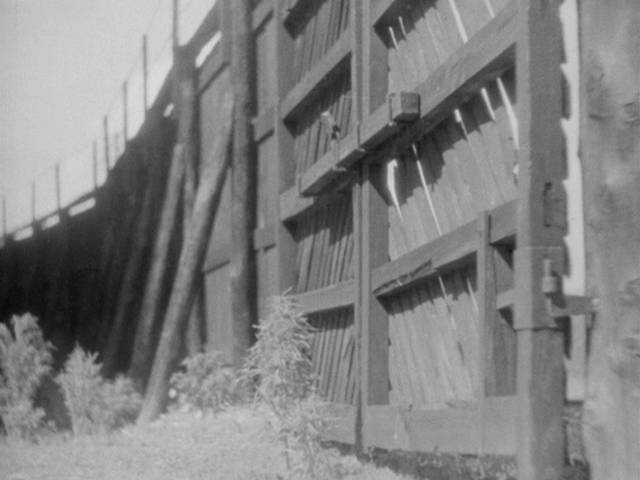
When you make as many movies as Rainer Werner Fassbinder did, you’re going to have a few misses. I think this effort registers as such. It’s not offensively bad or anything (I don’t think Fassbinder was capable of producing a film of such a quality) but it is a far cry from his most emotionally mature and technically advanced works – some of which actually came before this film. Still, this is a nice little film that was probably a lot better than anything else that was made for German television in 1975. It’s melodramatic and over the top in the most painfully obvious way, but it’s almost sort of endearing.
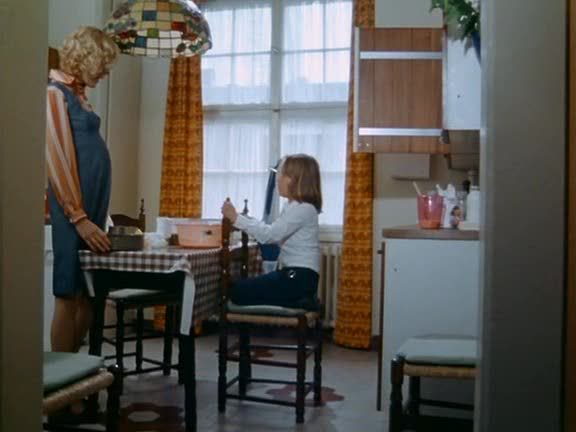
Going off of those descriptions, there is an extremely evident theatrical tilt to the film. In fact, the film is at it’s very best when it is extremely dry. The opening is really unassuming and  perhaps, “unexciting” but that’s what makes the ridiculous events that unfold a bit more bearable. The opening implies a very boring and conventional family story but it so sharply turns into something crazy and silly that I have to give the film some cred in the transgressive category. It’s not really bizarre or anything, but the film turns from a soap opera into a Twilight Zone episode so quickly that the audience never really gets a chance to “fall under the film’s spell” or something to that effect.
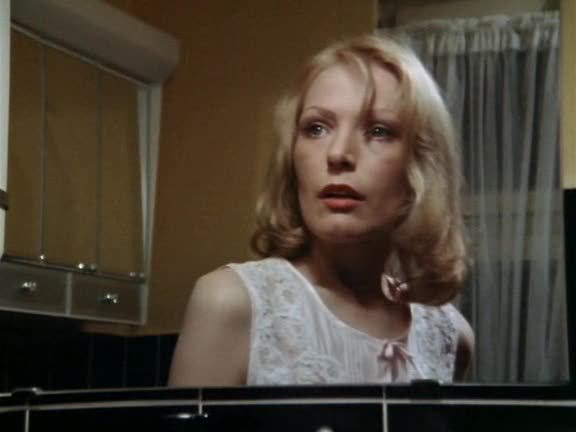
Obviously, this is a movie built almost entirely around events, and the people are no more than chess pieces. As mention before, though, it’s when Fassbinder takes pride in the placement of his pieces that the film becomes something interesting. The “ripple effect” thing may have seemed just bad in 1975, but now it seems bad and hokey – something that would be too cumbersome for even a student film. It’s almost embarrassing to watch here but if you’re fond of Fassbinder like I am, all of his movies are automatically interesting in the sense that they all contribute to a different “phase” in his career. He went from minimal, Brecht inspired stuff to dry noirs to naturalistic home dramas to visually striking melodrama to visually boring melodrama and operated everything in between. In other words, he’s the Howard Hawks that Germany never had.


Berlin Express (1948)

4 08 2010

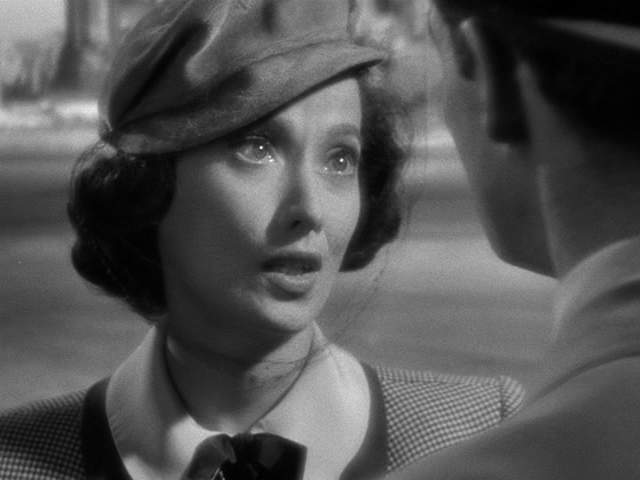
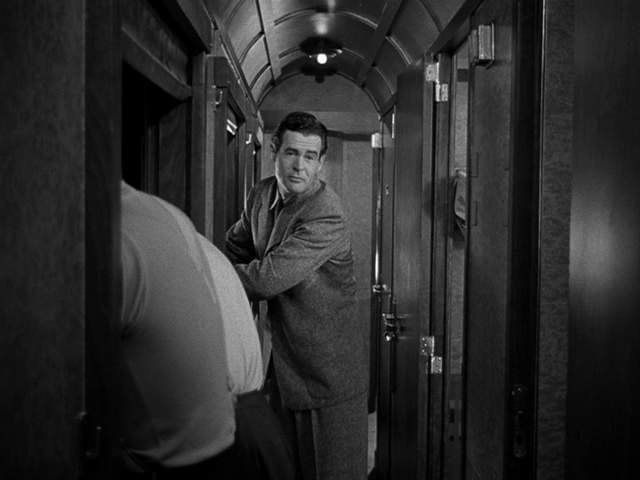
There’s a few redeeming qualities here, perhaps most obvious is Tourneur’s ability to create beautiful images out of what would otherwise be extremely mundane. That’s sort of a good way to describe the movie as a whole, too. If it wasn’t for Tourneur, the cinematography of Lucien Ballard (who did Mikey and Nicky!) and Robert Ryan’s presence, this would be pretty much unwatchable. Sure, there’s some nice documentary-esque footage of war-torn Germany and yes, Tourneur finds a perfect balance between that and his most stylized compositions. The problem here, though, is that the story is so run of the mill and tacky.

To begin, there is an extremely annoying voiceover which serves as a sort of news reel narrator, a la Anthony Mann’s (better) T-Men from the previous year. This isn’t really a bad idea on paper, but the execution is so damn awkward. We see the narration continue after multiple cuts and shots of Robert Ryan looking in the distance. Third person voiceovers are almost always terrible, but this one has to be the least graceful one I’ve seen in a long, long time. It really shows the movie’s potential “B” status.

Again, I think Tourneur should get a lot of credit for making the film as watchable as it is. The Berlin footage is astonishing, and immediately reminds one of Rossellini’s Germany Year Zero. The fact of the matter is, I don’t think many other Hollywood-based directors would have done this, even though in this case, the quality of the script doesn’t really warrant such dedication. The film remains a curiosity, though, if only for the footage of Frankfurt-am-Main and the IG Farben building. I can’t really recommend this to anyone, unless they are interested in Tourneur (as I am) but there’s still enough things here to make the movie interesting, which should count for something.


Nihon shunka-ko (1967)

4 08 2010

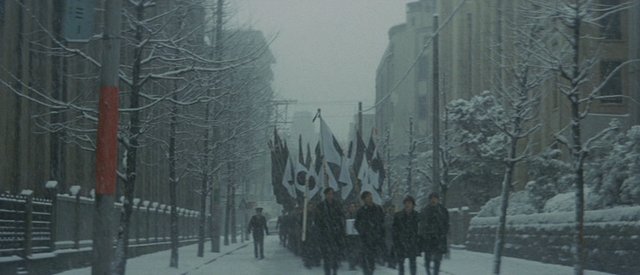
This actually starts out as being a much more gentle film for Oshima. Sure, that lasts all of 15 minutes before we get into death, rape, sex, and politics but even after that, he does seem to have a more matured vision and general approach to things. It might be the static, precise compositions, or the fact that the film is sort of a musical (at least in Oshima’s world) but overall, it doesn’t feel as overtly dramatic as his earlier stuff. I think maybe movies like Cruel Story of Youth and The Sun’s Burial are nothing more than childish “rebel” films that draw from Godard. I suppose it’s sort of fitting, then, that at around the same time Godard started finding his more unique vision, Oshima did the same.

The story begins rather innocently. Four friends convene outside Tokyo University to discuss how they did on a college entrance exam. They act like teenage boys – they poke fun at one another and discuss the attractive female who was in the same classroom. It seems like a very frivolous, yet poignant view of adolescence, but in true Oshima fashion, things take a sour turn. To give him credit, they do so rather slowly. One minute the four protagonists are drinking with their teacher, the next minute (uh, not literally) they’re fantasizing about raping women.

The entire film is sort of a fantasy, in which one can’t help but question the actuality of every scene. They characters describe sequences, then we see them happen, but Oshima’s tight editing melds the entire experience into one strain. I’ll confess: when the film finally becomes extremely Oshima-esque I sort of rolled my eyes, but the fact of the matter is, Oshima’s technical skill can overcome some of the more violent and tragic elements of his stories. In his defense, he treats men and women with the same sort of cynicism, but through some sort of paradox, makes him care about his characters.

Sure, there’s a lot of “men are such pigs” stuff, but the fact of the matter is there is no one in this movie that fits the mold of the public normal. The four boys are extremely messed up in the head, and the fact that some women don’t immediately run away from them is enough proof that they are similarly messed up. It sounds a bit reductive on my part to just classify everyone here as “crazy” but I think Oshima had the same thing in mind for this, and all of his movies. The fact that he consistently drew his attention to such outcast doesn’t mean he disdained them, but rather he was fascinated by them.


Les enfants terribles (1950)

2 08 2010

I might be in the minority here, but I think I actually prefer Melville’s earlier work to his later and more identifiable crime dramas. There’s an odd minimalistic artiness to this film and his previous effort, Le Silence De La Mer. Both films are adaptations, which seems to perfectly fit this kind of style. There’s a negative connotation with calling films “literary” but I think it’s a apt description for these two films. Sure, they’re a bit heavy at times and probably too dry, but I think they’re a lot memorable than Melville’s looser, genre-driven works.

I suppose Jacques Cocteau deserves a lot of credit here since it is his trademark that is branded all over the film. Melville just seems to be delivering his interpretation of Cocteau’s style. There’s little, if any, instances of Melville’s crime/noir stuff present here. Sure, the lighting is quite expressive but it seems to reinforce the whole theatrical chamber drama element rather than being even “noir-esque.” The ever-present voiceover and highly stylized angles certainly doesn’t make one think of Un Flic. Again, it’s an experience that feels so literary that it works. Sure, it’s sort of stilted and dramatized too much for my taste, but it works perfectly considering the subject matter.

The story is prime time arthouse fodder – dealing with, but not limited to incest, heartbreak, jealousy, violence, and anything in-between. Elisabeth and Paul are siblings who live alone in a cramped room. While most of their relationship seems to be built on petty feuds and brutal arguments, they manage to display an odd closeness when they’re not fighting. Obviously, something’s wrong here. I think there’s a lot of room for  psychoanalysis in the interaction of the protagonists, but personally, it seems sort of black and white to me. Elisabeth loves Paul, Paul is drawn to her, but wants to escape. The most fascinating part of the film isn’t in their potential romance, but in what Elisabeth does to cement her obsession to the audience.

There’s a little bit of Fassbinder (the theatrical era one) here. Perhaps it is short-sighted to call every highly stylized drama with a strong female lead as being such, but Cocteau (and Melville) float around and ponder on human sexuality in a manner that seems to anticipate Fassbinder’s most personal (and thus “most indulgent”) work. It’s not like this a nuanced portrait of siblings, it’s not meant to be. It’s a completely unique (in its literariness) experience that has a poetic personality anticipating some of the most important directors of the 60s and 70s. Though it would be foolish to call this minimalistic, since it’s not, it still seems to have it’s own type of Bressonian poetry.


The Only Son (1936)

29 07 2010

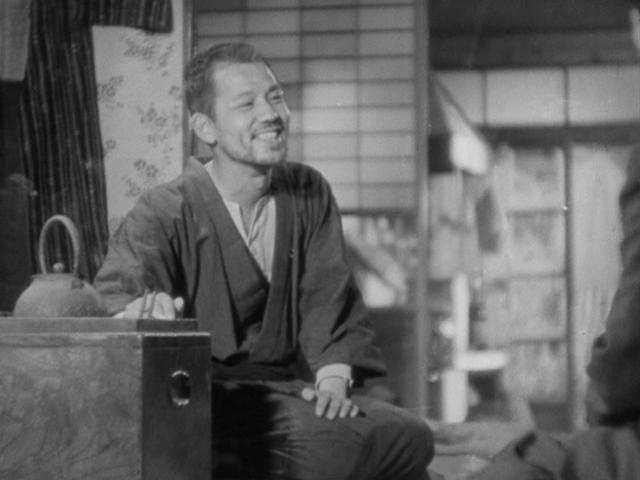
It’s been a reoccuring theme in my most recent entries but yes, I have sort of been “out of the loop” with movies throughout this entire summer. I can’t blame it on being busy as much as being a terrible manager of time. As I’ve mentioned many times on this site, Yasujiro Ozu is my favorite filmmaker of all-time and I don’t see this changing anytime soon. With that said, I can’t even remember when I last watched a film of his. I used to rewatch at least one of his films every week or so, but again, this summer has proved to be one of my least productive periods of movie-watching. I mention this not as a means of getting everyone caught up with my personal life, but to explain my reaction to this film.

No, I didn’t all of sudden find Ozu’s work less fascinating or enjoyable, but I think this film in particular is a little bit more “slow-burning” than the others. Personally, I don’t find any of his films slow (a seemingly dubious comment for casual fans) but this one seems to linger on a little longer, not in a negative way. It’s never tedious or stretched out or anything like that, but it seems to be a bit more poetic and tragic than Ozu’s most Ozu-esque work. The shots seem a little longer, especially in the beginning. Again, I think this might be a result of my inadvertent neglect for Ozu as of late.

For what it’s worth (and it’s not much, for my money) the back of the Criterion DVD does state this film as being “uncommonly poignant” which seems silly since I can’t think of a director whose work is more consistently bittersweet than that of Ozu’s. I think the intention behind the statement is that it’s a bit more poetic or somber than the par for usual. It’s an impossible task to tip-toe around all the buzzwords that people use to describe Ozu (such as “meditative” or “reflective” – I am as guilty of this as anyone) but this effort in particular seems to bit more melancholy.

This is all positive stuff, of course, because after all, I am an Ozu fan for such reasons, but he does seem to be working out the kinks here a little. Maybe some grace should be given on the account that this is his first talking film, but that’s not really fair. Ozu, at least using his films as evidence, probably had one of the easiest transitions from silent to talking pictures. He really didn’t miss a beat from An Inn in Tokyo, his latest surviving silent film to this, his very first talking film. He does give a nod to the monumental transition and it finally making way in Japan in a cute little scene where the protagonist takes his mother to the theater.

All this talk about technical has kind of outweighed the actual extent of the relationships in my head. But make no mistake, this is top-tier Ozu. I was a little thrown off by the fact that the mother had been so distant from her son for such an extended period of time. Everything sort of comes together, though — in fact in a literal way for this family.

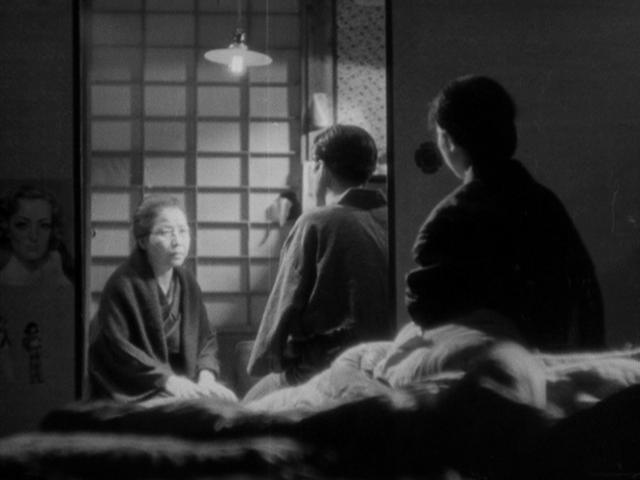
There is one extremely noteworthy scene here when the protagonist and his mother get into an argument. It’s one of the few times I can think of an actual argument breaking out in his universe. This scene is so fantastic because the conversation so casually escalates into something dramatic (but not over the top) and it’s not until Ozu cuts to a shot with the camera facing the back of the protagonist’s wife does it hit us that this is actually an argument.