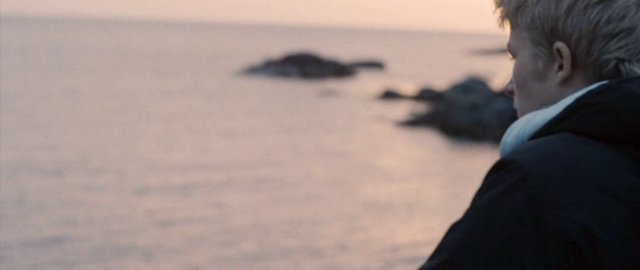
Flirt (1995)

15 11 2010

One story – told three times with only the slightest of differences. This is Hartley at his most experimental, his most deadpan, his most philosophical, but still extremely playful. Perhaps the Godard comparison is a little overused, but it fits all too well here. His characters border on being mouthpieces, which is usually a problem for me, but considering the stilted, deadpan delivery it only enhances the absurdity touched upon throughout all of the Hartley films I’ve seen. His performers never even attempt realism, instead they deliver each line as though they are reading the script for the first. For some reason, this is kind of amusing to me, which is odd considering it might be less acceptable when it’s in a film written by Alain Robbe-Grillet.

To Hartley’s credit, he does seem to be conscious of this type of humor. His wit is dry, but never condescending. In some ways, this is his most accessible work. At the very least, the first segment is a great introduction. It features a slew of his reoccurring performers (Martin Donovan, Parker Posey, Bill Sage) whose star power can maybe push even the least patient film watcher through the film’s first third. Additionally, this is the content at it’s most fresh state. It might be cheating to say since the point of the film is to observe the difference made between the three stories, but it definitely feels best when heard for the first time.

The slight differences found in the two segments that follows are meant to be minor shifts from the dialogue, but for me, the most interesting element comes from the difference in composition to the related lines. For example, Bill Sage’s description of what he’s thinking about in the hospital is read over a sensualist close-up of a nurse’s face, meanwhile Dwight Ewell’s similar speech is made over an extended panning shot. As it is, Ewell’s speech seems to lack the tension of Sage’s but maybe visuals aren’t the only justification of this, maybe it’s the element of repetition.
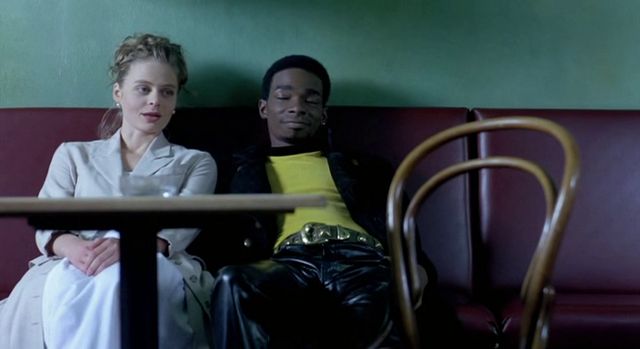
The third time around, the film sort of loses its momentum. This might be a fair assessment since it is essentially the third retelling of the story within an hour, but it definitely is the least memorable of the three. Maybe it wouldn’t be a terrible idea to watch it separately, but as someone who buys into Hartley’s intended experiment (albeit for only two segments) I have to feel a little disappointed. If there’s any saving grace in the Tokyo section it’s that the great music and beautiful visuals of the previous two segments remain in tact. Maybe that’s the whole theory and Hartley has outsmarted us all, or something.



Hellzapoppin’ (1941)

15 11 2010

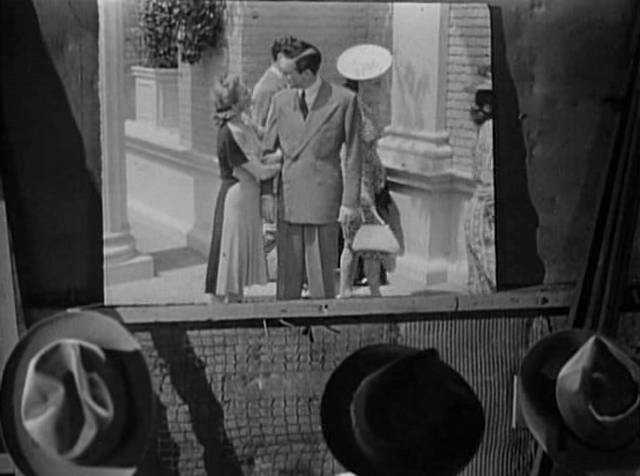
I watched this less than week ago. Upon my initial viewing, I was more than confident that it was one of the greatest things I had ever seen. Now that a couple of days have passed, I’m sort of seeing that’s not exactly true. It’s still an amazing piece of art, one whose influence is immeasurable to Mystery Science Theater 3000. It’s the type of picture that is so unique and bizarre, that it’s often a wonder that it was able to be made in a time when Hollywood was focusing on making either pro-war pictures that justified the country’s involvement or films that intended to make audiences forget about the war.

Hellzapoppin’ arguably falls into the latter category. After all, it is a comedy and carries an extremely playful tone of self-awareness for its entire running time, but that’s the sort of thing that elevates it from being a piece of mere entertainment. This is the definitive “movie about movies” from Hollywood, if only because it is constantly cross cutting from the movie to the movie with the movie, and the characters from both seem to be able to communicate with their opposing story. It’s textbook self-reflexive film theory. It seems frivolous, but the film is immensely more intelligent that just simple entertainment.

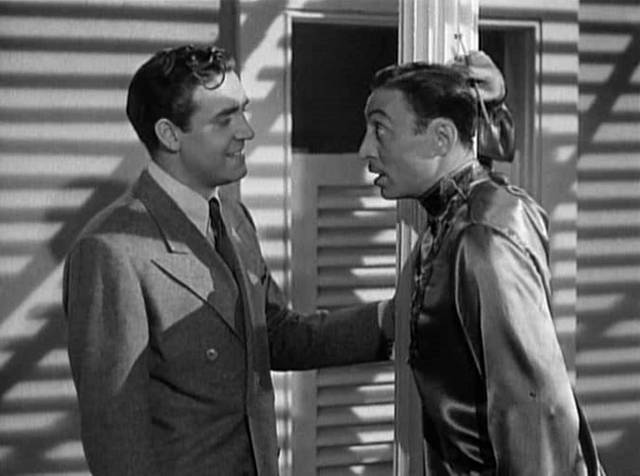
The story itself was birthed from the original Broadway production of the same name. It was enormously successful, thanks in large part to the charisma of the emcees Chic Johnson and Ole Oleson, who act as the self-conscious narrators in the film version. Much like the stage production, the film incorporates a satirical tone of self-awareness. The most notable example in the film being the skewing of Citizen Kane, which had been released only earlier in the year. It’s a perfect embodiment of Potter (and more importantly Johnson and Oleson’s) motive, that is to relate the audience to the form they’re already experiencing and commentate on it at the same time.

Speaking of commentary, there’s an especially groundbreaking sequence in which Ole, Chick, and the film’s producer watch dailies while providing their own commentary, dialogue to mask the actual audio from the “film within the film.” Maybe I’m giving the film too much credit but the way in which it (perhaps) unintentionally references the practice of benshi narration in Japan and then forms it into comedy is something that bears a remarkable similarity to the entire premise of Mystery Science Theater 3000. It’s a less polished example, sure, but the foundation is certainly there.

Hellzapoppin’ is a movie that is impossible to describe if only because it is layered in so many levels of filmness that opening them up in words seems futile. Perhaps the best description I can use is Sherlock Jr. but on a broader level. It teases film and filmmaking as much as it teases the audience and film-watching. It’s a complicated process and even though the film might not have the longevity I would like it to, it is still a remarkable experiment, and an insanely entertaining one at that.


Underworld (1927) and The Last Command (1928)

4 11 2010

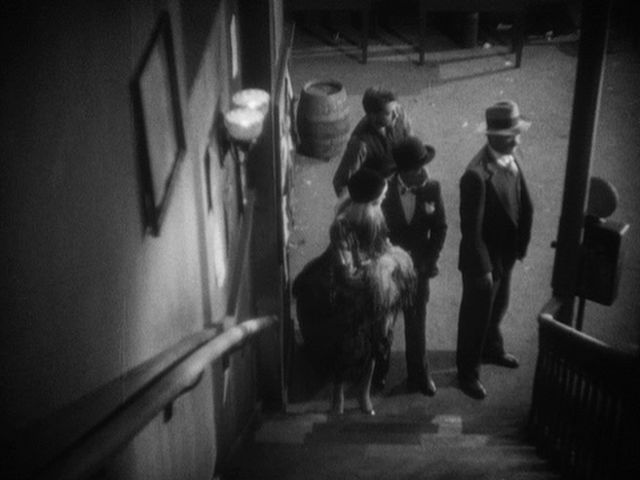
These are the two earliest von Sternberg films I’ve seen (the only other silent of his I’ve seen is The Docks of New York, my personal favorite) and with that in mind, they both represent very interesting progressions in the filmmaker’s career. The first, Underworld is more of an impressive formal exercise than anything else, but it does deserve some credit for anticipating one of the most popular genres in all of Hollywood, even though it was most certainly not the first gangster movie. As it is, it provides very few conventions for the gangster films of the 1930s, but that’s part of its charm. The latter, though, is much closer to being a full-on masterpiece. Emil Jannings’ performance is exaggerated little (both on screen and in film history, calling it “subtle” is a bit too much) but there’s something so painfully heartbreaking and that’s before the film even becomes a redemption story for and against its protagonist.

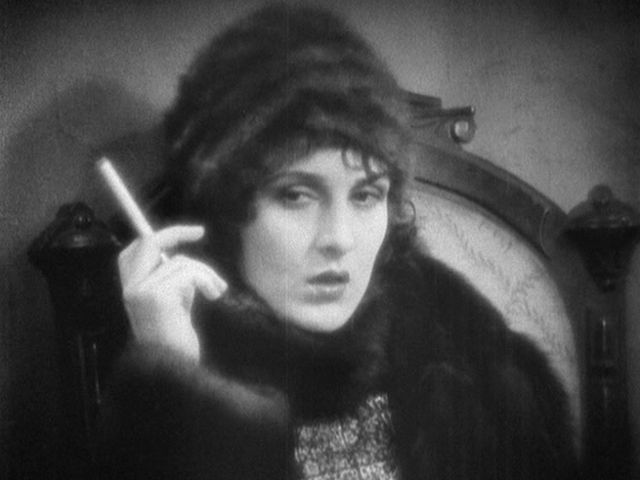
In Underworld, George Bancroft plays “Bull” Weed,  an extremely successful gangster, who likens himself to Robin Hood. “No one helps me, I help them” he explains when Rolls Royce (Clive Brook) offers some sort of repayment for all the help he has received from Weed. Weed has taken Royce from being the janitor of the local bar to something, at least superficially, much more respectable. Royce, however, is something of a self-loathing individual, who tends to think in a more philosophical way than anyone else in the film. Of course, Royce becomes infatuated with Weed’s sidekick female, Feathers.

If it’s not obvious by now, the underworld depicted here is one that is indeed gritty and realistic, but like Docks of New York later, there is a romanticism that underscores all the poverty and shady dealings taking place. It might be simply be the visual splendor of von Sternberg’s world, but there’s definitely a sort of appreciation for the unsavory reality being presented. This might be the single element that most resembles the gangster films of the 1930s. Unlike many of said films, this doesn’t really have a central premise – a big problem or heist or something. It just sort of flows around with Weed falling further into a depression and Royce and Feathers falling further in love. It’s odd, we feel for all three. There’s no real “bad guy” (except for the faceless police and Buck Mulligan character) to help improve the tension. It’s more of just a sad movie that happens to have gangsters.

If Underworld is setting up the foundations of von Sternberg’s stylistic tendencies and emotional motifs, then The Last Command is close to being a perfect second model. We’re thrown into the contemporary Hollywood scene and we follow a hopeless extra, who, as we quickly learn, was a affluent Tsarist officer in Russia barely a decade earlier. Even with the political weight that immediately arises from depicting pre-Revolution Russia, von Sternberg avoids all the traps and steers his film away from providing a ideological statement that is specific to the time. Sergeus Alexander  fully embraces Tsarist Russia, but he is not a bad guy. In fact, there is an immediate sadness when we realize his current occupation is one that is so pathetic it seems to dissolve the past.

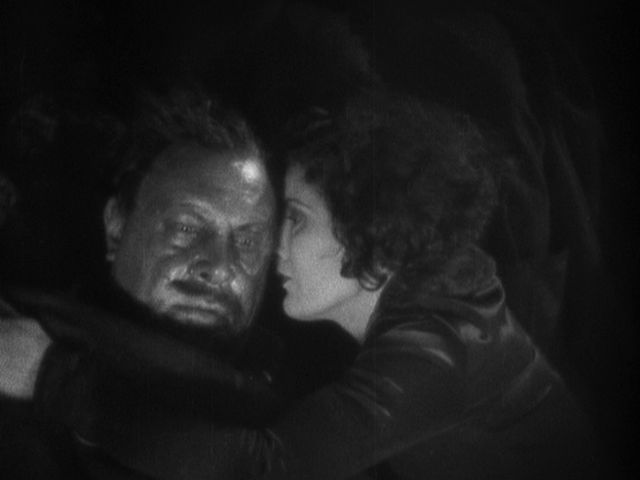
Alexander captures revolutionary Leo Andreyev, while keeping his female accomplice, Natacha for his own personal enjoyment. Natacha’s intention is to kill Alexander, but she gets soft when she sees his loyalty and dedication to the country. They remain together, but are ultimately torn apart following a violent protest, which transforms into a full scale riot. All of this occurs in a flashback that is triggered towards the very beginning as Alexander waits for another job as an extra. It’s difficult to explain, but there is something so troubling and hell, just goddamn sad about the way von Sternberg juggles Alexander’s chaotic, exciting, and meaningful past with his painfully mundane present.


Adding insult to injury, the film in question’s director is, of course, Leo Andreyev. Who, in a picture perfect set up for redemption, decides to cast Alexander as a general in his war film. I don’t want to say more about what happens from here, but I’ll say that the film ultimately manages to collide all the feelings it was built on into one truly heartbreaking finale. The Docks of New York probably remains my favorite, if only for its visual excellence, but this is a worthy runner-up. Calling a movie “emotionally unique” seems really vague, but this is the sort of experience that makes film-viewing worthwhile. It’s a different form of resonance and it is more than enough to validate Josef von Sternberg’s excellence. His first true masterpiece, and from what I’ve seen, his most Sternberg-ian work.


Kuroneko (1968)

26 10 2010

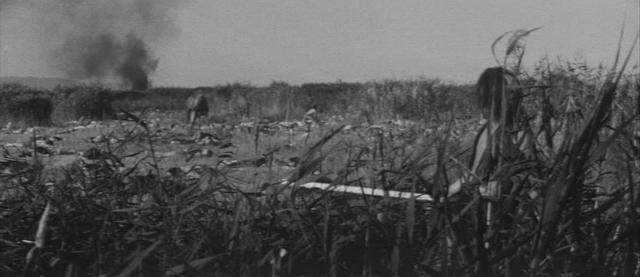
Pretty standard Shindo fair here, in so much that he is able to show off his technical chops while also telling a pretty mundane story. Don’t get me wrong, ghost cats seem like they could be interesting (I guess?) but the mythology and folklore elements are all sort of lost on me due to the silly (if not simplistic) morality complex and just the fact that Shindo just seems to tell the same story over and over again. It would be reductive to call this a rehash of Onibaba but the similarities are staggering. Sure, that’s what autuerism is, but in this case, Shindo seems to go through the motions and just reiterate the visual motifs he likes.

I’ll give Shindo some credit because he really does manage to make all his movies look really good. He’s not the best of his peers, not by a long shot but he definitely holds his own ground. His films lack the extreme sensuality in say, a Yoshishige Yoshida film, as well as the jolting editing of Hiroshi Teshigahara, who is probably the single filmmaker most like him. Both seem to embrace content that should be below them, in all honesty. Teshigahara has his sub-Twilight Zone “surrealism” and Shindo has his folklore horror stories. I really don’t particularly care for either. In Teshigahara’s case, the form sort of overwhelms the content. He’s a bit more creative with the camera, and a lot less concerned with presenting a linear narrative.

It’s kind of fitting then, I guess, that this film is at its best when Shindo decides to focus less on exposition or any dialogue for that matter, and tries to make the film one extended montage. For at least 15 minutes or so, he manages to collide a series of images which repeat the routine of the daughter-in-law, played byKiwako Taichi. We see her confront samurais, lead them through a forrest, and then seduce them once they arrive at her place. It’s a bit repetitive and probably exhausting for the viewer looking for some “J horror” but represents Shindo at his sharpest. He manages to repeat this exercise but still produce new images. Sure, from a pure narrative standpoint, it’s easy to “get” but it is one of the few times he is not chiefly concerned with progressing the story. It’s the film’s most self-consciously artistic sequence, but it is also one of its best.

I’m not saying that the content here is completely boring, in fact, towards the end it actually becomes a little poignant. The encounters the hero has with the ghost version of his wife is heartbreaking despite the fact that it shouldn’t be. It’s weird, I get the impression that Shindo wanted to tell a story about losing loved ones and based on sequences like the one I mentioned, he would have nailed it. Unfortunately, there’s an excess of the folklore stuff, which really just reinforces the silliest and most negative stereotypes of the genre. The whole bit at the end with the giant cat paw is just ridiculous. It’s really a shame too since it comes off the heels of by far the most emotionally resonant stretch in the entire movie. Oh well, some good stuff here.


Sebbe (2010)

14 10 2010

Well, where the hell did this come from? Just when I think the disgruntled youth in high school movie had long worn out its welcome, something like this comes along and sort of blind sides you into a new experience. Perhaps I’m embellishing it a little bit here, but this is definitely how one should execute such a movie. As far as I’m concerned, this, along with Paranoid Park represent the (faux) genre at it’s highest piece both in terms of form (though Van Sant’s film is definitely superior in that category) and intimacy.

The plot synopsis I read before hand described the story as that of a trouble young boy who gets beat by his mom. While this is certainly true, it is a pretty false representation of what the film is presenting. The film’s titular character is abused by his mother in a few instances, but it’s not some parental figure devoid of character, Sebbe’s mom is not a villain in any stretch. She has her unsavory traits to say the least, but she still manages to display something that resembles an affection for her son. In a weird way, this is almost like 35 Shots of Rum at least in the fact that it is one of the few modern films to actually attempt to look at the relationship of a parent and their child and to do so in a way that isn’t just about forwarding the narrative.

Truth be told, there’s nothing remarkable about the narrative itself. Sebbe is a resourceful boy, he spends his time collecting leftover electronics which he uses in the help of building various projects. He’s quiet and bullied at school. Sound familiar? I’m not riding the film off for being unoriginal just in it’s content. Even if it is unoriginal, it is concerning an issue that pretty much everyone is vulnerable at – the age of high school. Sure, perhaps not to the extreme it is depicted here, but it’s the sort of pathos that is difficult to just feel indifferent towards.

Speaking of being extreme, this does hold something of a tonal relationship with Lilya 4-ever in the sense that it’s about being young and it’s Swedish. Okay, there’s probably more but the comparison is vital in making my point. In that film, everything that happens is essentially bad, it’s a tragic film. I’m not saying it isn’t a moving story, but it’s the one that seems to have been staged with characters that are bordering on being interesting characters and just being chess pieces for the story.

This is pretty groundbreaking for myself seeing as how Lilya 4-ever use to be one of my favorite movies. I still like it, but I think the experience here manages to capture the same tragic tone, but apply it to something with less severe consequences. There is one extremely crucial scene towards the end that skirts the line of going into the over-the-top sadness of someone like Lars Von Trier, but it dodges all the dramatized “tragic” bullshit and ultimately becomes a story that is equally moving but manages to keep the audience grounded in a reality that is closer to them. Thus, the pain of the protagonist is all the more resonant.