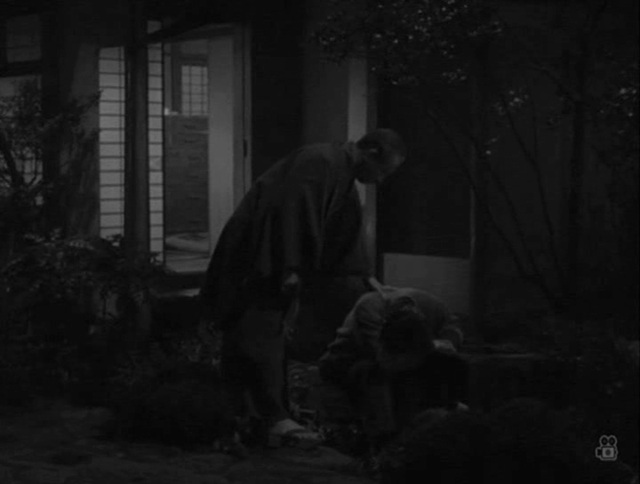
Swamp Water (1941)

22 07 2012

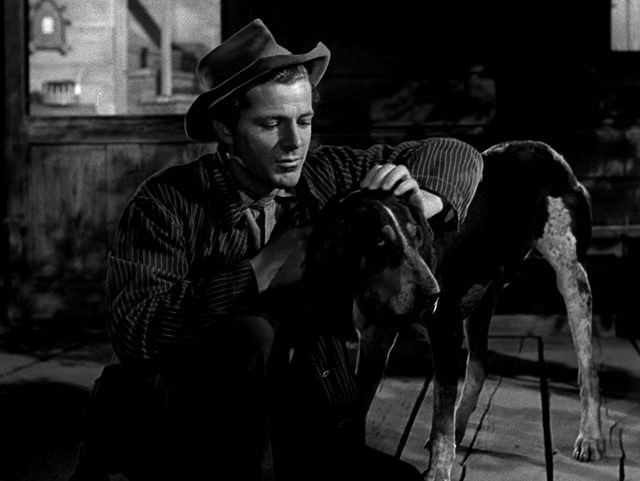
Jean Renoir’s first American production seems almost like a self-conscious attempt at a B-movie. I guess, it probably technically is one but the film, shot on location in Georgia with a group of actors who were nothing more than character performers at the time, feels like the perfect oddity. The photography itself, credited to Peverell Marley, feels bizarre enough when it’s being populated by actors like Ward Bond and Dana Andrews. The film’s closest companion would be Ford’s subversive and understandably rejected Tobacco Road but even that film only has hints of natural photography, where most of it’s charm comes from just the complete chaos. Renoir might have been too refined to make a truly lowbrow masterpiece, but the film does build upon his most famous cinematic landmarks, while still anticipating an entirely new direction.

Ben (Dana Andrews) happens upon a fugitive, played by Walter Brennan while hunting in the swamp. The two strike up something of a friendship, with the expectation that Ben will go back into town and provide for the fugitive. He falls in love with the fugitive’s daughter, Julie, while in the middle of an already stable relationship. The motivation becomes clearer for Ben: he wants to get the fugitive to come back into the town that ostracized him and intended to leave him for dead. While investigating the crime, it becomes more and more evident that the fugitive is innocent and that the town itself is hiding plenty of secrets.
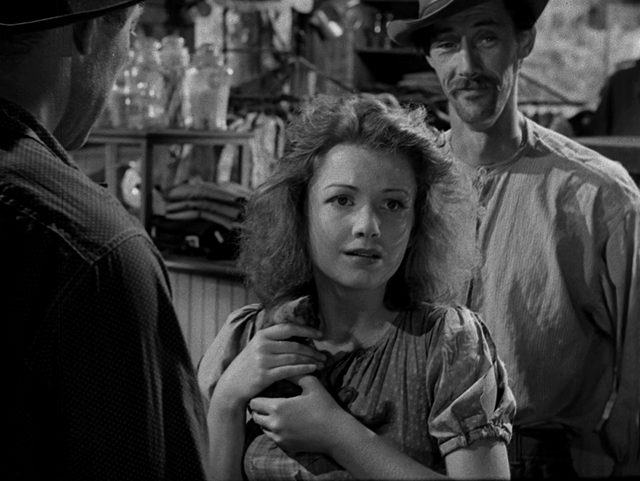
The script, based on a novel by Vereen Bell, is the work of Dudley Nichols, a true Hollywood veteran. The content seems unmistakably American coming from his pen. The story builds upon the mob mind set (anticipating The Ox-Bow Incident two years later, also with Dana Andrews) of a town condemning an almost iconic criminal. Ward Bond leads this group, in a predictable albeit still solid performance. His character is obviously drawn with a very thick brush but that characterization contributes to the aforementioned “B-movie charm.” There is disturbing sequence early on in which a group of kittens are playing around in the town bar. Bond offers to get rid of them for money and then suggests throwing them in a bag and throwing them in the river. The act is suggested, but never seen carried out to it’s violent conclusion.
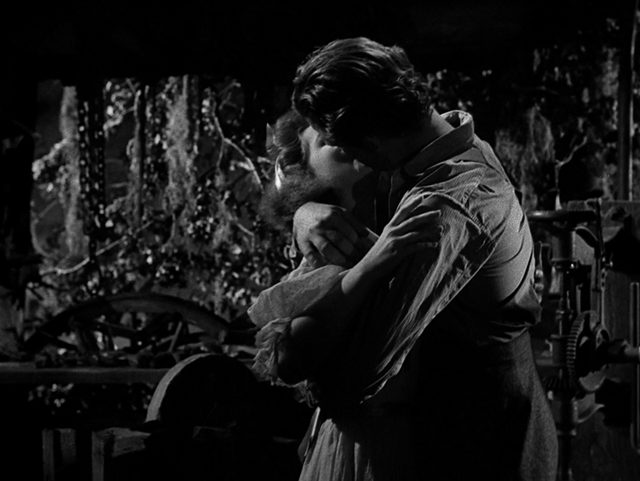
I suppose these little things seem just frustrating to some, since Hollywood’s treatment of even other human beings at this moment wasn’t exactly flattering, but it does contribute to this type of “backwoods” aesthetic, that I’ll again link with Tobacco Road. The character of Julie, Anne Baxter is one of her weirdest performances is compiled with the same feral / cave woman-like characteristics with Gene Tierney’s character in Ford’s film. The difference is that Baxter’s character becomes a Pygmalion construction for Dana Andrews. Meanwhile, Tierney’s performance in Tobacco Road is almost entirely peripheral. Her primitive nature is more of a set piece reinforcing the pathetic nature of the Lester family, while contributing to the odd vibes circling around that entire film.
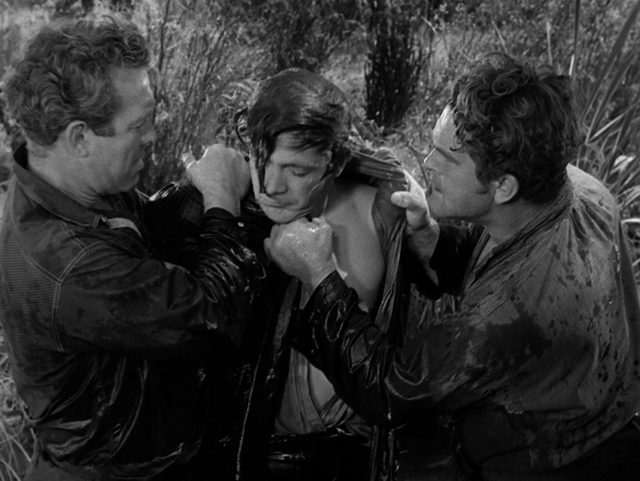
Renoir does best Ford in one very important regard, and that is the visual one. It would be a long time until Hollywood would see an on-location film shot with the grace and style of a studio picture. Renoir’s expressionist visuals anticipate The Night of the Hunter by almost twenty years, and this film has none of the tacky artifice that is (intentionally?) floating around that movie. It might really be the star here in what is already a pretty excellent film. Perhaps the film’s narrative construction is lacking but again, there is something weirdly fascinating about it’s incompleteness. Ben’s attraction to Julie seems so forced it might be intentionally written with little to no regard of their relationship. The movie is not really about that, it’s more about how Renoir can squeeze something so visually powerful out of something that is weirdly fascinating at best and just silly at worst. It’s a wonderful movie, but lacks the resonance of Renoir’s most celebrated work.



Open Five (2010)

20 07 2012

It wouldn’t surprise me if most of the people that read this roll their eyes throughout this entire review, but that’s kind of where American independent cinema is at the moment. The whole “mumblecore” movement might be on its last legs with Mark Duplass doing everything short of becoming a mainstream Hollywood celebrity and the movement’s poet, Aaron Katz moving further and further away from the elements that defined the genre. Kentucker Audley maintains these elements, almost definitely because of a lack of funds. With the introduction of the NoBudge website and a steady release of titles, he might be the most resourceful member of this group of filmmakers, whose connection seems loose at best now.

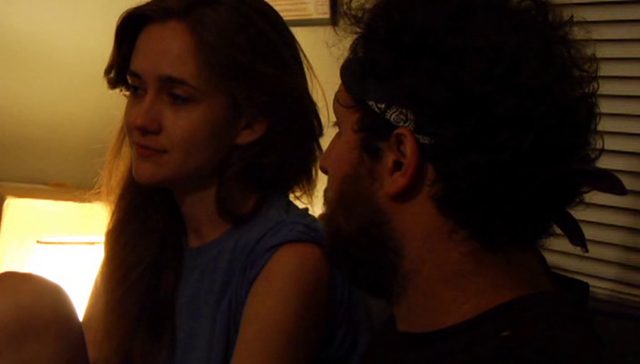
Open Five features plenty of relationships but the bulk of the film revolves around the one between Jake and Lucy. Their past is hinted at in the film’s intimate opening but never given a further explanation. It’s intentional, of course, because the mystery of the relationships in the film reinforces the fact that the film is more of a document, rather than a work of fiction. It helps that the filmmaker himself makes an appearance as a secondary character. Sure, the film’s fractured dialogue might feel a little calculated if one has seen more than two of these types of films, but the sentiment in the scenarios aren’t cheapened by the fact that maybe the dialogue was delivered with a forced sense of authenticity. I’m not saying the acting is too much, quite the opposite, it’s right where it should be but that level is one that will be pretty unremarkable to someone expecting a film, whether it be “arthouse” or not, to be either more involving with the audience or jarring enough that produces a stronger emotional response.

In his write-up of the film, Craig Keller mentions that the film “slows down onlookers’ attempts to count to ten. […] It’s like stopping at seven” and I’m not entirely sure what he’s referring to here, but it is a weirdly accurate description of both this and Team Picture. These films aren’t austere enough to gain a larger acceptance among the strictly art house crowd, and they’re obviously too fragile to be placed on the same shelf as Cassavetes, but the rhythms, from my perspective at least, seem way more in tune with modern human interaction. Perhaps it helps being in your twenties and understanding the culture of the characters, but the artifice of the performances seem to grow from something aesthetic. Under a different (read: more expensive) lens, Open Five might be the sort of film that an entire generation would gravitate towards.

This seems like a bit of an obvious observation but the DV potentially drains the energy of a film that is brimming with nervous anticipation and uncomfortable interactions. The film is easy as hell to relate to, but it might be subdued by the fact that it is so much in the low-budget mold. This is not exactly a criticism as it an observation. Audley is observant and amusing, touching upon little moments that are almost too perfectly real to be in a movie, but the simplicity might underwhelm many. Hell, it probably already has. Audley deserves the crown for producing the most uncomfortable setups of any of low-budget brethren. It sounds like the snobbiest proclamation but many of the things (and there are many) that will irk individuals and prevent them from enjoying this film are the very things that make it truly wonderful.

At only a little bit over an hour, Open Five is not perfect and it doesn’t really have the ending that is satisfying but at the risk of sounding stupid, it does capture something intimate and it does it perfectly. Many will find the conversations mundane and stupid, and they are right but there is something so on the ball about the film’s simulation. In fact, that might be the film’s biggest fault. It’s a little too perfect in it’s representation of the current generation of young people. It’s almost stuck in the same way Alex and Jake are stuck in their relationship. That’s corny as hell, but the film’s biggest strength might be its inability to provide any closure. It’s the weirdly specific sequences that save us from the mundane conversation that provide the most beauty. It’s complicated and even embarrassing, but it’s right. And something should be said for filmmakers who truly get it right.


Shi (2010)

6 03 2012

It takes approximately 10 seconds for one to be reminded that this is a Lee Chang-Dong movie. From the opening shot of a dead teenage girl floating in a river, Poetry is difficult to watch not because of the expectations of “arthouse” cinema. If anything, he makes some of the most accessible art films of the past ten years. The problem is that his work is extremely taxing, and this film is no exception. However, as opposed to his previous film, Secret Sunshine, this one is more of a slow-burner, perhaps a intentional reflection of the disease being depicted.

In nearly every review I’ve read of this film, someone points out how the film could easily become a melodramatic mess. The protagonist, Yang Mija is a 66 year old woman raising her grandson. He is predictably distant and cold to her, the way any teenager would be in a disjointed home. However, it is explained that the girl who killed herself was being repeatedly raped by Mija’s grandson and his group of friends. The fathers of these boys join together and make a plan to settle with the victim’s mother without involving the police. The plan requires a parental figure of each child to give a large sum of money, which Mija can’t afford.

There’s several other threads involved in the film, perhaps the biggest pitch for the film being that it deals with the development of Mija’s Alzheimer’s. Additionally, she joins a community poetry class, which inspires her to pen a poem, which becomes an essential part of the film’s finale. There’s also Mija’s maid job, which manifests poorly (in my opinion) in a scene where she acknowledges the lust of an immobile elderly man. The script doesn’t take any other wrong turns, though and if it did, it would feel comfortable in the hands of Yoon Jeong-hee, who deserves a great deal of credit for the film’s success. Her performance is understated as almost every critic will tell you, but more importantly, there is something ever heartbreaking about the way she conducts herself. It’s not a “poor old lady” routine necessarily, as her character refuses to accept the severity of her illness.

It seems reductive to categorize Lee’s work as “human drama” but admittedly, he doesn’t really attempt to try anything else. His style is competent, maybe even workman-like and it never calls much attention to itself. There’s signs of the Dardeenes, perhaps the best superficial comparison (both visually and in terms of narrative) but Lee’s work seems less disjointed, more willing to explain its context. I guess this all sounds like criticism, but it sets up the film’s finale kind of brilliantly. The character of Mija seemingly disappears. She leaves flowers and a poem for the professor of her poetry class, but she does not attend. As the professor reads the poem, the camera looks for her in her usual places but it never finds her. The camera returns to where it was at the film’s start.

There’s a lot of wonderful things about Poetry, it’s a fascinating film to watch because it requires the viewer to dedicate their attention to one character. If one doesn’t sympathize with Mija (for whatever case) it is probably not very interesting. It’s a film, above all else, about dealing with grief. Secret Sunshine is about dealing with grief as well, but in that film, the protagonist seems to be working against new obstacles constantly hindering her ability to live. Poetry is more of a constant upward struggle. It concludes with a moment of pure beauty, though. It does not validate the way the characters have conducted themselves, nor does it disown their struggles. There are no simplistic concepts like redemption to condone Mija’s decision regarding her grandson. Lee does not intend to provide answers or solutions, just reflect reality.


Days of 36 (1972)

29 02 2012

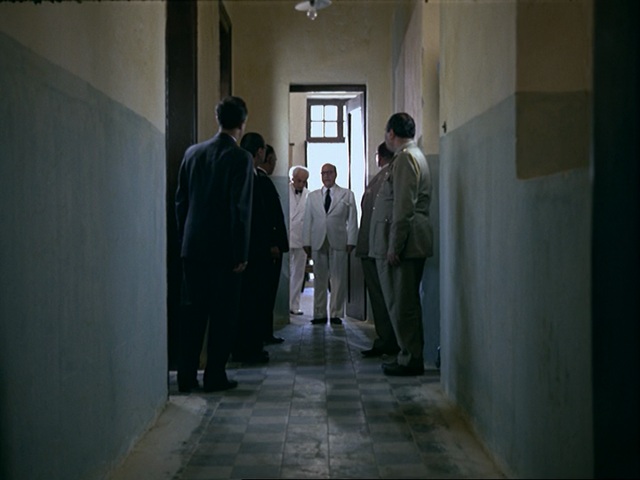
Many of the complaints an outsider might have about Angelopoulos seem applicable here. For what it’s worth, as much as I like him (and I do like him an awful lot) I was never one to completely buy into his aesthetic. Terms like “cold” and “distant” tend to become the first adjectives one forms in their head when watching one of Angelopoulos’s films. I’d argue that this isn’t the case for the work I’ve seen of his from the 1980s onward, but I might not be as vocal when defending this particular film, his second full-length feature and the earliest effort of his that I’ve seen.

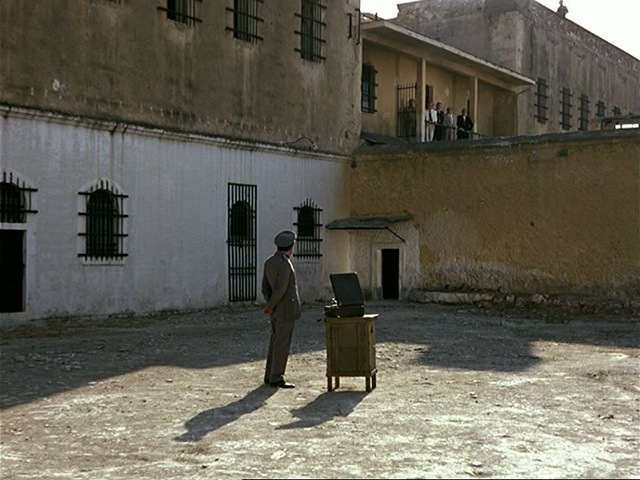
The story seems difficult to navigate if only for the general Angelopoulos way of literally photographing the characters from a distance, but it all boils down to an intricate assassination attempt inside a secluded prison. The target is Sofianos, a drug trafficker who is captured for his involvement with an assassination during a political rally. It’s difficult to follow the narrative without doing some kind reading before hand, and even then, I did not have a better understanding of the political climate in Greece during the 1930s outside of your typical view of “a time of change” or whatever. To Angelopoulos’s credit, though, he never really shifts the focus of the film towards the political.

It’s probably a bit too simple to classify Angelopoulos as being an “observant filmmaker.” His camera is certainly observant since even here, in the early stages of his career, it seems to have a mind of its own. Of course, this does not mean it’s necessarily “active” although there is one bizarre tracking sequence towards the end that feels like something out of Olivier Assayas’s playbook. One could draw a correlation between Assayas’s recent “thrillers” (Clean and Demonlover to the epic Carlos) as having the same tendencies as this film. For example, both filmmakers are essentially making “action movies” but manage to keep the context and characterization brief. It might seem odd to call the long-take mindset of Angelopoulos as “elliptical” but he definitely excludes information that, had it been kept, would have just made this a straightforward thriller with really arty direction.

All of these thoughts are coming from one viewing of Days of 36 though and if I’ve learned anything from this recent revisiting of the man’s work (which was indeed spurred on by his unfortunate passing) it’s that his films benefit greatly from multiple viewing. Sure, reading about his films enough will help one “get” it at least in an ideological sense, but when watching Landscapes in the Mist I was finally struck by the power of his poetry. I have loved Angelopoulos since I first saw The Beekeeper but even then there was a sense of watching something “austere.” It sounds crazy but the aforementioned Landscapes in the Mist struck me as almost being Malick-esque in its level of poetry. Perhaps it is that film’s similarity with Days of Heaven but they both have this wistful, aching rhetoric that underscores the aesthetic of the respective filmmakers, despite the fact that stylistically they seem distant.


Anzukko (1958)

27 01 2012

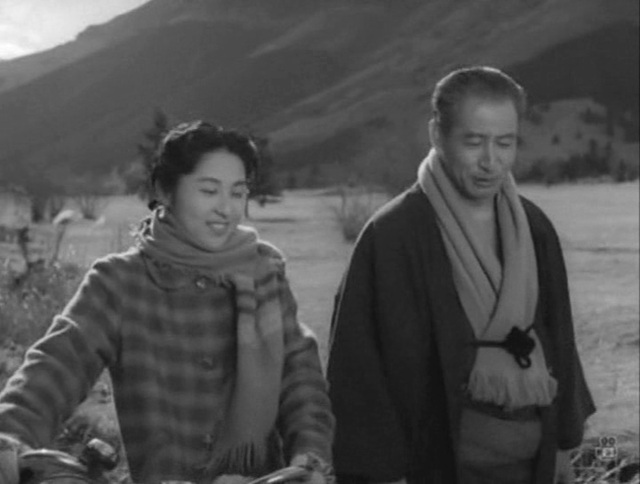
I didn’t realize until afterwards, but I had actually seen this Naruse before. Not only that, but I had written a fair amount about it, which I also don’t remember. My first response to the film seems a little misguided in retrospect since I felt like it was far too upsetting depiction of female obedience, but after watching it again, it seem a bit more complicated than that. If anything, the more dramatic and perhaps sentimental turn from the rest of Naruse’s career is an interesting development for him. The year before he had the extremely feminist and powerful Untamed and he also made Floating Clouds, perhaps his most poetic and romantic film, in 1958 as well.

The titular character is played by Kyoko Kagawa, best known for her collaborations with Kurosawa (Mifune’s wife in High and Low) and Mizoguchi (Anju in Sansho the Bailiff) but her relationship with Naruse is just as impressive. Seeing as how this film is a starting point in a “refresher” course for me, I don’t feel comfortable saying this is her biggest role in a Naruse film, but it definitely ranks up there. She plays the daughter of a famous writer, who ends up marrying Ryokichi, an inspiring writer who (at first) secretly loathes her father. Ryokichi is played by Isao Kimura, who is also best known for her collaborations with Kurosawa. As his character becomes more and more unsavory, his performance shifts towards exaggeration. At the film’s end, no one can question that Ryokichi is indeed, a very pathetic character.

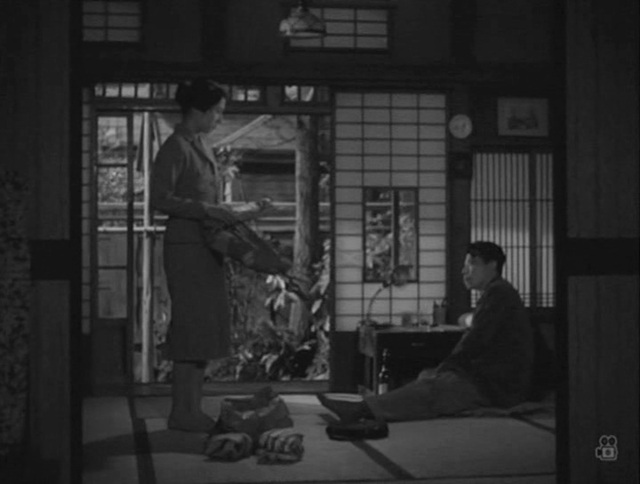
In my initial review, I never really got over the fact that such a couple would stay together. As Ryokichi shifts from one temporary job to another, his alcoholism worsens and his hatred for his father-in-law, Heishiro, deepens. Before, I mostly focused on the relationship between the struggling couple but on this particular viewing, it seems less and less important. Although the film is named after her, Anzukko’s actions tends to be just that of a middle man between her husband and her father. There’s something tragic in the fact that a housewife provides all the income for a family and ultimately gets no say in how it is used, but it seemed less of a “deal” this time around.

Perhaps it’s best to not view this movie with Naruse-tinted glasses because if one does, the film is just another relentlessly upsetting story about a woman staying with a man she’s better than. The best drama comes from Ryokichi and Heishiro, though, as the former weighs his own pride over charity, even when he is doing absolutely nothing to help his family from a financial standpoint. Ryokichi might be the least likable character to ever get this type of screen time in a Naruse film. He’s self-destructive, cruel, and unreasonable. His logic of a rivalry between him and his father-in-law stems exclusively during intense sessions of alcoholism. In a way, Naruse has made one of the earliest examples of an “addiction film” and the result is every bit as bleak and unsettling as any modern or “edgy” depiction. Sure, it’s just alcohol but the self-destructive nature of Ryokichi rivals any  character involved with hard drugs.

There is still something to be studied about the character of Anzukko. During this viewing, her commitment to her family doesn’t seem as much of a disgusting display of family politics as much as it seems like a complexity. She doesn’t want to lean on the help of her father. He does buy her groceries, but they’re a necessity. One can hardly blame her when she makes all the money and does so without having an actual career. Never is there any love felt between Ryokichi and Anzukko, not even a sense of friendship of respect. It was a marriage of convenience, it seems, but the irony is that it has become a total hassle for Anzukko. The film ends with quiet acceptance, hardly a surprise considering that Naruse seldom went for dramatic shifts in a narrative. It is anything but satisfactory for a character that has put up with so much but receives so little. Where it was frustrating to me on initial viewing, it is now fascinating. Relationships are difficult is nothing new, but the layers of odditity in this particular case make it a subject well worth studying and revisiting.