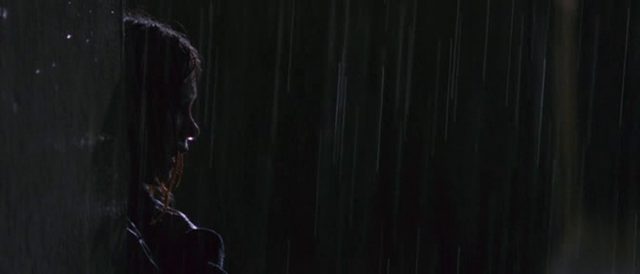
Some Days Are Better Than Others (2010)

13 08 2012

I saw a preview for this a long time ago and was impressed by the fact that it seemed that, in spite of its obviously cutesy and twee intentions, it had some aesthetic appeal. The dreamy soundtrack helped too, but really the film just serves as an extended trailer. It’s too precious to be truly as humanist as it wants to be. Plus, can a film that’s misanthropic really be humanist. There’s a annoying snide, Alexander Payne-esque mocking of all peripheral characters. It seems that everyone outside of a small circle are just caricatures of people you’d meet at a terrible college party. It’s impressive but a completely forgettable experience.
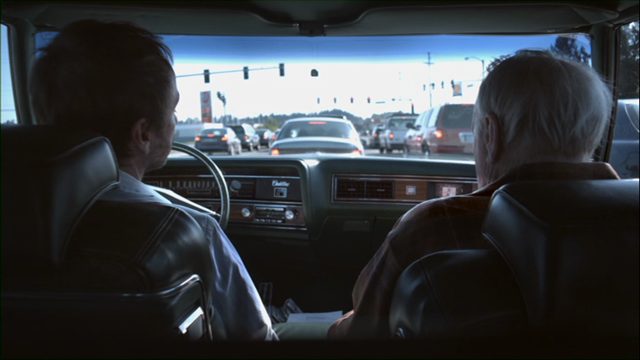
I will give director Matt McCormick some credit. He does manage to create some very impressive visuals, something the like-minded Payne has never really accomplished outside of his inherently picturesque The Descendants. There are a few truly awe-inspiring photographic moments, which mesh perfectly with the Matthew Cooper soundtrack. This is when the film is at its very best. However, once someone opens their mouth, it begins to fall apart. Carrie Brownstein is solid, but James Mercer is kind of grating. It can’t really help that their left dealing with dialogue that is either a forced attempt at naturalism or uber-pretentious pondering. Does anyone ever really ask questions like, “How long does it take to get over a broken heart?”

Dialogue such as the line mentioned above is floating throughout the film. When the movie wants to be serious, it feels like a Pacific Northwest version of American Beauty. Remember how that film’s poetic attempts are now seen almost entirely as comical? Well, they’re subtle compared to some of the musing suggested here. There’s a completely obnoxious story involving James Mercer’s step grandfather narrating some film about soap. In addition, this character’s presence is only served to remind us that Mercer’s character is really, really a good guy. No seriously, he’s helping an old guy. How life-affirming, how positive, how humanist.

I guess that’s the film’s biggest problem. It tries to create some interesting “character” driven stuff, but it all seems so positively manufactured. It’s even more upsetting considering the film tries so hard to reveal itself in a slow, natural manner but then the actual drama is so blah. One of the few interesting parts is that James Mercer’s Eli might have a really deep crush on a friend he’s living with, but that ultimately becomes a complete snooze when he talks about it in his “meaningful” conversation with his step grandfather. It’s a film about people that it really wants you to like via their alienation, which is really just a situation where they are surrounded by comically stupid people. It had a chance to be something special, but it’s ultimately just a conventional cutesy, twee movie slowed down to be arty. 


I Want You (1998)

9 08 2012

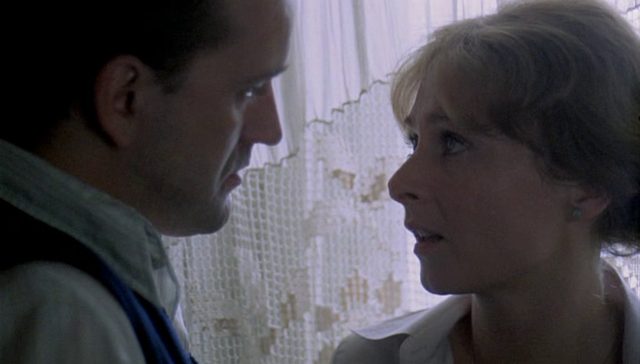
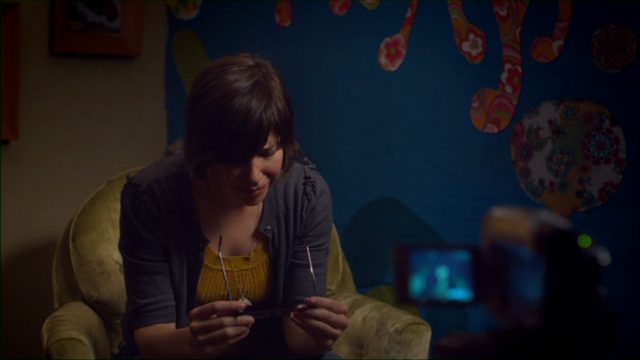
Michael Winterbottom had actually been making movies for almost ten years by the time this project was released. It’s still one of his earlier (and lesser known) full-length efforts. Weirdly, it seems like the culmination of an entire career with Winterbottom touching upon things he would later explore later and with greater depth. Sure, the influence of Wong Kar Wai and Kieslowski is so obvious it is almost obnoxious, but it’s never a terrible idea to draw upon your influences when you have the technical prowess to back it up. There’s no denying the beauty of this movie, even as it takes a rather shaky turn towards being a thriller. It still feels grounded in spite of its dramatic conclusion and if it wasn’t, it would still be a enormous aesthetic accomplishment.

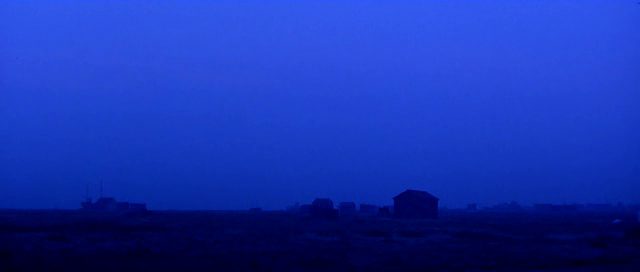
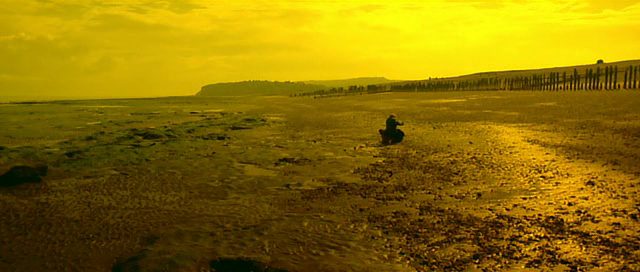
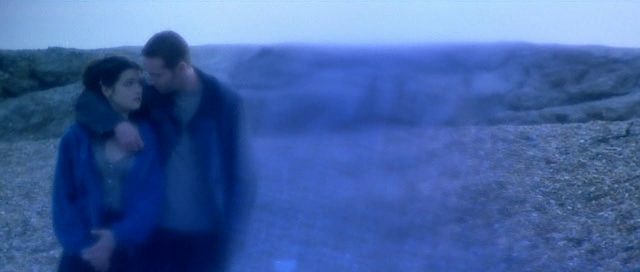
Slawomir Idziak, longtime collaborator with the aforementioned Kieslowski, is the man responsible for the visuals. They seem heavily indebted to Kieslowski even as they anticipate the art house trends of the approaching decade. The heavy blue filter look is produced here about five years before it became something of an cliche. The yellow filter that frames the country landscapes (perhaps anticipating The Trip) feels a little overdone at times, but the results are still undeniable. It’s one of those rare pieces where certain shots are absolutely framed intentionally, but the film manages to evoke a natural energy. It’s not just about juxtaposing a composition with a steadicam take, it’s about a filmmaker maintaining an intimacy with their images.

That sounds like a bunch of garbage, but it does lead to an excellent illustration and it’s where the Wong influence comes in. I hate saying things like intimate images because it treads the line of being pretentious, but the closeness of the images, within the widescreen frame takes a certain talent. In a way, this almost anticipates Wong’s own 2046, which is arguably his best looking film, but it along with In the Mood for Love definitely announced a shift: the kinetic pace of his 90s work was gone, now there was something more mature. I don’t mean to get too off-topic but that split in Wong’s work represents a line that this film is balancing on. It’s deliberate but provides a spontaneous energy, a sensation not unlike the one produced by the work of Winterbottom’s country(wo)man, Andrea Arnold. She accomplishes this in a very different way, ending up more on the “gritty” end of things, where as this is clearly more glossy.

In the review of The Woman on the Beach I mention the potential appeal of having characters with unclear motivations, or “opaque” characterizations. This is applicable here in a film where the most impressive moments are the placement of characters, not a deeper probing of their pysche. They are still interesting, mind you, but they are not a deliberate focus. There are more beautiful, individual moments that slowly connect into a narrative. This creates something of a problem as the film slowly scoots its way to becoming a thriller. It happens so subtly, it’s almost unnoticeable, and it’s not at all jarring when the “plot” stuff has to be carried out in the film’s conclusion.

The film still ends open-ended enough, I suppose, but there is something unappealing about framing this as a neo-noir. It has genre elements, obviously, but it such a far cry from being “genre cinema.” There is something very impressive about balancing art and genre, especially if it is unexpected, but I Want You seems to be only formed from a genre template, being filled in with something more distinctly driven by its technical/visual artistry, not a storytelling one. Sometimes the pieces fit, but most of the time it feels weird.

These are really minor complaints. Most of the film’s actual content is effective. The curiosity of Honda is hard to not relate to, and his experiences have a poignancy, reaffirmed by the abstraction in which they are presented. His recording of conversations seems like such a move of the influences I’ve already mentioned, but there is still something distinct about his character, perhaps even distinctly British. The muddy countryside that houses Honda and his sister Smokey is many miles away from the nightclubs and motels of Wong, the studio apartments and cafes of Kieslowski. It’s a new poetry, even as it borrows the rhetoric from the past.


The Woman on the Beach (1947)

7 08 2012

There’s no discussion of Renoir’s final American film, Woman on the Beach, that fails to mention the mutilation of the film. It was test-screened in front of an audience and the film’s inability to follow a straightforward narrative confused many. The film that exists today is only 70 minutes. I mention this not as a history lesson (though it is interesting enough) but more as that a reoccurring criticism is the film’s incompleteness. Many say that the characters aren’t fleshed out enough, their motivations seem as murky as the waters that invade Robert Ryan’s nightmare in the film’s opening. This is unintentionally a strength, though.

This is loosely considered a noir and the story follows a noir template in that a helpless man is unfairly seduced by a evil, evil woman. The inherent misogyny in the characterization of a “femme fatale” is less evident here. Again, this might be a result of the film’s extensive trimming but Joan Bennett’s Peggy never feels tactical or scheming. The attraction developing between her and Scott (Robert Ryan) occurs so quickly. Perhaps develop is the wrong phrase since their affair seems to happen on a whim, while Scott is in the middle of deciding his future with the much more calm Eve. The point being is that the film’s limiting time provides characters that are opaque. There’s a very elliptical nature of the film, even if it was just the by product of poor editing.

The lack of fleshed out characters seems likely from the film’s opening sequence, in which the audience is introduced to Scott’s inner most thoughts before they’re even introduced to him. Renoir himself called the opening rather avant-garde. It feels that way, although it is also kind of hysterically old-fashioned and cheesy. There’s images faded on top of images in a garish fashion, with the not so subtle reminder of the film’s location (hint: it’s in the title) and this is all before the film bothers to tell you anything. This all sounds like a tongue-in-cheek criticism on my parts, but it is fascinating how many Hollywood “mistakes” take this from a standard noir proceeding to something haunting.

Perhaps that’s the greatest encapsulation of the film: it’s a collection of oddities, slight mis-steps from conventional storytelling that make it something truly special. Where as Swamp Water was bizarre and beautiful as a result of the content and photography, Woman on the Beach is compelling in spite of its story, which seems like it would be stuck in the mud if it weren’t for Renoir’s touch. It’s not even a trademark touch on his part, the film is rather unremarkable looking from his high standards. The film is already an oddity as it is, but it feels weird even within the scope of Renoir’s short-lived career in America.

The acting is weirdly the hallmark here. Robert Ryan trading off with Charles Bickford (as Tod)  is utterly fascinating. Twice they have conversations in which both characters seem self-conscious of the subtext. The scene where they talk about going fishing is the best example of this. Both Tod and Scott are conscious of the dangerous storm outside, as well as their mutual hatred, but they carry on the mundane conversation. Peggy is also aware of this but makes no effort to stop what could possibly kill both men until they leave. Again, the actions and motivations of the film’s main three can be called in to question but that’s what makes the film all the more fascinating.

The film ends up Tod’s cathartic burning of his painting, and the implication seems to be that Peggy is ready to stay with him, but again, the film prides itself on avoiding any answers as much as it does on setting up any questions. It’s hard to not sound vague when talking about this film. Who are these people and why did we watch them? In the end, we don’t even know what happens to them, but that’s the best thing about it. It’s a short character study and the audience isn’t given much to learn from. This is a good thing, and it’s a really good movie.


Bizalom (1980)

25 07 2012

Istvan Szabo’s name is usually linked with Mephisto, his Oscar winning film which remains to this day, the only Hungarian film to boast such a claim. His filmography is fairly extensive, though, beginning in 1964 and continuing to this day. I’ve seen three films from him now and no two have any overwhelming similarities.  Lovefilm, made in 1970 is a love story (duh) fractured by kaleidoscopic editing. Father from 1966 is a more straightforward piece, with arty touches that would anticipate the later film. Neither resemble 1980’s Bizalom though, a political romance that manages to take place almost exclusively in one room, but still manages to avoid feeling theatrical.

Kata returns home to find her home has been invaded, she is given instructions to begin a new life in hiding from the Nazis and is forced to live in a rather dreary room with Janos, who never reveals his real name. The two are forced to feign a relationship as husband and wife. Despite the fact that both are married this eventually boils over unto a real relationship. One which is hindered by the inability of either individual to communicate truthfully, as they must be cautious of the Nazi sympathizers living in their building.

Szabo uses the nervous energy from the tight compositions to his advantage. At no point does his film feels like it is shifting to a thriller but there is a constant reminder that the false construct Janos and Kata have created can dissolve at any time. Additionally, there is all the psychological weight that comes from the fact that both have been displaced from their real families and they are never able to talk about their frustration about that since they’re both paranoid about the elderly couple that lives in their building. It’s easy to see how the film could become too heavy but it’s not terribly pressing. There are shades of Cries & Whispers but the lack of philosophical dialogue makes it a much easier viewing, even if there is a similar kind of tension in the images.

One of the most crucial decisions from Szabo is the lack of background he gives us. The film doesn’t bother establishing Kata’s normal life, instead it opens with her being pulled away from it. Similarly, we never learn much about the past of Janos. Hell, we never even learn his name. There is a fairly impressive montage in which a sexual encounter with Kata yields images of his wife. Later, we see her reciting the letter from her that he has received. The frustration of the two is all the more palpable because the film hasn’t bothered to build up some world that is only expository. It would have been next to impossible to comprehend how jarring it is to suddenly start a new life unless Szabo wanted to make a seven hour film.

It should be mentioned that the acting is a huge contribution to making this film work. Ildikó Bánsági and Péter Andorai would continue to work with Szabo. Both appeared in Mephisto and without seeing that film, it seems like this production could have been a piece designed as a initiation for the actors and the director. That sounds like a criticism but that film was a huge undertaking. This is a deeply intimate piece that relies heavily on its two main performers. Visually stunning at times sure, but not the sort of film that needed additional crew. It’s powerful filmmaking without bells and whistles.


Belle épine (2010)

23 07 2012

Every once in awhile I’ll see a film that at least fits the mold or something I’d absolutely love, but I don’t. I’m going to file Belle epine away as such a film. Perhaps calling it the French Fish Tank is unfair but considering my admiration for that film, it’s more than reductive compliment. The way Zlotowski is able to depict something which is so often romanticized (being a teenager) as something more natural is definitely in line with Arnold’s better known film, but her film lacks the direct impact of Arnold’s film.

I’m more than glad to give Zlotowski credit. Her film does look absolutely stunning, even if the following steadicam look is apparently overdone. Her visuals never get the time to be appreciated with the camera’s kinetic pace. This almost sounds sacrilegious against my own cinematic creed since I have many personal favorites that look good and aren’t entirely static. However, her compositions seem to have gone under appreciated, perhaps with the expectation that the camera work is a necessity in a “teenage drama” such as this film. Many have compared it to Pialat, but where as his character were almost the sole focuses of his works, the ones here feel like more of a construct.

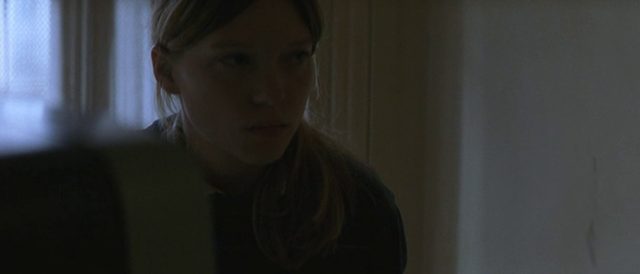
The character of Prudence is certainly interesting and Lea Seydoux is pretty fantastic, but the film uses the death of the character’s mother as a stepping stone for the drama. Where as Pialat’s characters may have been more opaque, or at least mysterious, the chaos overtaking Prudence’s mind here seems to have been cheapened by the structure of the story. Sure, Pialat’s characters had their motivations for their personal rebellions, but they seemed to be responses to situations. Here, it seems like the intention that Prudence is being haunted, perhaps even defined by her mother’s death. This is reinforced by a certain scene in the film’s conclusion.


This might sound like a bitter Pialat fan being disappointed by the film not being similar enough, but the distinction between the two is important. Here, the film seems to be quietly prying itself from the definition of a “character study” even while it remains naturalistic. I guess the ultimate result is that the characters aren’t that interesting. Maybe the adventures of the individuals in   À nos amours seemed more interesting to me because I was a teenager when I first saw that and now I’m not. I would at least argue that the film transcends that viewer-film relationship. The young life there as least has it moments of small happiness, even though the sentiment is still that those moments are fleeting. Here, the interactions are a mental downward spiral, implying more of a connection with a film like Lilya 4-Ever.

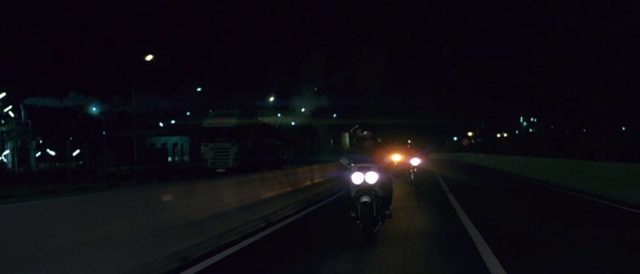
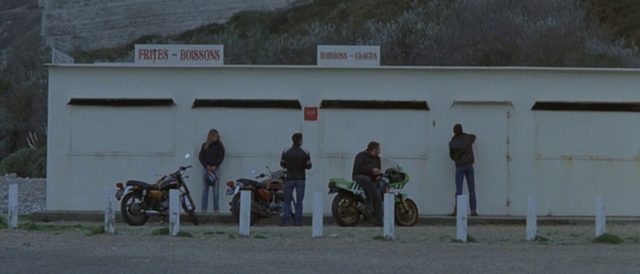
It’s worth mentioning though that this Zlotowski’s first film and under those circumstances, it is even more of an accomplishment. She seems very sure of herself, even as the film teeters out of momentum once Prudence loses her connection with the bikers. She is able to be naturalistic, elliptical, and romantic all at the same time. One of these seems like a contradiction. It’s still an authentic experience, but it manages to be visually stunning. This is probably where the Fish Tank comparisons could come from, but Zlotowski lacks the virtuoso camera movements of Arnold. I’ll admit to being hard on this movie, if only because it reminds me of so many things I already love. It should be recognized for being a impressive debut, and it features the best performance I’ve seen from Seydoux. It seems a little incomplete to be a masterpiece, though.