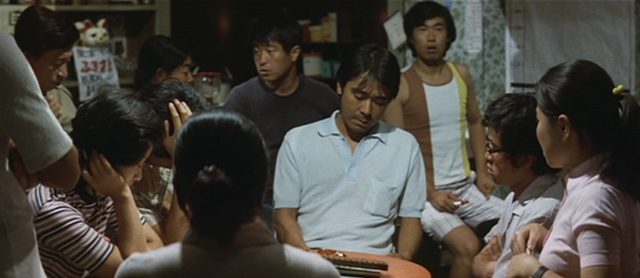
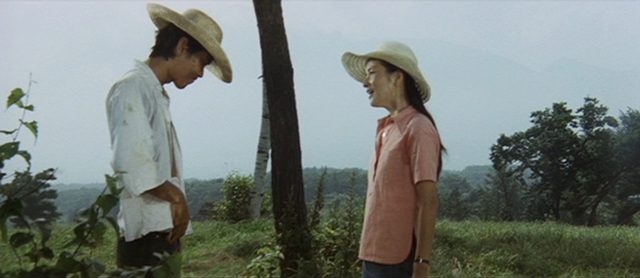
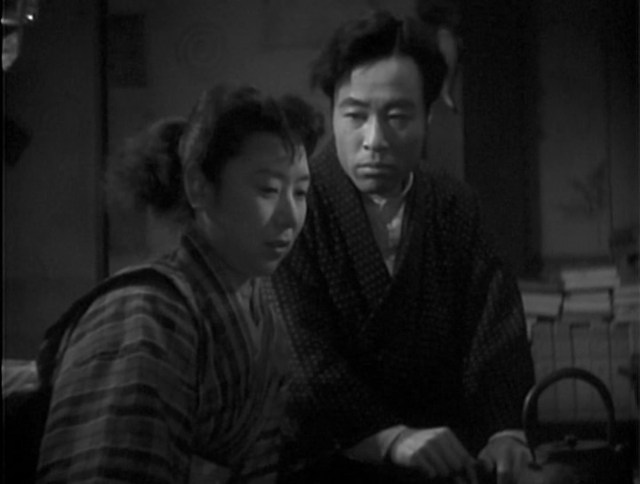
Aki tachinu / The Approach of Autumn (1960)

3 08 2013

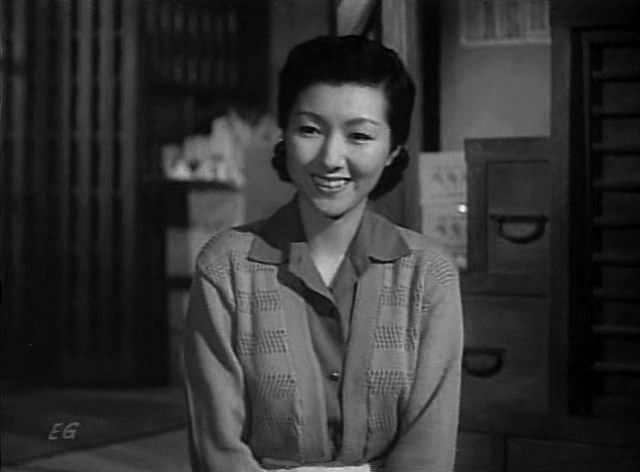
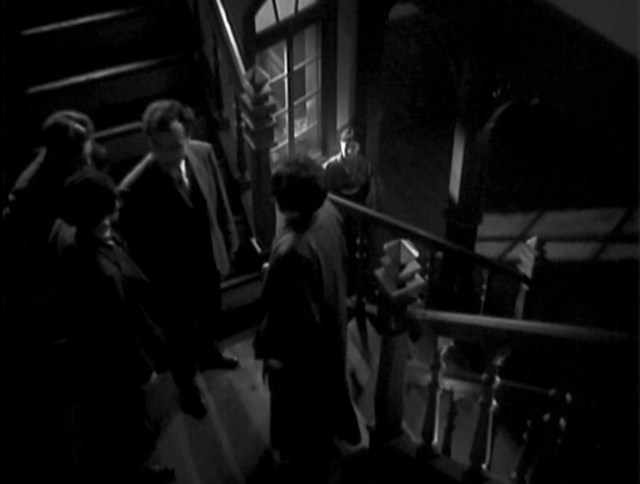
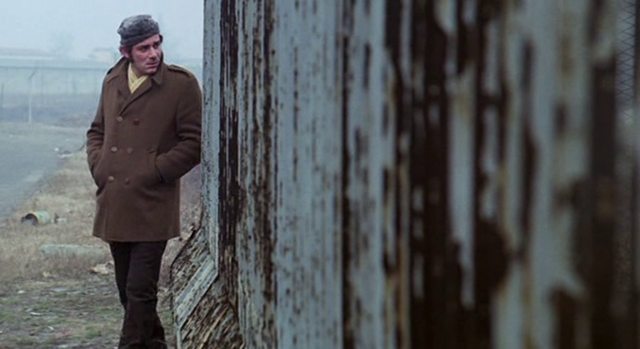
During the 1950s, there were very few directors more consistent than Mikio Naruse.  As he did for most of his career, his focus was on lower-middle class adults, particularly women. While the economic context of his characters shifted somewhat as his career progressed (not nearly as dramatically as Ozu’s, of course), the protagonists of his films have never been dramatically different. For this reason, it’s particularly interesting whenever Naruse’s films are centered around men (The Road I Travel With You from 1936 comes to mind) if only because of the inherent difference with the majority of his work. To mix things up further, The Approach of Autumn is strictly about children.

1

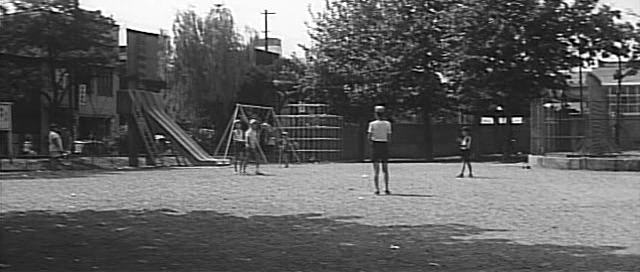
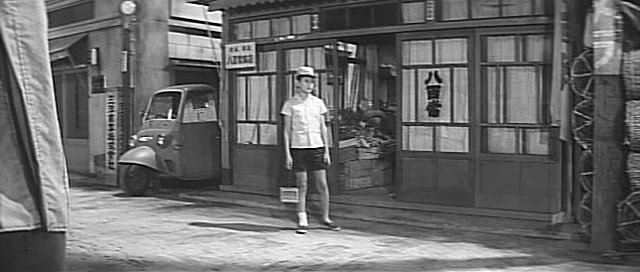
Young Hideyo moves from the country into Tokyo. Living with relatives that aren’t particularly invested in him or his interests, he struggles to fit in with his surroundings. With some bad luck, he becomes enemies with all the boys his age. He does however develop an interest in Junko. Despite being from a family with more financial stability, she faces the same problems as Hideyo. She wants her parents to adopt Hideyo, but societal pressures seem to turn them off from the idea of even having Hideyo spend time with Junko.
2

One obvious problem that the film runs into is the performances of the children, neither of which are particularly good. Naruse has a pretty good track record with young performers, but he has no luck here. In all likelihood, it’s a symptom of the story being built around them too much. They have to carry too much of the weight, and they struggle more so than any performer in a Naruse film. It’s here that one begins to take for granted the performers that populate most of the filmmaker’s world. They’re so effortlessly perfect that it takes a film where most of the interactions are so awkward and forced to remind you how crucial the performances are to Naruse’s best work.

3

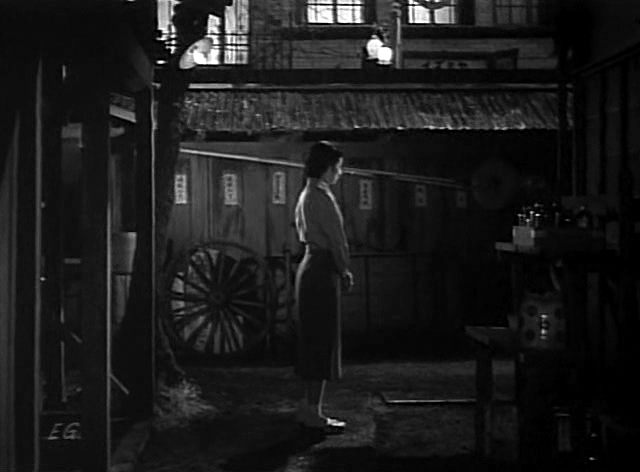
There are a lot of nice things about this film, though. The black and white, scope cinematography looks nice, especially in the sequence where Junko and Hideyo walk around the neglected parts of the city. It seems Naruse might have been aware of the limits of these young performers, which motivated him to have a scene where they do little else but walk around. This is probably the “heart” of the film, if I had to choose such a thing. It’s visually stunning, and the performances manage to not really get in the way.

4

I struggle to tag this film as even being good, as I would have quickly forgotten it had Naruse’s name not been attached. It is still his film though (and interestingly, his first as a producer) and because of this it provides an interesting shift in perspective from the rest of his work. Here, it’s the child of a struggling mother that gets the most time and how this works into the collective Naruse landscape is genuinely interesting. Particularly, in the fact that this young boy becomes numb to the cruel behavior of men (well, boys) much like any Naruse woman. The themes of the filmmaker’s best work are still there, they just take a different route.
5


Tsuma no kokoro / A Wife’s Heart (1956)

28 07 2013

One would be hard pressed to find a director who had a more eventful year than Mikio Naruse did in 1956. Certainly, the filmmaker himself had busier years, but the three films released in ’56 (this, Flowing, and Sudden Rain) are fairly diverse considering the filmmaker’s reputation as being so consistent. Flowing is the most well-known to the west (being that it actually has a DVD release) but the other two might be the better representations of the director. Here, in particular, we have Naruse’s trademark themes of money and relationship problems woven into one of his most digestible narratives. Basically, this is his “in-laws from hell” story, but obviously done with the personal touch that prevents such a scenario from seeing simplistic.

1

Kiyoko (Hideko Takamine) and Shinji (Keiju Kobayashi) are trying to open a cafe, but they lack the money. The timing isn’t exactly perfect, either, with Shinji’s brother and mother breathing down his next for money, among other things. The pressure of Shinji’s family has obviously had an affect on him, as he is particularly quiet in nearly all conversations. The few times he does raise his voice, it’s to ask for another drink or when talking to Fuku, a geisha who is in the middle of complicated marriage herself. Kiyoko, meanwhile, meets with Kenkichi (Toshiro Mifune) regarding the money needed to open the cafe. Kenkichi is everything her husband isn’t, confident, strong, and perhaps most importantly, single.

2

The outline of the film seems quite scandalous, but it’s important to note that Naruse has never made a film seem nearly as steamy as the plot description. Kenkichi’s meetings with Kiyoko are almost entirely formal, consisting of only hellos, goodbyes, and thank yous. Most of their interactions take place with Kiyoko as a waitress with her presenting herself with the suitable facade. The film’s lone moment that labors on their potential affair is an absolutely stunning one. Caught in the rain, the two take shelter in a restaurant.  The conversation is once again pleasantly superficial until the two spot kids playing in the rain. Kenkichi says he’s good with kids, which prompts Kiyoko to say “then you need to find a wife soon.” The music swells, and the air has been sucked out of the room.

3

This is as far as Kiyoko’s relationship with Kenkichi goes, just a prolonged moment of silence where the two recognize the situation. She, in a middling but fine enough marriage, and he, unable to truly express any fondness he might have for this woman. When Shinji’s flame, Fuku, kills herself it is remarked that she “threw away the life her parents gave her.” Be it a suicide or an affair, the families in Naruse’s world and tied together more tightly than usual. Family, like money, is another obstacle in true independence. Naruse’s popular quote about his characters, ““If they move even a little, they quickly hit the wall” resonates particularly strong here.

4

Of course, none of what Naruse meditates on here is particularly new. The ambitious woman angle seems to have been attempted again with When a Woman Ascends the Stairs, but the big difference with that film’s protagonist (also played by Hideko Takamine) is that of experience. She’s more cynical, less optimistic, which gives her character a certain appeal. Perhaps it’s interesting to note that both films also have suicides, but When a Woman Ascends the Stairs opens with one and it is approached with gallows humor. It’s more of a sudden gut-punch here, though the victim is a peripheral character. I would say the approach in both films represents the outlook of the two protagonists. Kiyoko might be naive, which makes her dissatisfaction with life burn deeper. It’s still a fresh wound.

5

As far as marital portraits go, this isn’t one of Naruse’s deepest but I don’t think that’s entirely his intention. Repast stands as his fullest examination of the institution because it seeks to redefine the subject. Here, the audience is presented with an immediate drama that resonates because of said immediacy. There’s only so many ways I can say that Naruse’s films simply work but watching a film like this that’s the sensation that comes to mind. He had three films in 1956 alone that feel “fuller” than anything in most director’s careers. Like the best of Naruse’s work, A Wife’s Heart is striking because its possibilities are overwhelming. Saying one most study Naruse’s work makes him sound too academic and dry, but it should be mentioned that one viewing is not for most of his best work. This feels like the case here.

6


Harakara / The Village (1976)

7 07 2013

I’m not one to make note of IMDB comments, but there’s not much written in English about Yoji Yamada. Additionally, I tend to be dismissive of director comparisons, but for whatever reason I was struck by a review of this film that compared Yamada to Altman. To me, they couldn’t be operating on more opposite positions. Altman, perhaps the ultimate cynic seems downright mean-spirited next to Yamada, who often borders on being “too gentle.” The comparison ends up making sense here as this does play out like a rural Japanese Nashville but more importantly, it made me think of the potential aesthetic overlap. From a visual perspective, both manage to work extremely well with multiple characters, a point emphasized in this film, which has such an extensive cast.

1

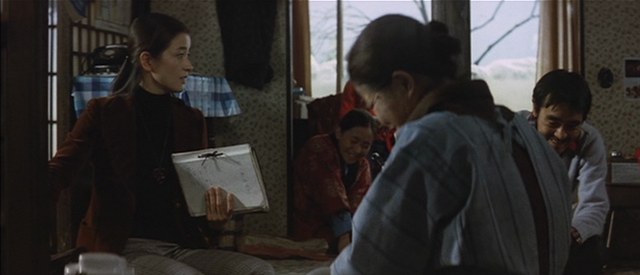
Hideko Kono, a representative of a theater trope based in Tokyo, visits the snowy and small village of Matsuo. She does so with the intention of putting on a production in the small community. During her visit, she meets the leader of the village’s youth association, Takashi. Although he’s in a position of authority, he lacks the confidence that such a position would normal imply. Hideko’s idea of a show is thus the subject of long debates within the youth group. Eventually, they decide upon going forward with the production, but this only begins the long struggle of a small town securing the finances to put on such a production.

2

This might sound a little dry on paper, but Yamada paints around the setup, giving us short glimpses into the lives of the people connected to the story. Takashi has long harbored a crush on Kayoko, who dreams of moving to Tokyo. Their romances never seems particularly forced, mostly because it doesn’t actually end up happening. The naturalism might just be because of the wonderful performance (Chieko Baisho, in particular, of course) but one might argue it also is because of the fact that the character’s side stories lack an arc. Their background is developed almost entirely by non-events.

3

To continue building the case for the film’s naturalism, I feel like there’s something to be said about Yamada on a formal level. I’ve never be able to discuss his style in a flattering light, as he doesn’t seem as interested in form as the ATG/Japanese New Wave crowd that emerged on the scene around the same time as his own career was beginning. Seeing a film like this, where Yamada has to balance so many people, his technical craft is easier to notice and appreciate. His frames  in the first half almost always seem crowded, perhaps an intentional move considering a majority of the film takes place in an isolated meeting room. Later, when the actual production is being put on, there’s an undeniable sense of space, which is crucial to the theatrical performers.

4

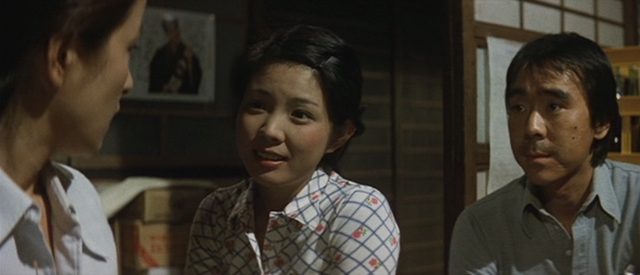
I’m never one to discuss aesthetics in details, but I did want to mention something about how Yamada frames conversations. There’s a freedom within his actors that seems quite refreshing. The compositions seem so delicate, but the actors are constantly walking right in front of the camera with no regard for its presence. It still works on a visual level because it’s balanced out by other actors in a “layer” (so to speak) behind the person standing right in front of the camera. There are multiple stories unfolding within each frame, which seems is a wonderful visual match with the film being about the multiple stories within a small, mostly ignored group of people. Yamada touches upon the idea that a shared story, be it a positive or negative one, can unite the downtrodden. It sounds hokey, but his touch makes it feel organic.

5


Waga koi wa moenu / My Love Has Been Burning (1949)

16 06 2013

I always hesitate to compare movies when I’ve seen them so recently if only because I feel like I might be fighting an impulse to connect each new cinematic experience with the one that is the freshest in my mind. I feel like it’s warranted in this case, though even as Kenji Mizoguchi and Elio Petri seem so disconnected from each other. Like The Middle Class Goes to Heaven, My Love Has Been Burning meditates on the differences between the differences in liberalism in contrast to radical leftism. Mizoguchi’s statement is even more clear than Petri’s and he works within a beautiful, heartbreaking portrait of women during the Meiji era.

1

Hirayama is heartbroken by the departure of her boyfriend, Hayase, to Tokyo. She proposes the idea of her joining him but he ignores the idea, assuming that Hirayama will never get her parents’ permission and she’ll never disobey them. However, Hirayama learns that her neighbor, Chiyo has been sold into slavery. She defies her parents and goes to Tokyo with the intention of reuniting with Hayase and eventually liberating Chiyo. This doesn’t go to plan, and it turns out Hayase was conspiring against the Liberal Party, who he left with the intention of joining. From there, Hirayama falls in love with the party’s leader, Omoi, but she finds that his actions don’t always match his outspoken politics.

2

If one were to take away the political context here, that of women’s rights during and following the end of the Meiji-era, you might get something that doesn’t seem that unique from Mizoguchi. In some ways, this could work as a warm-up to the endurance test of misfortunes that is Life of Oharu. Like that film, Mizoguchi’s muse, Kinuyo Tanaka is constantly placing her trust in men, but then realizing that she shouldn’t have trusted them in the first place. I get the impression that the tone here serves a bigger purpose beyond the tragedy of Oharu. Fittingly, my biggest beef with the claim that Mizoguchi was the first “feminist director” was (aside from his own personal life) that he presents the stories of women as tragedies, one in a lifetime martyrs that felt more in place in the opera than in reality.

3

To be fair, my common criticism of Mizoguchi is still applicable in this film. The sequences with Chiyo are violent on a level that approaches cartoony with images of women bound and being abused. Thankfully, these images (which are, to their credit, as difficult to watch as Mizoguchi probably intended them to be) are kept to a minimum and Chiyo’s attitude towards the men mistreating her gives us the rare Mizoguchi heroine brave enough to speak out, as opposed to one who just endures her mistreatment.

4

Chiyo’s much more violent oppression runs in parallel to Hirayama. Some might deduce that by placing them side by side, we are to all of Hirayama’s activism and education has made her lose sight of “true” oppression and she has nothing to compare in contrast to Chiyo. While Chiyo is indeed inflicted with more physical pain throughout the film, their struggles are united by the fact that they’re brought on by the same reason. This reading would also suggest ignoring some of the film’s most crucial scenes, particularly Hirayama escaping from her husband but it also works within Mizoguchi’s cinematic vocabulary. Early on, the Liberal Party has a meeting and it’s exclusively men and self-identified “intellectuals.” Tanaka manages to float into the frame and is ignored, all of the men but the party leader leave. Almost a visual embodiment of her refusal to back down in the face of men.

5

It could also be read that the film is ultimately about the difference between what we say we do and what we actually do, but I think this type of discourse is inherently related to Mizoguchi’s political message. It’s sort of ironic, at least to me, though since one could accuse him of the same thing he’s accusing the men of the Liberal Party of in this film. Then again, he’s made a work that still feels ahead of its time, ideologically. Within all of this, it’s probably worth noting that Mizoguchi is at his very best here as a visual artist. I tend to feel that before the 1950s, he was a bit more free with the camera. Sure, he’s always been mobile but there’s a calculated feeling to Ugetsu and Sansho. It works for those films, but there’s an energy that bursts from the tracking shots (the riot one, in particular) that is not only impressive, but perfectly underscores the chaotic political nature of the film. It would not be a bad idea to see this with Naruse’s White Beast made only a year later, which has similarly aggressive feminist sentiment.

6


La classe operaia va in paradiso / The Working Class Goes to Heaven (1971)

12 06 2013

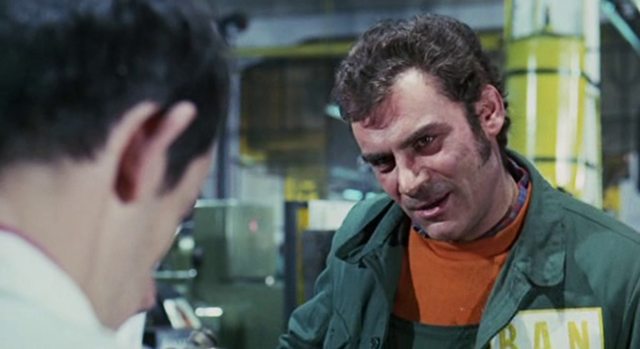
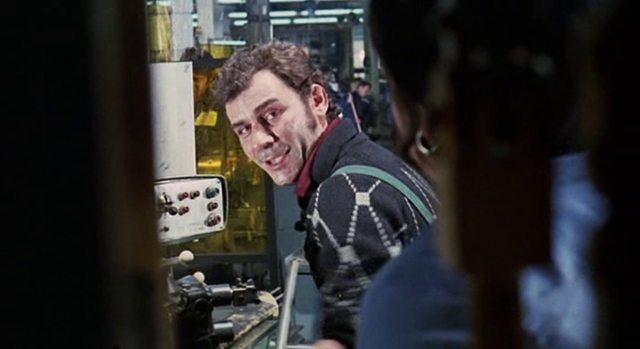
I’ll begin by confessing I know next to nothing about Elio Petri, and until about a week ago, he was nowhere near my radar. It was a viewing of Mario Monicelli’s I compagni / The Organizer that sparked my interest in this particular film. That film and this one are united in a depiction of a post-industrial labor in Italy. Monicelli’s film, even when it does get serious, plays up most of its content for broad, sexually-driven comedy. Petri’s film is much different, and at times, the aggressive nature of its protagonist threatens to derail the film’s ideology. The film ultimately works not be being a particularly gripping human drama or looking nice, but by meditating on the effectiveness and differences between radical leftism and more central liberalism.

1

Lulu is the best worker at the factory and he’s fairly confident in his abilities. This endears him to his superiors and makes his coworkers, most of whom are unionized, loathe him. He’s indifferent to the political landscape. He comes home every night and he’s too tired to do anything with his girlfriend but he finds his fatigue peaceful. This changes when he cuts his finger at work, and slowly becomes more and more interested in the politics surrounding the factory. From here, two groups emerge. A political activist group concerned with starting a revolution and the more centrist union, which focuses on improving working conditions.

2

The way I describe the politics of this film presents two scenarios are oppositional binaries: the first being the workers v the bosses and the second is the one between the union and the activist. One could deduce just by the way that these pair of binaries are presented that Petri is equated the safe “moderate” union as being just as bad as the bosses. This is a pretty simplified reading, though and I think the film deserves a deeper one, though I will agree that Petri is ultimately in favor a revolutionary approach, even as the film is constantly presenting us with characters who engage with radicalism as insanity.

4

Even as the film seems to be empathizing with the worker’s skepticism towards the activists (all of whom appear to be students, and who are dismissed because they must be financially stable), it illustrates an important divide within the proletariat. It was probably relevant when class consciousness became a thing, and it sure as hell is important now. There’s still a stigma between the intellectuals and the actual workers, but the film sees this tension benefiting the factory’s owners. To be blunt, the fighting between the oppressed is capitalism’s preference. If those who are hurt by it can’t even agree with each other, they’ll never organize and the system has nothing to sweat over. This might all sound like too heavy for some, but the unfolding of the chaos outside the factory is actually enjoyable, if only because Petri himself is struggling within himself. The effect is that the film is not propaganda, it’s polemic yet smart and realistic.

3

While I don’t find any of Petri’s aesthetic choices particularly interesting (just a lot of steadicam and closeups really), there is something to be said about the way he introduces the factory to us. As the workers start their day, a voice tells them over the PA that they need to love and care for their machines as if they were a person. The initial images of the machines seem to follow the lead of the voice, Petri captures them in a way that almost seems sympathetic, despite the fact that they are indeed machines. Later, Lulu has casual sex with his coworker, Adalgisa. Their photographed just like the machines as they embrace. Their encounter is comically short and unpleasant. After all, Lulu only sees Adalgisa as sexual potential. She “serves” him, the same way he “serves” the factory. They’ve both been objectified.

5

It’s unfortunate that The Working Class Goes to Heaven hasn’t endured the test of time critically. It’s the type of work that begs for canonical consideration, if only because of its political discourse. There’s a lot to chew on here, but the few writings I’ve found on the film seem to gloss over or ignore the film’s biopolitical implications. Worse, some see Petri as identifying with the centrism of the union. I cannot understand how, though. The film ends with the union reuniting Lulu with the job he had lost for political reasons. As the good news is delivered, the camera observes his face. He’s feigning happy enough to convince the others he’s excited about work, but he realizes he’s back in life lived in service to capital. He later describes a dream while working, the symbolism is heavy and the sentiment is clear: this is not a way to live.

6