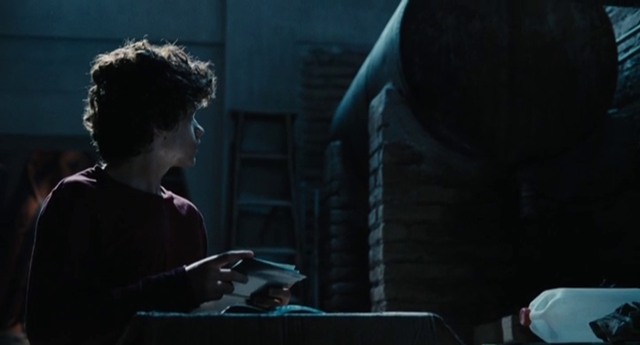
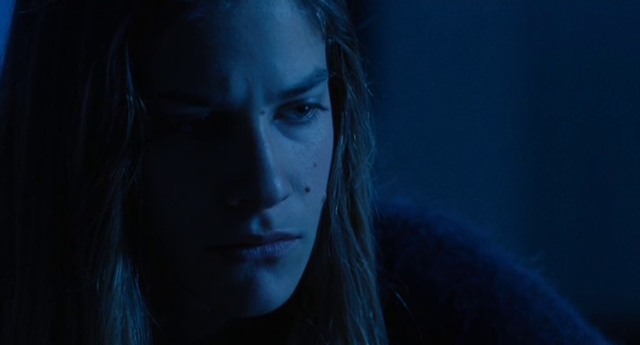
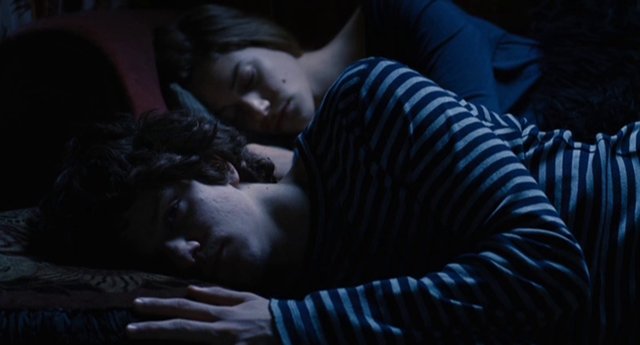
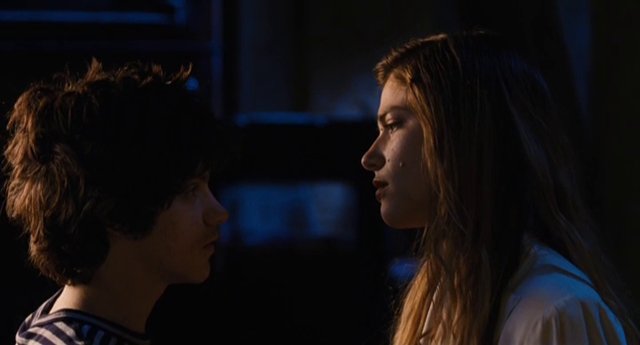
Conte d’été / A Summer’s Tale (1996)

24 08 2013

I’m starting to think that one’s favorite Rohmer film might be entirely based on one’s connection to the lead character. It sounds like I’m selling him short, but this film, while just as amazing The Green Ray in a lot of ways, didn’t really hit quite as hard. It’s still a masterpiece, and is equally as perceptive as a study in human interaction. What Rohmer does seems so simple and “light” but the film concludes in a way that is quietly devastating. This is one of those films where essentially nothing happens, but the process of that nothing is far more dense than a standard narrative. It is absolutely amazing.

1

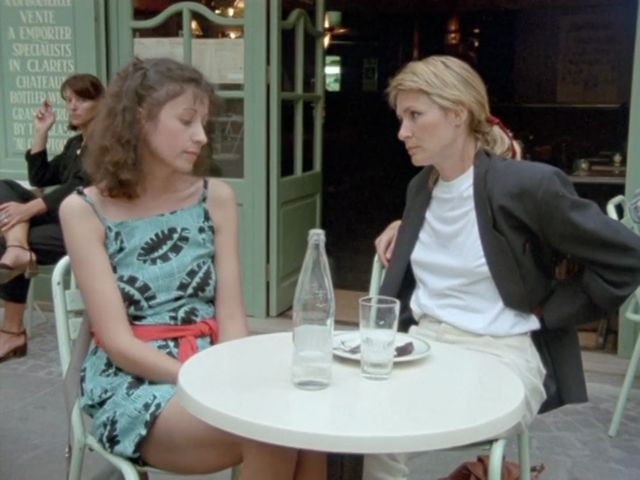
Gaspard has almost a month of vacation time to waste before he starts his new job. He’s completed his postgraduate studies and is on the brink of adulthood, but his future isn’t a big deal. A friend gives him a place in Dinard, where he decides to stay for the potential of meeting up with Lena. The two are not dating, but have had some romantic past. Gaspard quietly spends his days by the beach before meeting Margot. Margot and Gaspard spend entire days together, walking along the beach and of course, talking. She introduces him to Solene and without even trying, Gaspard finds himself involved with three women and Lena hasn’t even arrived yet.

2

It’s interesting how every summary of this film that I read beforehand made it sound particularly dull. I knew it wouldn’t be, but the idea of a young man having to “choose” between multiple women seems particularly stupid. It’s to Rohmer’s credit that the film never plays out like some sort of smooth guy falling for three women at one time. It only takes ten minutes of this film to realize that the protagonist, Gaspard, is not a Don Juan. If anything, it seems like his devotion to Lena is supported by the reality that he can’t find anyone else. Maybe one can’t get involved with so many potential romantic partners without playing it a little loose, but Gaspard is loose. He’s loose because the summer documented in the film, might be his last without the pressures of a professional life.

3

Much like The Green Ray, one could easily point to the situation here as being ultimately trivial. After all, these all four of the major characters seem to be completely fine financially, and Gaspard himself doesn’t even need to worry about working in the day time. He and Margot spend almost all of the two weeks that the film covers walking along the beach and talking. Margot is a waitress, but that’s a part-time gig. She has a PhD in ethnology and her first “date” with Gaspard is an interview with an old sailor. She is not passive like Gaspard, but her life does seem comfortable on the surface. I don’t think a story like this one can work without the upper-middle class 20somethings milleu, though. No group would have such freedom nor would their interactions feel so crucial. Margot mentions that she was to marry her last ex, hinting at the reality that her next romantic relationship might be the romantic relationship.

4

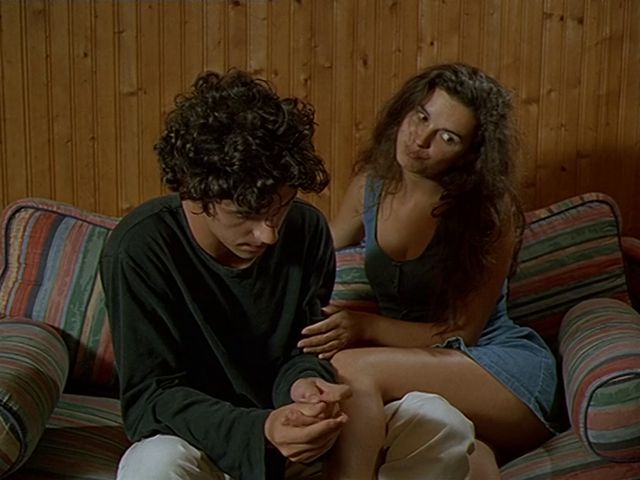
The relationship between Gaspard and Margot is probably the most interesting in the entire film, perhaps because it is the one that gets the most time. Gaspard doesn’t spend much time with Solene and when Lena arrives, she’s already irritated by him on the second day. In the case of the latter, Rohmer is suggesting a turmoil between Lena and Gaspard that we never see and that her jarringly impulsive behavior is compelling to Gaspard. All of this is worth noting because Solene and Lena are the two with the greatest physical potential for Gaspard. He does “the most” with them, where the relationship with Margot might never be more than a particularly close friendship. In the actual process of watching the film, though, everything feels organic. The moments with Solene and Lena don’t feel like sideplots, but instead natural happenings from Gaspard’s own passive and drifting attitude.
5

The film concludes without Gaspard ever “choosing” any girl, which seems like an open-ended conclusion to spark a thoughtful chat at a bar following a viewing. Maybe some people would prefer Solene, and others fascinated by Lena. This would be stupid, because the crux of the film is, as mentioned before, Gaspard and Margot. Rohmer cleverly hides their passion in their playful friendship and how alarmingly open they are with each other. In reality, this is why the two being together seems the most ideal. Gaspard mentions early in the film that he’s never had a female friend before Margot, and this comment is revealing because he ultimately can’t see her as just a friend. More importantly, though, it’s their friendship that makes him so talkative and so willing to reveal information about himself. For as long as we know Gaspard, he’s always had romantic feelings for Lena and he immediately thinks of Solene similarly because Margot suggests her as girlfriend before the two even meet. Around both women, Gaspard feels the need to try because putting on a performance is subconsciously how some people try to impress others. This is never needed when Gaspard talks to Margot.

6

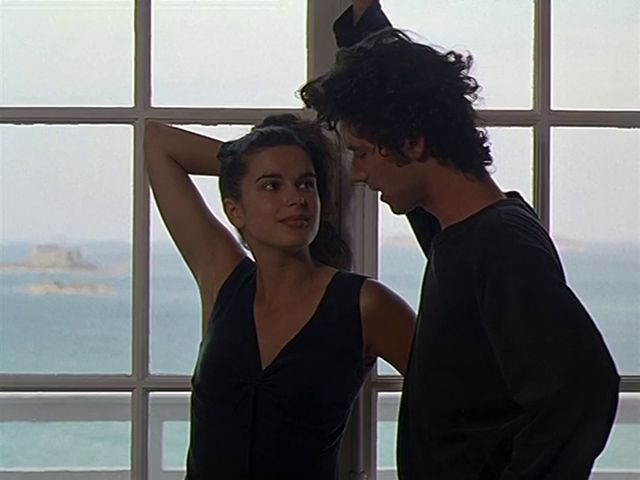
I never thought I’d be praising Rohmer for his cinematic brilliance, but he does wonderful things here, things which may gone unnoticed as the majority of the film is tracking shots of people talking. To begin, the film opens with no dialogue. The camera instead follows Gaspard around as he drifts alongside the beach, spends time in his friend’s apartment, and does essentially nothing. It’s only when Gaspard runs into Margot on the beach that the characters become talkative in the typical Rohmer fashion. Interestingly, these scene features a fascinating sequence in which Gaspard, fresh from a dip in the water walks around the beach. The perspective flips from his to Margot’s and we see as she observes Gaspard looking around. When the scene unfolds, one would assume that he’s looking for Margot but it becomes evident that he’s probably looking for Lena. The sequence almost plays out like a horror film, with Margot as the predator observing Gaspard who is completely oblivious to the fact that he’s being watched. Interestingly, this sequence and the two’s conversations early on suggest that Margot is more interested than Gaspard than he is in her, but like the camera’s perspective in the scene described above, this gets flipped when Gaspard is the first to make a move.
7

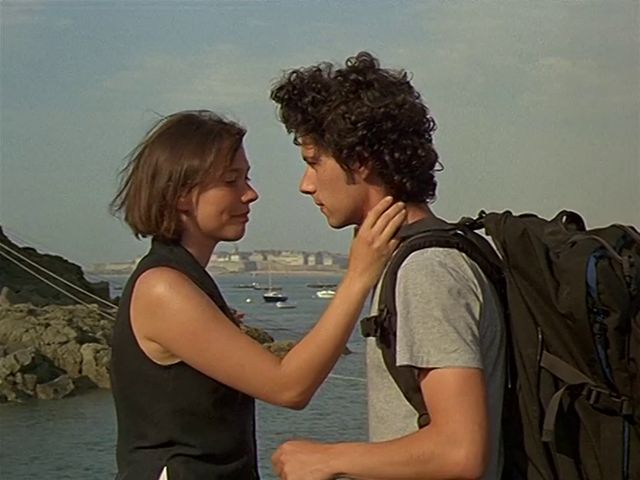
While there is a lot to be found in all of the conversations in this film, it could easily be argued that it all feels a little too inconsequential. Even the audience member that gets absorbed by the conversation, might feel like the film hasn’t given much of an emotional payoff. If one is to see the friendship/(non-)love of Margot and Gaspard as the central one in the film, the conclusion is actually heartbreaking. She’s the last girl he sees before the film ends and he leaves Dinard and their last bit of dialogue while superficially cute and nice suggests heartbreak. They never show it on their faces, but the reality is that their love might have been the most justified of any depicted in the film. However, because people are tied to a place and situation (their life, basically) there is the reality that a love will never have the opportunity to fail. Margot kisses Gaspard lovingly and they say goodbye. The moment doesn’t feel that tragic, but as the film fades to black and one is faced with the idea that two fascinating and lovely people won’t get a chance to explore their relationship further.

9

Rohmer’s accomplishment here could evident just from the basis of me trying to break down the intricacies of a fictional relationship. There’s more to his films, sure, but the quality of watching his works come from the idea that while talking is crucial, other observable behavior is just as fascinating. Again, I’ll always hesitate to compare anyone to Ozu, but I’ve seen two Rohmer films that provide a similar experience. A Summer Tale and The Green Ray are films that need to be rewatched, because one can discover new things with every viewing. Here, Margot and Gaspard (as well as Lena and Solene) are fascinating not just because they seem deep in the process of watching the film, but because what they do can be studied forever. Early in the film, Margot interviews a sailor and it feels like she could be the director of an ethnographic documentary. The same could be said of Rohmer when he frames a conversation.
10


Le rayon vert / The Green Ray (1986)

20 08 2013

The timing of a film is really crucial. No, not the timing within the film itself, but when one chooses to watch it. Five years ago I saw Rohmer’s My Night at Maud’s and declared it as pretentious, uncinematic garbage that displayed everything I wanted to avoid in film. That disdain has faded, especially after loving Four Adventures of Reinette and Mirabelle. I still see what I disliked about Rohmer, but I find him captivating now. Sure, I’ve matured and changed but a big part of my response to this film is that I can relate to Delphine to an insane degree. Rohmer has captured something so close to my own life that nothing else really matters.

1

It’s the end of July and young people throughout Paris are all making plans for vacations. Delphine isn’t, or rather, she doesn’t know what else to do. This isn’t to say she doesn’t have options, she does, but they all seem uncomfortable. One of her friends invites her along to Cherbourg, but a change in plans results in Delphine returning back to lonely Paris. She keeps trying to have her vacation and she continues to have options. She goes to the mountains, but decides that she’d rather go back to city almost immediately after getting there. While romance is clearly on her mind, she actively avoids any type of flirtatious interactions. She tries one last time to have a decent vacation at the beach.

2

One amusing element about having to revisit Rohmer is the fact that I can actually see in my mind what my reaction would have been just a couple of years ago. This film, even if it looks better than usual for Rohmer, could easily be dismissed as just some girl walking around, talking a lot, and being sad. I mean, that’s exactly what it is but I guess that’s the sort of thing I find vital now. I’ve read reviews online that mention Delphine being annoying and the film being saved by Rohmer’s compassion. This is preposterous, Rohmer and Marie Riviere have created someone so fully realized to reduce her sadness to just “whining” would mean you’re not paying attention or you’re unable to feel sympathy.

3

Riviere does deserve a lot of credit here, because a lot of what she says is ultimately sad longings. Yes, there’s a lot of superficial conversations but they almost all end up with wistful longings. Towards the end, Delphine meets an outgoing Swedish girl who tells her she can’t reveal all of herself right away. She accepts this fact, but it seems to sadden her. In a film filled with words, it’s Riviere’s facial expressions that say the most. In fact, it’s hard not to think of Hong Sang-soo’s Nobody’s Daughter Haewon and that character’s exhaustive sighs when the camera lingers on Riviere’s similarly restless face. It’s not the first comparison one could draw between the directors, but there’s something in these two films in particular that stings a little more than the rest of what I’ve seen from them.

4

Hong’s film isn’t even the only film made in 2013 to feel in debt to Le rayon vert. Noah Baumbach’s Frances Ha, which was also written as a collaboration between its lead and the director, seems to be mining similar material. I don’t want to make a bunch of modern connections to Rohmer’s film just for the fun of it. I have a point here and it’s that the film still resonates so strongly right now despite the fact that it’s about French yuppies from 25+ years ago. All great art is timeless, but it’s especially striking here because it’s something so deeply personal. I mean, I can only explain that I deeply relate to a character in so many ways, but it’s more than that. Delphine’s disappointments build up and slowly fade into her face. When she does break down in tears, it’s because the burden of anxiety has overwhelmed her to the point that hiding these emotions (which is what she tries for the whole film) is a source of pain itself. As she explains it, “I’m not very operational […] I’m not very functional.”

5

A film that is entirely about one person’s emotional torture sounds a little dire and unwatchable, but it’s to Rohmer’s credit that it never feels like operatic torture. This isn’t The Life of Oharu, Delphine doesn’t need to worry about dying. Instead, her fear is dying alone. While the film does a perfect enough illustration of depicting the loneliness she’s enduring, there a few choice conversations that are just so damn heartbreaking. Admittedly, some of them are so because I feel like I myself have said them before. The early sequence where her friends tell her that she needs to go out, be social, and meet new people reminds me of countless real life conversations I’ve had with friends. Some might say just having a sympathetic character is cheap and not all that of an accomplishment, but she’s not generic nor universal in appeal.

6

Part of me is convinced that my connection to this film might be that it is so damn particular and accurate in drawing a person similar to me that my emotions eventually get in the way. Judging a film (or anything) “objectively” is stupid, if not impossible, though. I don’t think an appreciation of the film is dependent on how much an audience member sees themselves in Delphine. Of course, I see a lot of myself reflected in the character, sure, but it wouldn’t mean as much if she wasn’t so embraceable and fleshed out. I hesitate making Ozu comparisons with anyone, but Rohmer has surely done something within the same vein here. The former would have focused his intentions on making all the characters complete, but Rohmer is interested in only one, Delphine. His focus is narrow because as we see from her interactions, Delphine is seen as someone who can’t earn the focus of people. Others see her as not being worth the emotional investment. She’s too fragile, indecisive, and needy. This is part of what makes her and by extension, the film itself, so amazing.

7


Nugu-ui ttal-do anin Haewon / Nobody’s Daughter Haewon (2013)

19 08 2013

For the past ten years, Hong Sang-soo has been consistent, but at the risk of seeming a little repetitive. Take a look at any review for this film or anything else he’s released recently and you’ll read plenty about him returning to his major themes. Some unrest can be detected here, as Hong hasn’t channeled all of his positives into something especially new. I’ve felt similarly, but I think he’s finally won me over again. This is his best film in years and it’s exciting because it isn’t a return to old form, but instead the most engaging work he’s done in his “new” conversation-driven style.

1

Haewon reunites with her mother, but it’s only for a short time. The two share a nice afternoon together but her mother leaves the next day for Canada. Feeling lonely, Haewon gets together with Lee, a married professor with whom she has an on-again/off-again affair. The two run into Haewon’s classmates at a bar, where their affair becomes known. Lee’s intentions are obvious: he wants to run away with Haewon, but she wants to, pardon the cliche, live her own life. The dilemma comes from the fact that she’s not entirely sure what that entails.

2

The title here should prepare us for Haewon having to say goodbye to her mother, but their moments together are heartbreaking and jarring. It’s rare for a film to hit such an emotional point this early on. With Hong’s detached camera, it’s entirely possible that most viewers won’t even see anything upsetting about the mother-daughter relationship. Hong’s dialogue is as perfect as it’s ever been. Her mother tells her “living is dying” which sounds like pretentious nonsense as I type it out here but still flows organically in the conversation.

3

Maybe I’ve worried too much about Hong being “uncinematic” in his most recent films to notice how wonderful the dialogue is, but he really achieves a wonderful balance here between sentimental confessions (“I want to do everything with you”) and sharp non-responses (“Whatever.”) It’s important to the character of Haewon because she is constantly being schmoozed by men, men who she wouldn’t even bother talking to if she wasn’t so lonely in the first place. Her interactions with men aren’t tragic and terrible, but they build up to an arch of constant disappointment.

4

The men here are still typical of the Hong universe. That is to say drunk and filled with rage and jealousy. In one of the film’s most telling moments, Lee castigates Haewon for sleeping with a classmate. The hypocrisy is easy to spot: Haewon slept with someone she was dating while Lee himself is having an affair with one of his students. Still, his outbreak doesn’t even seem that bizarre. He throws a scene like a manchild (Hong’s hallmark, really) but his anger is “okay” in a world where men see Haewon for only her sexual potential.

5

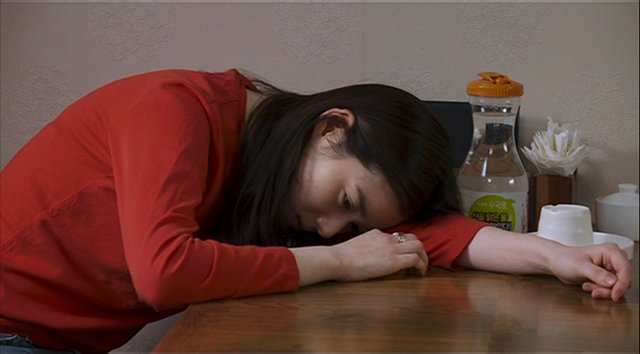
Lee’s tirade is maybe the most revealing moment in the film, and that’s a weird claim to make sense it is one that is more about him than Haewon. It’s an important illustration of the men in her life, though. The other potential relationships are introduced and end quickly and breezy. She has cute conversations, that end up with the men being too aggressive. Hong’s repetition is one of his strengths (both within individual films and throughout his career) and the repeated image of an exhausted Haewon laying her head against the table contains everything one needs to know here. Haewon is restless and sad, and there doesn’t seem to be any escape.

6


Du zhan / Drug War (2012)

19 08 2013

I hesitate to call Johnny To a “critic’s filmmaker” because the phrase could mean plenty of things. On the other hand, a film like this, a genre film so smartly constructed and confidently composed is the sort of thing that film nerds love. That’s not a dismissal, though, because there’s truly something remarkable here from a technical perspective. Perhaps it lacks something in the pathos department, but it twists and bends the action film genre to its most logical point. It’s not going to make you cry or anything, but there’s something so exciting about watching a filmmaker who is so sure of himself.

1

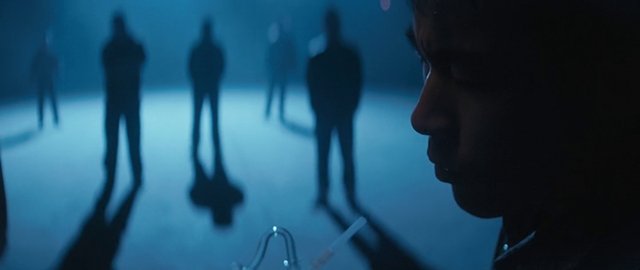
Druglord Timmy Choi begins vomiting profusely while driving, which results in him crashing his car into a restaurant. Meanwhile, Zhang has just made a huge drug bust. Choi is hospitalized, but faces the death penalty. Zhang gives him the opportunity to get out of it if he helps the police by going undercover. He agrees, but things don’t run smoothly, and Choi’s allegiance is never clear.

2

The setup here is pretty straightforward, which is ultimately a positive with the amount of narrative developments that are present. It would be exhausting to revisit all of them in text, but thankfully one can’t say the same for To’s images. They serve a purpose, sure, but his film doesn’t feel like a crime film dressed up with nice cinematography. At the same time, calling the visual style “functional” implies something negative, that it is less than great. To make things a bit more simple: the intricacy of the story (multiple viewings is probably wise) is less frustrating because To’s technical wizardry carries the momentum. One never gets the impression of walking through a puddle of exposition.

3

Here comes another description of To that seems negative: clever. Sure, maybe it’s condescending but I struggle to find another way to describe the scene where Zhang meets HaHa while impersonating Li Suchang, which is followed by the scene where he meets Li Suchang while impersonating HaHa. It’s a narrative move that is apparently a theme of To’s work. The idea alone is brilliant, but To executes it with such confidence that you never get the impression that he’s elbowing the audience in the ribs. It seems like he could be justified in doing so.

4

Not all of To’s tricks work at the same level as the scene described above. The bit with the deaf men feels corny enough to make Tarantino roll his eyes. His best moment might be the film’s finale, which is as exhausting as it is brilliant, an extended shootout scene devoid of a soundtrack beyond the sound of bullets flying. It’s a bit ridiculous, but it feels cathartic. The result of the shootout is To’s twisting of the crime film, so much so that it seems to betray the genre itself yet at the same time it feels like the most “real” outcome of such a scenario. As To begins to gain popularity in the west, I can’t think of a better film to convert potential fans.

5


Io e te / Me and You (2012)

18 08 2013

There’s something to be said about the fact that Bernardo Bertolucci is still trying. Hell, it’s really the best thing he has going for him at this point. This isn’t a terrible film by any stretch, but it does feel all a little too familiar and safe. Yes, safe. Sure, the transgressive Bertolucci stuff is still there (plenty of incestuous overtones!) and everything still looks good, but it feels a little bit uninspired. He manages to salvage something unique out of the setup in the final act. It’s a nice movie, but it seems to be lacking in energy. That could be an unfair description, and perhaps a bias towards Bertolucci’s own age. He seems conscious of this, though, because the film’s greatest strength is that one can see him trying to recapture something youthful and energetic.

1

Lorenzo is an alienated teenager who lives alone with his mother. Their relationship is composed of either arguments or bizarre sexual questions from Lorenzo. He gives his mother the impression that he’s excited for an upcoming ski trip put on by the school. It’s a front, though, and he takes the money she gives him and decides to hide in the basement for a week. His half-sister, Olivia, unexpectedly turns up and to keep her quiet, Lorenzo is forced to take care of her.

3

It’s entirely possible that I’ve simply seen too many coming of age films about ostracized teens, but the scenes that are focused entirely on Lorenzo seem to be missing something. It’s easy to feel for him on a superficial level, but we’re given few details beyond a potential Oedipus complex. It seems more like lazy writing than opaque characterization when viewing the film, but in retrospect, I’m glad Bertolucci didn’t bother to flesh the character out with scenes of him having no friends and being sad. Still, the film awkwardly starts with him listening to The Cure’s “Boys Don’t Cry” which seems too on the nose. Maybe that’s the point.

4

When Lorenzo finally begins his week-long hideout, things still seem a little bit forced. Lorenzo’s lying resonates in a weird way, but it’s hard to shake the feeling that his escapade seems so remarkably stupid. Admittedly, he is only fourteen years old and I myself did equally stupid things at that age. I mean more that the fact that we have to follow him around seems stupid, and uninteresting. There’s a little bit about his appreciation of insects, which seems like the easiest “introverted” passion for a teenager to have. Unlike Antoine in The 400 Blows, Lorenzo actually has hope because he has a passion. The heartbreak in that film (which Bertolucci makes a nod to in the film’s end) is that life is so overwhelming. Lorenzo’s life, in comparison, is remarkably easy. He might have more in common with the gang from The Bling Ring.

5

Bertolucci does capture something vital and worthwhile towards the film’s final act. Basically, as soon as Olivia shows up things begin to be interesting, albeit not entirely unique, even for Bertolucci himself. The drug addiction doesn’t feel real as much as it feels like another bullet point in how to make a transgressive art film. Even with Olivia’s breakdown, it never really feels harrowing, but I think that’s more of a positive. It’s not a film about addiction, anyway. Hell, I don’t even know what it really wants to be about, but I hope it’s something about Olivia and Lorenzo.

6

The best moments are the ones where the film tries to detach itself from time. Olivia and Lorenzo share a dance and it’s weirdly beautiful. When the movie is the two of them just hanging around, it manages to catch a groove. Again, it’s nothing new for Bertolucci. There’s shades of the brilliant Gino Paoli slow dance from Before the Revolution and the early scenes from La Luna. The film feels like its maker trying to hold on to some semblance of youth, and it’s poignant in that respect. On the other hand, this sort of thing has been done better before, and by Bertolucci himself.

7