Drinking Buddies (2013)

16 09 2013

Joe Swanberg is something of a divisive figure in cinema. My reactions to his films have fallen somewhere in the middle of this divide, but I guess I lean more towards the negative side than the positive one. I find the man about as fascinating as I find him frustrating. Certainly, there was a time when the harrowing “emotional truth” drama spoke with me, but I’ve found most of his films to be forcing the point. Drinking Buddies is a departure in many ways. Superficially, it finally gives Swanberg’s film a professional sheen, but just as noticeable is the specificity missing from his characters. He’s gone for something more broad. While both of these would seem to be improvements, they actually work as problems here, yet this is still probably the best movie he’s ever made.

1

Kate and Luke are coworkers at a brewery and the two maintain an innocent yet flirty relationship. This isn’t much of an issue even as both are attached, Luke to Jill and Kate, less convincingly, to Chris. Kate and Luke finally introduce their significant others to each other, and the quartet goes on a weekend camping trip. There, Jill kisses Chris when the two are finally alone, almost devoid of any sentiment. Kate and Luke continue to flirt, but she arrives for work the next day proudly broadcasting the news that she’s single. Jill, meanwhile, leaves for Costa Rica, opening a door for Kate and Luke to finally express the feelings they’ve playfully masked.

2

At the risk of reducing some of characters here, I would argue that Jill and Chris are mostly periphery. Make no mistake, their presence is important because it is their ties to Kate and Luke that provide another obstacle. Like Rohmer, who Swanberg is most close to (not Cassavetes), the tragedy here lies in the sort of societal strings that bind heterosexual relationships from happening and not happening. Kate and Luke would be and should be in love, but that’s never how these work out so instead they playfully work out around their feelings until the point that become unbearable. Their interactions are pleasant enough on the surface (until the end, which I’ll get to shortly) but there’s an aching uneasiness in how perfectly they gel together because they’ll probably never be together.

3

It feels hypocritical to criticize Swanberg for his film looking “too nice” since the aesthetics of his past work has so frequently been viewed as a negative. There’s a generic cleanliness in his frames here, though. He was slowly becoming a minimalist director (perhaps getting closer to Rohmer, again) but he’s hard to separate from say, Judd Apatow here. The artistry in the images is not really the point so I’d argue it isn’t a gigantic demerit but the best moments here are when the camera can rest and do without a worthless steadicam float. Again, I feel like an idiot criticizing Swanberg for the opposite thing I might criticize him for in another film. On the other hand, I think it’s worth noting that this film isn’t better than his earlier work just because it looks a lot nicer.

4

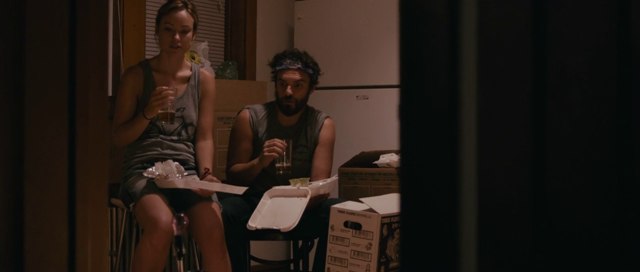
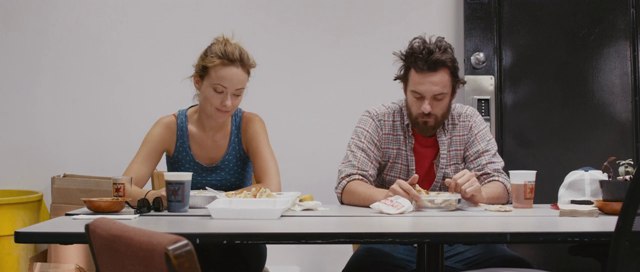
The other big common criticism he is able to get away from here is that his films are too specific, which I think again, might be a problem. Something like Uncle Kent is annoying to me because I feel the rhetoric of Ray Carney and “truth” flowing through every confession about sexual kinks. There’s nothing like that here and I’d argue that Swanberg perfectly captures the interactions of American 20somethings. In doing so, though, his brush is remarkably broad. It ultimately works, but Olivia Wilde reminds me of so many girls she could be any of them and Jake Johnson, equipped with a “cool beard” and everything, can be any dude I know. It’s not these characters feel a lot like people I know, it’s instead that they’re so lacking in anything specific that they probably could be anyone. Considering Swanberg ends the film in a way that is so willfully “open-ended” it might all be intentional. Maybe he knows the audience would want more, and then he’s gone for something a bit more opaque.

5

Swanberg grants us a little more into Kate and Luke towards the end. Luke agrees to help Kate move out of her old apartment and into her new one. Of course, the process is a total disaster because moving is almost always a total disaster. It’s a sequence that feels fresh, if only because it’s such a frustrating exercise that tends to be ignored. However, it’s a perfect point for Luke’s emotions to spill over into the open. Some have said that the scene feels forced, but I’d argue the film builds entirely into his frustration with Kate’s openness. It is part masculine bullshit (he wants to control Kate and prevent her from hanging out with anyone other than him) but the other part of it is he’s in love with Kate. The boundaries of his own relationship make this impossible to communicate in a way that fits into the realm of “reasonable” human interaction.
6

I hesitate to even call this film “good” but it’s definitely Swanberg’s biggest success. He has cleverly constructed a film that is ultimately about just two people who can’t be together, and he has formed it in the mold of a dumb romantic comedy. Chris and Jill aren’t important but their interaction is crucial. They share little to no feelings for each other but act physically on an impulse. They are the antithesis to Kate and Luke who are pretty much in love with each other but their feelings never manifested in the triumphant way we want relationships to play out. There’s problems here, but it does work as a reminder that the perfect romantic relationships that do happen are not only difficult, but are actually minor miracles. Kate and Luke’s non-relationships is, by the same logic, a minor tragedy.
7


Conte d’hiver / A Tale of Winter (1992)

9 09 2013

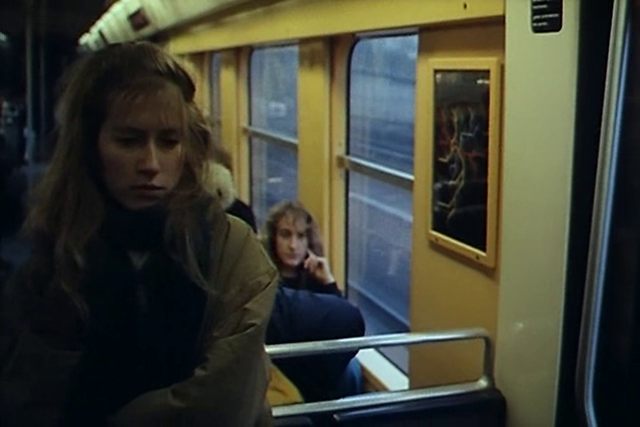
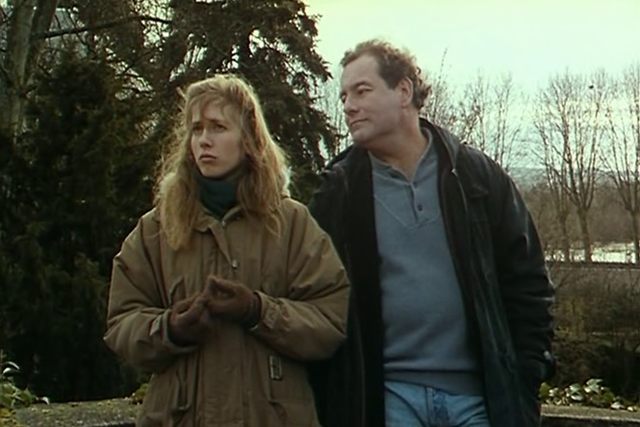
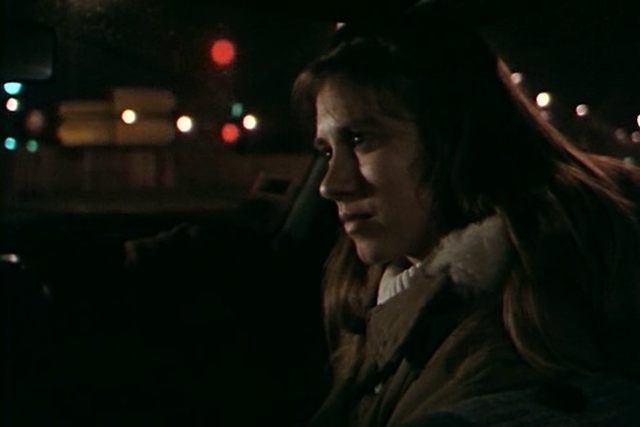
With as often as I’ve been watching his films lately, I had the feeling I knew all of Rohmer’s moves. This isn’t to say I was getting tired of watching his films or that they didn’t have the chance to surprise me. Rather, I figured I had an angle for the general tone of his work. A Tale of Winter doesn’t exactly betray this tone, but it certainly plays with the cold, hard realism of the filmmaker’s work set in the contemporary world. This is a film that gives us something of a miracle, after all, but give the man credit: he knew how to make such a miracle feel possible and the film doesn’t conclude with an entirely positive or even cathartic attitude.

1

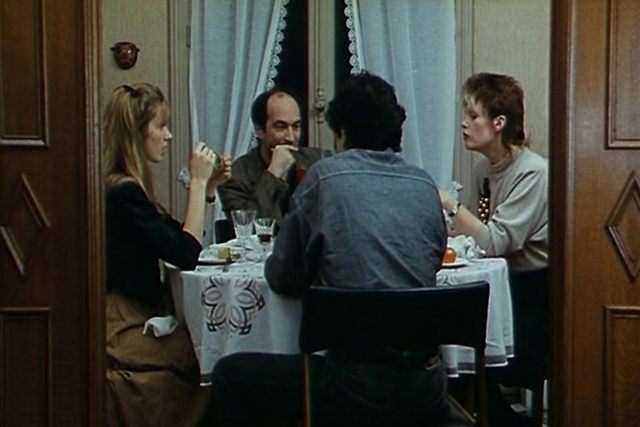
Felicie and Charles share a wonderful romance during a vacation on the coast of Brittany. The vacation ends, of course, and the two go their separate ways. Still, they plan to continue communicating. Felicie accidentally gives Charles the wrong address and the relationship seems to end. The films jumps, somewhat jarringly, to five years later. Felicie has a child, Elise (and one can immediately presume Charles as the father) and is involved with two men, Maxence and Loic. She decides on the former when he tells her of his plans to move to Nevers. Felicie and Elise joins him, but things never really click. She returns to Paris to be with Loic, but she can’t stop thinking about Charles.

2

It’s quite easy to overlook the film’s prologue, which introduces us to Felicie and Charles’ relationship. It’s the sort of thing that Rohmer could leave out entirely, and had hinted at with only Felicie’s words. It’s crucial, though, because the scene itself is so moving when we’re given the context of the film’s present. It’s not just that it establishes this relationship, but it makes one sympathetic to Felicie’s rather grand and romantic sentiments towards Charles. Throughout the film, her conversations about him lead those around her to dismiss her as crazy. They’re somewhat justified in doing so: she hasn’t seen Charles for over five years. Take the perspective of someone talking to Felicie and you can see why she’s hung up. After all, Charles is Elise’s daughter. But because of the formalities of life, the easiest response one could give her is to move on.

3

For a good portion of the film, Felicie is working on moving on. She’s involved with two men and somewhat remarkably, both are conscious of the other. It’s impressive that Rohmer has mapped a space where one of his characters can be a working mother, but still have multiple partners. Of course, having two partners might just serve as a distraction for the one men who she truly desires. She explains to both Maxence and Loic that she’ll never love them the way she loved Charles, but she hopes that she’ll love them enough. She has resigned herself to the reality that seems the most plausible in a film made by Eric Rohmer. It’s one where she’ll never reunite with her true love.

4

There’s an early sequence, when Felicie first visits Nevers, where she mentions that she isn’t religious. This seems like a throwaway conversation, but of course, seldom does such a thing exist in Rohmer’s world. Her atheism contrasts with Loic’s admittedly lapsed Catholicism. However, she has two experience which one can describe as religious. One is a bit obvious, she takes Elise to a cathedral and gazes at the architecture. Afterwards, she has a blowup with Maxence that eventually leads to her leaving him and Nevers for good. On the surface, her explanation for leaving seems to be that she can’t juggle taking care of Elise with working. Relationships are always hard, though and her decision to exit out of this comes from the fact that she doesn’t see it as one worth the struggle. Her experience reintroduced to her the idea that she could still find Charles.

5

After leaving Nevers, she returns to Paris. Although she is now unemployed, the situation is remarkably better because her mother can help take care of Elise. She immediately goes to see Loic and explain to him her new decision. It’s not that she’s decided on Loic instead of Maxence, but that she’s gone back on her initial plan. Loic offers to take her to a performance of Shakespeare’s The Winter Tale. Ever the skeptic, Loic explains to her as being far-fetched, but she agrees to go with him anyway. To keep things brief, the scene Rohmer decides to show is about resurrection. It’s the thing that Loic has, in the previous scene, described negatively as a “fantastic thing” but Felicie is completely caught up in it. On the drive home, the two share a discussion over the scene which underscores Felicie’s newly found faith. She even goes to the point of saying she’s more religious than Loic, an observation on his inability to believe in something miraculous.

6

Loic seems to be the film’s most logical viewpoint, especially when Felicie struggles to be sure of herself. However, his reservations about the “fantastic” are foolish, and Felicie gets her own miracle. She runs into Charles on a bus and the two get back together. She’s been either struggling to block out Charles for the entire film, but the two end up together. It all happens in the blink of an eye. This is how reality works sometimes, though I acknowledge the fact that such a fantastic event can be jarring in Rohmer’s grounded world. Indeed, the couple reuniting is the equal to the resurrection in Shakespeare’s play. The moment is less transcendent for Felicie, though, because life goes on afterwards. We’re left wondering if Charles will fit back into her life. There isn’t a cruel hint that things are going to go wrong, but we’re also not given the satisfaction that the two reuniting suggested in the film’s opening.

7


Conte de printemps / A Tale of Springtime (1990)

8 09 2013

A typical criticism of Eric Rohmer would be that nothing happens in his films. Sure, this seems like a pretty typical arthouse talking point, but even in the scope of the European film canon, his films are especially unassuming. They’re actually more direct than they are obtuse, which probably creates another level of frustration for the viewer. Every film I’ve seen from him can be explained broadly as people talking, which isn’t the most exciting description. But in making films that aren’t concerned with visual poetry, he presents the idea of a text that can be studied for what’s really important: the people in the film itself. A Tale of Springtime is more of the same, but the story feels conscious of its ideas. His other films can give the viewer something new with every viewing, but A Tale of Springtime feels too sure of itself.

1

Jeanne and Natacha strike up a conversation at a house party. The two are drawn to each other, perhaps because they don’t know anyone else at the party. Jeanne explains that she’s lending her place to a friend and laments having to sleep at her boyfriend’s apartment while he’s away. Natacha invites her to stay at her apartment, which has an empty bed because her father, Igor,  is out of town. The next morning, Igor arrives and awkwardly runs into Jeanne. With Natacha’s well-documented disgust for Igor’s girlfriend, her friendship with Jeanne begins to seem more and more like an opportunity for her to play matchmaker.

2

If Pauline at the Beach is a film about learning to lie, then this is a film that more explicitly explores the emotional repercussions of literally lying. The former film is a bit more abstract as the idea is more in lying to yourself, lying about feelings, being willfully delusional for your emotional satisfactions. Here, the lying is more evident, though it should be worth mentioning that it is more about Natacha’s withholding of information. Perhaps that’s not lying, but we still are left to deduce if she intentionally forgets to tell Jeanne about her father coming back with the hope of creating a spark between the two. It’s something of a mystery film that never gets a payoff, which isn’t exactly uncharacteristic for Rohmer himself. Full Moon in Paris has a similar quality, though we eventually get a conclusion that ties the narrative together. Here, it could not be more open-ended.

3

The crux of the film is the relationship involving Natacha and Jeanne. While most of the discussions are about potential romances or romantic relationships already in progress, this is one of the few Rohmer films where the motivation for such love isn’t the central driving force. It’s a friendship film, but it’s troubling in the idea that the friendship might not be legitimate. This sounds kind of corny and perhaps Natacha and Jeanne are still friends even if Natacaha is recruiting Jeanne as a potential stepmom. The film asks the viewer to observe and scrutinize their conversations, which is really the “meat” of any Rohmer film. The big difference here, for me at least, is that I feel like the story is reduced to this idea.

4

This isn’t to say that Jeanne and Natacha aren’t interesting people, and that there’s nothing else to take away from their conversations. Jeanne’s background as a philosophy professor (which comes from Anne Teyssedre’s own life, not Rohmer’s pen) works itself naturally into the director’s typically loquacious universe. This is probably the first time I’ve actually started to believe that the characters are talking too much, if only because their conversations feel a bit too obvious. Natacha’s conversations with Eve when they’re not already arguments, are easy to understand as coming from a place of anger. It’s not a simple film really, but it just feels “easy” (for lack of a better word) within Rohmer’s canon.

5

I want to stress that A Tale of Springtime is still a pretty wonderful film. There’s something to be said about Rohmer’s side-meditations on personal identity. As he did in Full Moon in Paris, he touches on this here by relating it to a person’s place of residence. Once again we have a protagonist that has two apartments, but Jeanne speaks much more negatively of her spaces than Louise in the earlier film. Here, Jeanne utterly detests her boyfriend’s apartment, it’s not her partner but where he lives. Her boyfriend is mentioned passingly and never seen, and Natacha suspects that Jeanne isn’t really attached to him. It’s sort of a brilliant little move. I mean, it’s not as though we are always surrounded by the most important people in our lives, especially during the moments Rohmer finds the most interesting. There’s something to be said about Rohmer’s meditation on the formal nature of human interaction. His insights continue to be stunning, but this film isn’t quite as thick as others. That’s hardly a damning criticism.

6


Life is Sweet (1990)

5 09 2013

Mike Leigh has built his reputation on providing realistic, slice-of-life portraits. I mention this banal phrase, because I feel there’s enough evidence to contrast this claim. Certainly, the filmmaker has the ability to capture fractured moments of truth, but a film such as this one suggests that his character, even if they are interesting, are actually drawn rather broadly. At times, Life is Sweet feels like a sad cartoon. Leigh has found something heartbreaking within these stories, but the characters themselves seem to be missing a depth that would elevate the film beyond just heightened emotional experience. There’s enough interesting things to digest here (no pun intended) but it’s not a harrowing experience like Naked or Bleak Moments. It’s quietly sad movie about loud characters.

1

Nicola and Natalie are twins in their twenties, but they’re still living with their parents, Andy and Wendy  Natalie works as a plumber, and has a generally calm demeanor. Nicola is unemployed, and constantly on edge. Andy is a professional cook, but his personal project is a beat-up fast food van, which he hopes to update and maintain. Meanwhile, family friend Aubrey also has a food project, he’s opening a rather garish French-themed restaurant. Wendy volunteers to help, but Aubrey’s own incompetence suggests that the restaurant itself is doomed.

2

Leigh himself calls Life is Sweet an ensemble piece, and I am inclined to agree, but unfortunately this is where the film runs into some problems. The biggest problem of all being Timothy Spall’s performance as Aubrey. Everybody’s characteristics are heightened here, but even he seems jarringly simplistic. In fact, simplistic doesn’t get to the root of that character’s problem, it’s instead that he feels like a reoccurring character from a sitcom. This wouldn’t be too much of a problem if the film didn’t devote so much time to him. There’s something a little bit sad about him waiting in his own restaurant on opening day, but that seems to come from the context of anyone’s hopes being dashed. He makes such a buffoon of himself, throughout the film and especially following the restaurant’s poor opening that it challenges one’s sympathy. Maybe this is a credit to Leigh, but in reality, it’s hard to not be relieved by his failure.

3

The most frustrating part of Aubrey’s presence is that it takes time away from what actually is a pretty interesting family study. Nicola is drawn a little too thin as a psuedo-activist, but at least she’s given time. Natalie, who seems the most well-adjusted person in the entire film, is given very few moments that flesh her out. Maybe this is what motivates Leigh to spend more time on the rest of the family, but we only get hints about her. We know she’s going to America for vacation and we know she enjoys playing pool. On the commentary, Leigh mentions that her outlook is healthy and this is referring to a conversation she has with Nicola. The implication is that she really is just the “healthy” foil to Nicola, who struggles with an eating disorder. It reduces Nicola too, suggesting that she just needs to “get it together” to be like her model sister.

4

There’s some positives to be found here, of course. I mean, I do think the family itself is interesting enough. Andy is playfully revealed to be a competent and professional chef, somewhat of a twist when the film sets him up as a wage laborer. Wendy has one particularly wonderful moment with Nicola towards the end, and her frustration with her daughter feels like a mother’s frustrating love. Leigh is able to capture isolated moments that feel real and tender, but it feels sort of wrong in the film’s context. For every breakdown Nicola has with her mom, there’s another scene of Aubrey drunkenly knocking things over. Maybe there’s some perverse pleasure to be found in miserable characters making morons of themselves (this is what Leigh’s wonderful Abigail’s Party does) but it comes at the expense of what could be a great family drama.

5

Leigh does provide something vital here, which makes the film worthwhile, but in addition to Aubrey’s hijinx, there is a nagging sensation that the film is weirdly conservative. He’s not a polemic filmmaker, but there’s a tension here that suggests a quiet resignation to neoliberalism. If it’s intentional, it’s brilliant and absolutely heartbreaking. However, the simplistic morality stuff seems too deeply coded into the film to separate it from Leigh himself. Nicola seems to recycle standard feminist and leftist rhetoric, but the humor comes from the fact that she’s just reciting phrases. When called out on her personal politics, she collapses into a ball of rage. The greatest sadness comes from the fact that she’s so frustrated and hurt but can’t articulate herself in an adequate way. It’s played up as humor here, though. She’s passionate about her politics, but the characters ask why she isn’t marching in the streets. The answer is pretty plain and simple: she’s dealing with emotional and mental issues that she refuses to share with anyone else. Maybe I’ve become something of a softie, but Leigh’s dealing with her isn’t as consistently warm as I think it should be. The moment she has with Wendy is fantastic, but it’s hard to forget the rest of the film which usually frames her as foolish. There are some exceptions to this, though, the most obvious example being the scene where she binge-eats and vomits.

6

The “I would have done this” instead is one of the laziest and unhelpful critical routes, but I get the feeling that Leigh would have been on to something wonderful had he eliminated some of the broad humor here. The Aubrey character can exist, but doesn’t need to dominate a section of the story the way that he does. The sisters themselves need more time, if only because Leigh has made them so fascinating with the limited time he has managed to give them. Everything concludes in a weirdly upbeat manner, though the conclusion itself is open-ended enough to suggest that not everything is okay. Still, the jaunty tone doesn’t seem to benefit the film’s best moments, but it does explain its worst ones. Maybe this is why Leigh’s next full-length feature would be his grimmest since his debut. This isn’t a bad film, but it’s one I have to wrestle with in the context of Leigh’s career. I admire it and I still love him as a filmmaker, but it’s not his most essential piece.

7


Les nuits de la pleine lune / Full Moon in Paris (1984)

26 08 2013

While I love Pauline at the Beach, it does seem that Rohmer works best with 20something French yuppies. Interestingly, this is a change of pace itself from the last three Rohmer films I’ve reviewed in that it’s actually a “city” film. I’d say the distinction isn’t that important, but the filmmaker himself seems to be toying with the idea that setting matters. In a way, he has remade Murnau’s City Girl, where we’re to believe that life is hard regardless of where you are. City life is tough, but the rural isn’t some romantic dream world. There’s no farm here, but there is a nice and quiet suburbs which are contrasted against the streets of Paris.

1

Louise is an interior decorator working in Paris, but living with Remi, her boyfriend, in the suburbs. Their apartment, located right next to the train station, is ideal for Remi: there’s plenty of tennis courts nearby. It’s a nice situation for Louise, but she wants another living arrangement, not to replace what she has with Remi but to coexist with it. She takes up in a city apartment she’s in the process of redecorating to be closer to the city. There, she has more freedom to access the nightlife with her friend, Octave, who while thinking of himself as a cold intellectual, is actually completely infatuated with Louise. While her adventurous lifestyle suggest that Remi has reasons to worry, it’s Louise who begins to suspect he is the one being unfaithful.

2

There’s an immediate point of interest here in that it is Rohmer doing a “city film” and of course, this holds even more gravitas when the city is Paris. While the photography looks slightly different (it’s a lot more blue!) the filmmaker’s style doesn’t seem to be modified in any remarkable fashion. This actually furthers the playful manner in which the filmmaker handles the suburban/urban dichotomy that is present here. We begin to see that the difference is not exactly superficial, but one that is dramatized by the fact that the two function as binary oppositions. Louise herself perfectly sums up what it is that draws her to both spaces, “When I’m in one I want to be in the other.”

3

Her desire to live within multiple spaces is easy to understand: while Rohmer never gives us an actual number, it is easy to see Louise as younger than Remi. She’s recently graduated from school, and still wants to have the freedom that comes being a young woman in the city. Remi, on the other hand, has progressed further along in his work and he’s more than fine with settling down to a life in the suburbs, where he can be close to his tennis courts and see the countryside. The previous paragraph might suggest that the differences between the two spaces are exaggerated, but in reality, these still represent something to both Louise and Remi. Louise could still go to her parties in the city while just living in the suburbs, but it’s not as practical and it would drive Remi crazy, which is exactly what ends up happening anyway.

4

The Louise and Remi relationship is on shaky ground from the film’s opening. She tells him she’s going to spend the night in Paris for a party, he’s upset and tries to talk her out of it. The two share some tenderness but their goodbyes seem ambivalent. Remi shows up for this party and stays for hardly a minute, and he can’t leave without contributing to Louise breaking down in tears. There’s nothing in the film that makes us actively root for this relationship to work. They have their moments, but Remi’s behavior seems like it could become violent at any moment. Indeed, at one point he begins punching himself, which certainly isn’t the worst thing he could do, but his behavior is frightening none the less. It seems the less time the two spend together, the more accepting the audience is that they’re trying to make it work. It makes sense in real life, as plenty of relationships are dragged out by participants refusing to communicate their feelings.

5

As odd as it sounds, Rohmer has almost made something of a Hitchcock thriller here. I mean, all the trappings of the genre are obviously absent, but there’s something in how he constructs the story here that feels like a calculated suspense story. After all, suspicions of Remi’s affair has a red herring (Camille) and the woman he ends up in love with, Marianne, functions dramatically speaking, as Chekhov’s gun. It seems cruel to reduce characters to plot devices, and would almost definitely seem like a critique of such a character-driven filmmaker like Rohmer, but it works for whatever reason here. Louise is the character we’re invested in anyway, which makes the film’s finale almost as confusing as it is heartbreaking.

6

Louise cheats on Remi with Bastien, a young saxophone player who’s only in Paris temporarily. In their night together, Louise gets to experience what she wants out of Paris: freedom and the chance at a purely physical relationship, something she has admitted to never having earlier on in the film. The morning after, she leaves Bastien quietly and returns to her apartment in the suburbs to find it completely empty. There’s something suspenseful about the sequence, and it is one of the most impressively photographed moments in Rohmer’s entire career. Remi arrives later and confesses that he too was cheating on Louise. Initially, she does not mind it and explains that they were both with “unimportant” people the night before. Remi explains that he’s in love with Marianne, though. This ends the relationship as well as the film.

7

The ending here seems difficult to read and understand. One could see it as Rohmer shaming Louise putting her own freedom ahead of her relationship and thus, not realizing how important it was until she lost it. This is the most conservative reading of the ending, and not particularly interesting. Another suggest that she’s escaped a life of suburban imprisonment. Neither reading fits with how the ending feels. It’s heartbreaking, even as Remi sympathetically suggests that they make each other miserable and they’ll be better off separated. This seems logical and it’s everything the film has been pointed towards since its starts. Still, to Louise and to us, it is incredibly jarring and stings. She enjoyed the safety of the relationship, even as she wasn’t willing to commit entirely to it. One can’t blame her for wanting stability and freedom, just as one can’t blame Remi for falling in love with someone who embraces him. It’s an ending that’s difficult to pin down and make definite statements about, but sometimes that’s how relationships work out.

8