Kalamita / Calamity (1982)

14 05 2014

Despite making one of the most transgressive and unique films during the 1960s, Vera Chytilova’s career never really gained much from the momentum of Daisies. Her 1966 film is rightfully beloved, as one would have a heard time erasing any of the images she crafts in her bizarre, kaleidoscopic and kinetic assault on the senses. Her political sensibility remains in Calamity, made 16 years later, but her method is a little different. On the surface, Calamity is overwhelmingly quaint and almost typical in how closely it matches the mold of an arty movie about a sad dude. But that’s Chytilova’s point: that the “rebellious” rhetoric of arthouse cinema is hypocritical and it has left us with the same old images. One where the plight of the young, white, heterosexual male is the center. By making a film so mundane and unremarkable, Chytilova challenges the impulse that makes us return to the well time and time again to mine pathos from a group who is least in need of representation.

1

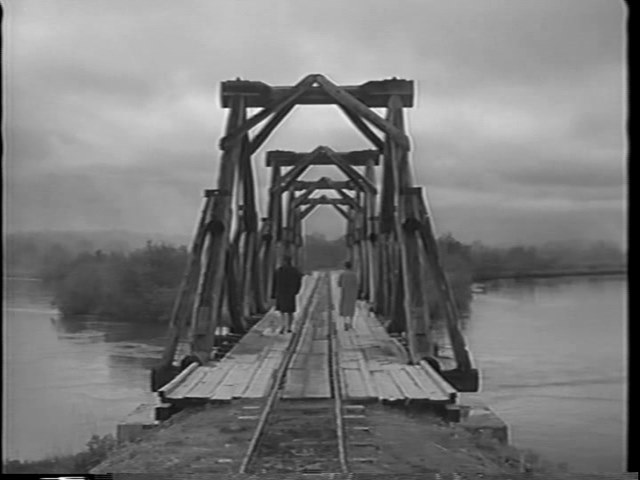
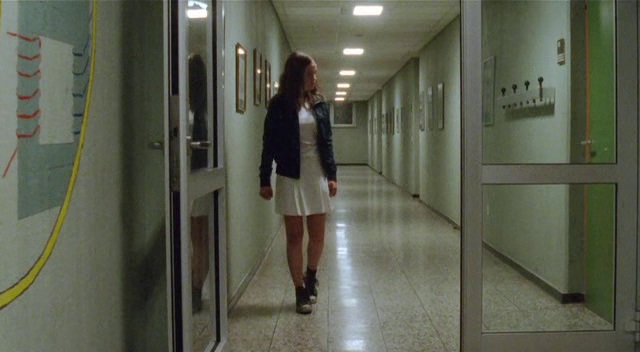
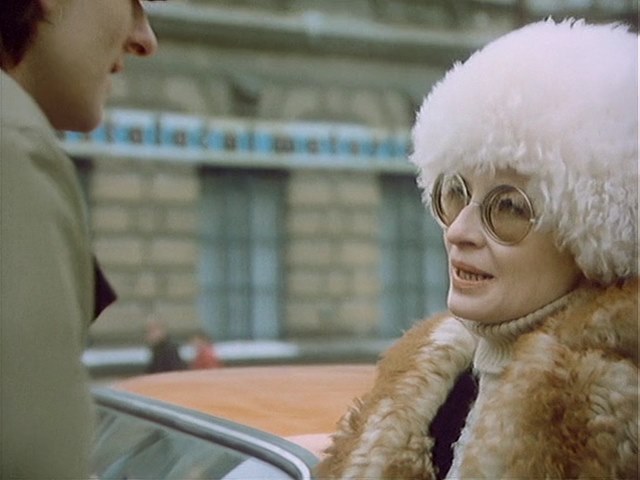
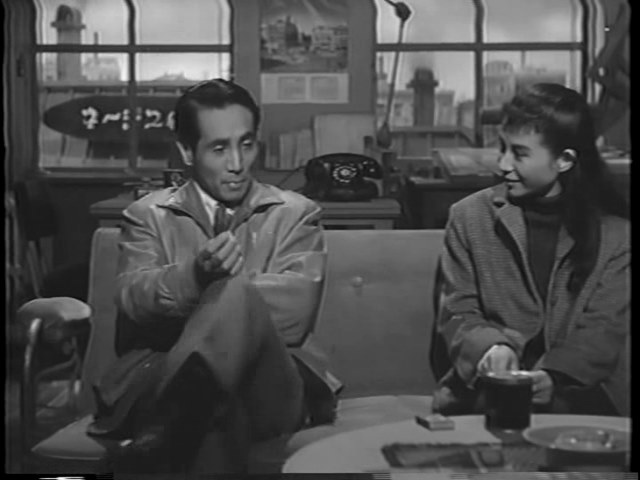
Johnny takes the train home from college early. He’s not exactly willing to announce the matter, but he’s dropped out of school. He suggests that he’ simply impatient with the college experience, but one gets the sensation that his lack of motivation lead to less than stellar performance. Whatever the case, he immediately tries to become an engine driver. While many question his ability, he seems to get through the training process and almost immediately becomes a driver. In the process, he finds himself unintentionally involved with three women, two of which he doesn’t seem particularly interested in. What makes Johnny so goddamn exceptional? Nothing really, he’s unmotivated and lacking in education, but he can’t seem to cross the view of the opposite sex without something happening.
2

If there’s something lacking in Chytilova’s biting critique, it’s that she hasn’t made a film that is particularly, uh, pleasant. It has it’s moments, in a technical sense, but because she is mocking a style of film that she (and I myself) believe to be dull and lifeless. As is the case, the trajectory of Johnny is somewhat, well, dull and lifeless. When the film isn’t saving us from his presence with dialogue undermining his character type, there isn’t much to appreciate. Sure, Chytilova loves to whip the camera all around a location, which is interesting, I guess. The stylistic flourishes are too fleeting, though, and seem like conscious attempts to make things seem exciting. It’s a uphill battle, because the crux of her critique is that what is happening here is not remarkable, and the repetition of such images and narratives limits us as an audience.
3

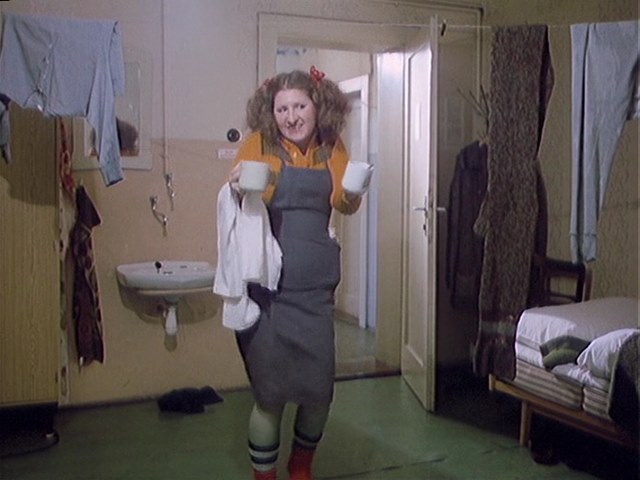
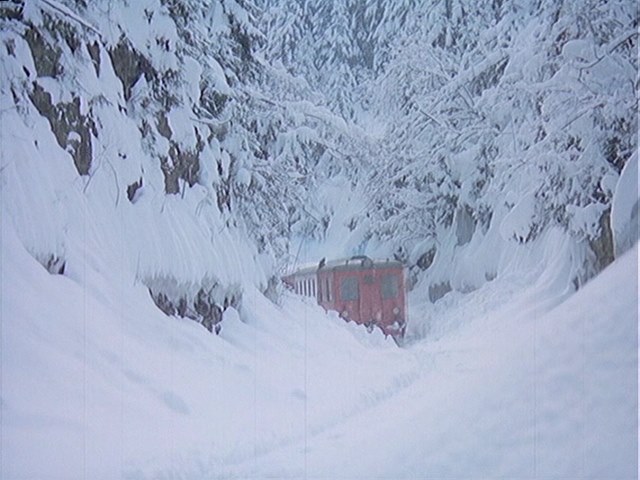
The film ultimately work because it does manage to bite at times. During one potentially physical relationship, a woman, in reference to Johnny, declares that she “just loves sick idiots.” Those the context of the film tells us that Johnny himself is physically ill (with a cold), out of that context its hard not to see Chytilova playfully jabbing the bellies of countless arthouse classics (Closely Watched Trains is referenced) in which women seem to gravitate towards otherwise miserable male character. Yet, she is also critical of the very fact that we’re sympathetic to these men, because like Johnny, they are ultimately not that fantastic. The film ends with a train, driven by Johnny, getting stuck in an avalanche. It’s not hard symbolism, but the suggestion is that like the passengers on the train, we are all stuck in the storytelling centered on the heterosexuality of white dudes. The fact that these stories are present even in a cinema that is meant to jar and clash with the conventions and molds of the mainstream is disappointing.

4

One can’t help but get the impression that although she crafts a valid satire, that Chytilova would have liked to devoted her attention elsewhere. Following 1966, the government made it nearly impossible for her to make a film and the Soviet Union’s invasion of Czechoslovakia in 1968 only worsened the situation.  She was forced to pursue a safer, more easily digestible form of cinema. Simply stated, her expression was stunted by the political climate. One wonders how Chytilova’s planned biopic of Božena Němcová would have turned out, but she was never given the opportunity to go ahead with that project. Even a film like Calamity was only shown in limited theaters, and the publications who were daring enough to write about it, were usually censored. Calamity as a film is remarkable because it gives us a woman, jumping through all the deliberately impossible obstacles for the sake of self-expression. The end result heavily critiques the same type of control that limited her creativity.
5


Banka / Elegy of the North (1957)

13 05 2014

While David Lean’s Brief Encounter is almost universally beloved, evoking the film in certain comparisons almost seems to inherently imply a negative connotation. The beloved melodrama is seen as the epitome of its type, and the film that try to retread the magic it left behind basically are saturated with some problems that they almost serve as an explanation of everything that makes that film feel so right. Heinosuke Gosho’s Elegy of the North, made in 1957, has yet to even reach the purview of many English-speaking film scholars, but the few who have taken notice to it would find a hard time deflecting comparison to Lean’s classic. While both films occupy a cinematic space that is populated with swooning, romantic gestures, and big, monumental feelings. It’s not a typical route for Gosho, but nestled underneath all the reverie is something a bit more grounded.

1


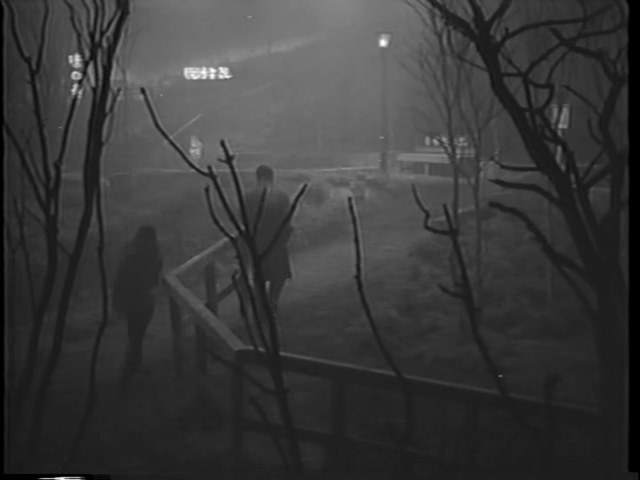
Reiko gets her arthritic hand bitten by a dog. The dog’s owner, Katsuragi is extremely apologetic. “The dog never bites” he tells her. “Dogs never bite me” she replies. Reiko becomes fascinated by Katsuragi. Once his deferential facade wears off from their original encounter, he is revealed to be a deeply unhappy man. Sure, a wealthy, attractive, and married doctor should have very little to complain about but the stillness of his life is beginning to hit him. He’s not out of love with his wife, Akiko, but the passion seems to have faded. She herself has begun seeing a med student on the side. Reiko and Katsuragi become more than friends, but his extended business trip leaves both Reiko and Akiko without anyone to talk to. Naturally, they become best friends, but Akiko remains unaware of her husband’s infidelity.

2

Pardon the baseball analogy, but Gosho is really swinging for the fences here. Going for a film that tries to cover such a big, important part of the human experience is always commendable, but his film never quite achieves the transcendent moment for which he shoots. I guess this sounds like a simple criticism of “too melodramatic” but I find that phrase both misused and overused, as while as ignoring the problems that come up here. The reality is that the film is adequately melodramatic, but its issues lie in a betrayal to what it wants to tell us. At its best moments, Gosho has given us a story about two women who should be in opposition to each other, but become wonderfully close friends. This would be enough for a typical Gosho film, at least by the standards of Arthur Nolletti. Like Naruse did with Floating Clouds in 1955, Elegy of the North attempts something more pointedly and poetically “profound” than the usual work of the film’s director. Naruse was successful and his film, though atypical for him, is one of the most masterful moments in a career stocked with them. Gosho’s film is a success too, mostly on the strength of his performers, but overall, it feels a little over baked.

3

One needs to give credit where credit is due, though and Elegy of the North does feature one of the best casts ever assembled. Yoshiko Kuga and Masayuki Mori would have received top billing, but the presence of Tatsuo Saito and Mieko Takamine is just as exciting. Both of them may have been considered washed up by 1957, Saito achieving most of his success during the late 20s/early 30s, Takamine during the late 30s/early 40s. More important than familiar faces is the fact that both Takamie and Kuga nail, what I would argue, is the meat of the film. That being the relationship between Reiko and Akiko. Their actual interactions seem a bit maudlin, Reiko quickly takes to calling Akiko “mom” but the film leads up to their friendship in a way that is both real, and easily the most interesting thing in the film.

4

Upon meeting Akiko, Reiko mentions that she’s aggressive. “I’m a hunter, a swan hunter. If I have my eye on something I won’t miss it” she tells her. The film awkwardly gives a cutaway of actual swans, before quickly cutting back. It’s almost there that Gosho himself realizes that the illustration isn’t necessary, we’ve already seen Reiko as a “hunter” before. To call her a hunter would be missing the point. She’s aggressive around Katsuragi, but not in a way that suggests male heterosexual wish-fulfillment or even a one-dimensional femme fatale. In a scene at a bar, she has control, but not in a way that suggests she’s a manipulative woman just teasing and seducing him to torment him. Such a person seldom exists in real life, but is constantly created in the pen of frustrated men. Give Gosho credit here: his film, perhaps brought down by some silly narrative shifts, still manages to populate its world with women that feel real and complete. When the film is focused on the struggles of Reiko and Akiko, it touches on something that is far more substantial than a doomed affair. Sure, a nearly-mythical and tragic love story can work, but it seems like Gosho should have spent more time with the far more interesting relationship unfolding in the periphery.

5


Die Unerzogenen / The Unpolished (2007)

9 05 2014

Within the first five minutes of Pia Marais’ debut, young Stevie is told by her mother, Lily, that they need to mentally prepare for the return of her father, Axel. While this suggests we might need to be afraid of Axel (his name is menacing enough, if not comically overzealous), Lily herself quickly finds herself back in his arm. Stevie is unimpressed, though, and she’s rather break away from the control of her parents. Marais’ debut is one of the all-time great films about being a teenager, it seems very much in step with The State I Am In, directed by Marais’ fellow countrymen, Christian Petzold. Marais might have more in common with Maurice Pialat, though oddly enough her debut seems like the antithesis of his most celebrated work, A nos amours. The problem here is not teenagers having the freedom to confront their approaching adult and being alienated by it, but instead one who is trapped in that tragically liminal state, but willing to do everything to break out of it.

1

With Axel back in the family picture, Lily and Stevie move into his deserted house. There’s two other men there, and it would be presumptuous and unfair to label them as drug addicts, but they are there because they’ve been weathered down by the conditions of conventional society, and the living plans that go with that. One of them, Ingmar, shows an interest in Stevie. She is repulsed by the men around her, and instead their constant references to her budding sexuality. She teases him, but the only attention she is able to receive from anyone comes from his gaze. Stevie makes some friends her age, but they are still cold around her, perhaps simply having her around to benefit from her drug-dealing parents. Even with some companionship, she struggles to shake the feeling that she’s alone.

2

There’s an uncomfortable feeling one gets in watching Stevie do pretty much anything in this film. Perhaps that’s because everything she does involves her in close physical proximity to her parents. One wouldn’t describe them as “helicopter parents” in fact they are the parents that such individuals who fit the label fear. They’re irresponsible, care-free, and financially dependent on Axel dealing drugs. This might seem overwhelmingly bleak, perhaps approaching the fatalism of someone like Lars Von Trier, but Marais’ eye observes everything as if under the control of the bewildered fourteen year old girl who is experiencing all of this. Sure, it’s bad to be hanging around exclusively with junkies, but it is the only existence she knows. Instead of overwhelming the audience with how terrible and miserable Stevie’s family life is, Marais’ camera almost suggests we get comfortable with the reality, just as Stevie herself has had to do. So many of us are fascinated by the “transgressive” nature of poverty, especially in film (see GummoLos Olvidados, Pixote – all films I would consider favorites, by the way) but Stevie herself is bored with it. She is constantly looking for what she finds fascinating, but what many of us would call banal: the well-dressed family staying in same hotel, a group of girls her age gossiping about boys, and so on.

3

More important than this idea of “normalcy” which is obviously a construct. As a teenager, the rest of the world seems normal because we see only the performance of others in the public sphere. I hesitate to say “everyone is fucked up” because it sounds both trite and reductive, but it might be wise to express such a sentiment to Stevie. She doesn’t realize the idea of normal is completely false. Her more tragic learning moment comes in her interaction with men. She wakes up one day to find Ingmar in the kitchen. His body language, how he positions himself in the physical space of the kitchen is already sexual and intended to discourage to Stevie. To her credit, she beats him at his own game. She promises to perform fellatio on him, before recanting and adding “you could never afford me anyway.” It’s a powerful moment for Stevie because she’s won this sort of game, but alas, she’s going to spend the rest of her life dealing with similar bullshit from men.

4

She warms to the idea of Ingmar as a potential sexual partner, though and eventually throws herself at him. It’s easy to read all of this as the actions of a sad girl trying to communicate something with the rest of the world, but again, that’s too simplistic. As much as Stevie is repulsed by the sexuality that men around her impose on her body, she is fascinated with the idea of sexuality to herself. She sees a romantic relationship to achieve some agency, and distance herself from her parents. Throughout the film, Lily and Axel wield her around like carry-on luggage. Children can be a burden, sure, but they almost accept her as only this possibility. Not as a person worthy of their love and care. That’s why she seeks something else. The heartbreaking irony is that a romantic relationship will, in all likelihood, lead her down a similar path. As Hong Song-Soo has showed us, a patriarchal society limits a woman’s agency when she’s in a heterosexual relationship. This is not her fault, of course, but Stevie’s craving to be her own person is not likely to be fulfilled with the route she’s taking.

5

The beauty of the situation, if there is any to be found, is that Stevie does indeed have the time to fuck up and learn. So many of us do, whether it be with sex or the countless other exciting yet emotionally exhausting things we do as teenagers. I come back around to Pialat’s A nos amours. The anxiety felt in this film is the pressures of being your own person, and the struggle happens within an environment that is much less imposing than the one in Marais’ film. Suzanne’s situation seems brighter, she would be the type of girl that Stevie gazes at in jealousy. The experiences are always different, but if there is something universal in the teen condition, it’s the idea of being counted as a person. Both films are beautiful and bittersweet depictions of this struggle. It’s one we should all remember and be sympathetic towards.

6


Dealer (1999)

8 05 2014

There’s no one who has seen Thomas Arslan’s Dealer that wasn’t completely sure what they were getting themselves into before hand. Perhaps “Bressonian” is an overused description of style, but where cinema stands right now, Bresson’s aesthetic DNA is over a great deal of things. I mention this because I think it’s a fair description of Arslan’s film, but I mention it in passing because I think dwelling on this shared ethos will yield analytic results that are trying too hard and reaching too far. To clarify, there is something intriguing in where these filmmakers overlap and connect, but it would be a disservice to Arslan to focus solely on how his film works in step with a canonical classic like say, PickpocketDealer is cut from the same cloth, but its print is unique and worthy of our investment.

1

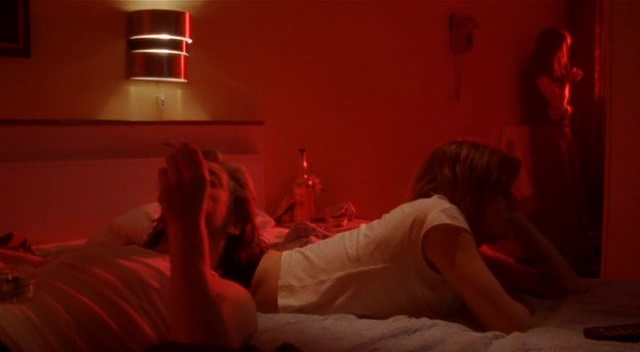
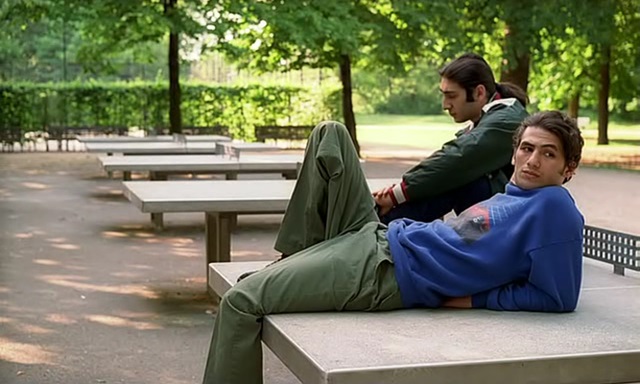
Can is a drug dealer, but not by choice. He lives with his girlfriend, Jale, in a cozy enough home with their daughter. Jale is constantly trying to get Can to find real work. He says he looks for it, but can’t find anything. She calls him on his bullshit. She’s not the only one giving him a hard time, though. Can is repeatedly visited by a cop that he knew in his youth. The cop gives him the option to work undercover for them, but the persistent act never wears him down. He dreams of something bigger, which is what his boss, Hakan, might offer him. He’s opening up a new bar and he wants Can in on the dealing, but again, he’s getting pressures from every angle.

2

As one would expect from Arslan and his Berliner Schule peers, everything here is played rather straight. There is no non-diegetic sound, and the things we do here are the unremarkable sounds that many of us are already familiar with. Arslan’s focus is not on the bustling streets of the city, but instead on the outskirts, where the soundscape is dominated by the hum of an air conditioner, or the scattered screams of schoolchildren off in the distant. While Can feels the pressure from his profession, it is not the conventional gritty hustle we so frequently see portrayed in America, or even the images we’re fed on the local news. Can’s environment is not another character itself, it’s something quite banal and unremarkable, but Arslan’s ability to illustrate its ethos is poetic. Sure, its not pointed and romantic, but it is loving in ability to step back and observe.

3

While Dealer is not a political film, it does reflect a reality that requires some political unpacking. Can, and most of his coworkers are of the Turkish diaspora. Without reading too hard into the  Turkish-German relationship that I don’t know enough about, it’s easy to see it translated to the Black-White relationship in America. The “war on drugs” was launched to criminalize the behavior of young, Black males. Their customers might be richer and white, but the design of such a program was intentional in criminalizing those who turned to drug dealing as a last resort. In America, the war on drugs is a hollow, rhetorical tool used to legitimate abuse impoverished and colored bodies. The same thing seems to be happening in Dealer, where the drug king isn’t hassled nor are the white buyers, but the Turkish dealers are, and they feel the brunt of the apparent “anti-drug” measures made by the law. Arslan’s film observes this, but like everything his camera captures, nothing is made of it. It’s the reality, and Arslan feels no need to point at like a more superficially “social problems” film would. He’s not aloof to the problems. The critique of the system being less pointed makes more biting at times.

4

What Dealer quietly observes is the reality that many of us face. Immobility might be a problematic term, but definitely the inability to move upwards in society. Can and Jale are ultimately stuck not by his drug profession, but instead the society that leaves him with no other options and then criminalizes his only means to living. As he himself points out late in the film, “They made it impossible to move.” He’s referring to the local police here, but this kind of manipulation, this trapping is something institutional. This kind of critique is not in the discourse of Dealer itself, but instead hidden away in the languid, empty shots of the protagonist looking on. Perhaps I articulate something similar far too often, but this is an effective political film precisely because it is not a political film.

5


Park Row (1952)

5 05 2014

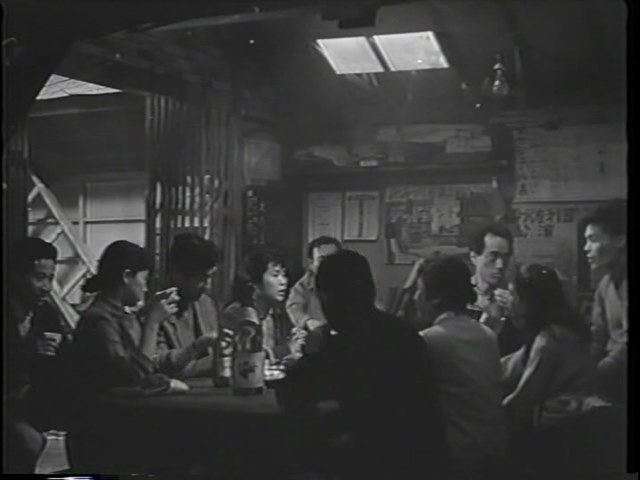
Much has already been written about director Samuel Fuller’s own admiration for his 1952 effort Park Row. The film, a personal love letter to the very newspaper world he worked his way through as a youth, was a fiscal failure, which almost seems to deepen its bond with its filmmaker. Fuller’s style of filmmaking always suggests that he’s going 100 miles per hour, and that he believes every bit of his film is crucial and urgent. The comparison seems forced but through this idealism Fuller finds his closest colleague in Pier Paolo Pasolini. Sure, they worked towards a different ideology, but both did so with such passion and earnestness that what one could call “amatuerish” about their work (ie the potentially hamfisted nature way their politics manifest) ends up becoming part of its charm. Though “charm” seems to be a disservice to both men, it’s almost the ethos of their energy energy, and it becomes more and more contagious in every moment.

1

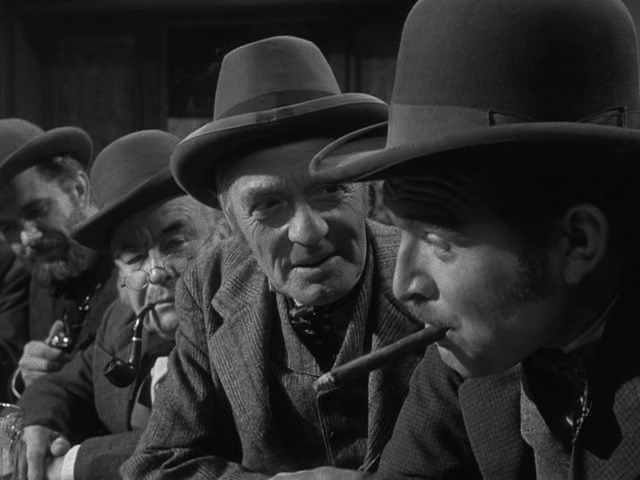
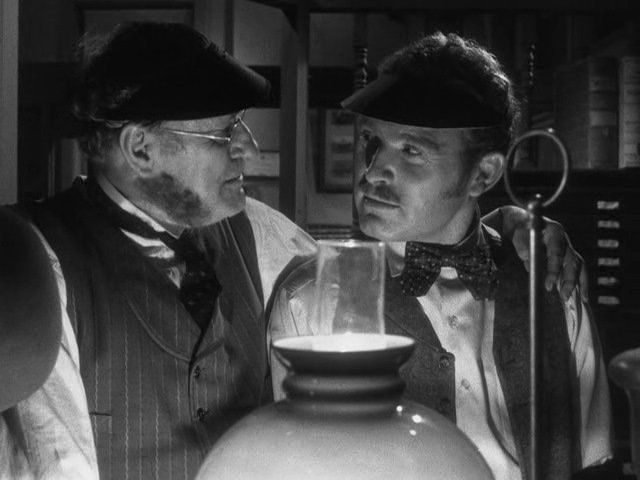
Phineas Mitchell is a great journalist at The Star, but the paper’s involvement in a recent trial has left him disillusioned. At a local dive bar, he tells off the paper’s proprietor, Mary Hackett. The other Star journalists at the bar are similarly dismissed, which leads Mitchell to wishfully entertain ideas of making his own paper. Someone listens and gives him an old office right next to The Star. The Globe is born over night and it quickly becomes a success. However, this success is much to Hackett’s chagrin, who seems devoted to quickly ending The Globe’s successful run. Undeterred by some shady efforts from his rival, Mitchell seeks to grow The Globe’s readership by having a drive to complete the Statue of Liberty. With every new innovation, however, Mitchell opens himself for a new opportunity to be taken apart.

2

Fuller’s energy and drive is commendable and it’s something I’ll go into later, but I find it more important to begin with a narrative that manages to be both simplistic but complicated. The actual arc isn’t difficult to follow, but rather the complications come from the Mary Hackett character. She is drawn rather broadly, at times appearing more like Cruella De Vil than an actual woman with fears, dreams, expectations, and disappointments. Her relationship with Mitchell is where things get sort of interesting, since the film ultimately redeems her from this basic character template. The film shows an interest in elevating her from this unremarkable and equally unflattering trope, but it doesn’t quite work. At one point, she gives Mitchell a knowing wink and he returns it before the two embrace. Although the intimacy achieved in this moment is later revealed to be another manipulative tool of Hackett’s (sigh) the glance in the sequence suggests that both Fuller and Mary Welch (who portrays Hackett) understands how stifling such a character type can be. The fact that their romance ends up working out suggests that their animosity comes almost of convenience to the story, at that Fuller is winking along with the couple the entire time.

3

Park Row from a social perspective, is probably best read as Fuller’s love letter to journalism. It’s been described as such before, and I don’t think there’s anything wrong with agreeing with the film’s accepted reading. The marvel of Fuller’s film does not come from its subtext, but instead from the filmmaker’s technical virtuosity. There’s an energy in every composition, even the ones that are completely static. Sure, the tracking shot at the one hour mark is amazing all on its own, but just as impressive is how much Fuller’s gets out of his less flashy moments. Jonathan Rosenbaum describes the film as “cozy”  which seems like the perfect description for those compositions where Fuller squeezes everyone into the frames, much like how the characters themselves seem to squeeze into a seedy dive bar during off-hours. It’s this kind of love that one can read from Fuller in every frame. The way Mitchell gets excited for starting a new kind of paper in The Globe mirrors the way Fuller gets excited about making a new kind of movie.

5