Yuwaku / Temptation (1948)

4 07 2015

Infidelity is a narrative icon for melodrama. The act, or the threat of it, carries such a powerful weight that it is less a trite move but rather the groundwork for moral musings. Of course, it might help that the average film that explores this is targeted to men, who the idea of forgoing a commitment to someone younger and sexier is well, tempting. Kozaburo Yoshimura, fresh off the success of A Ball at Anjo House, found the motif worthy of exploring. Despite the best efforts of the wizardry of his camera and the excellence of his actors, Temptation ends up feeling flat. It’s a worthwhile film, sure, but when one considers the talent involved, it should have been much more.
1

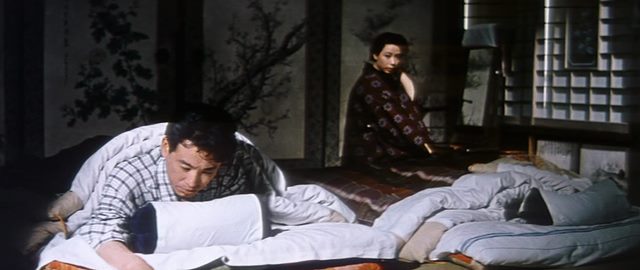
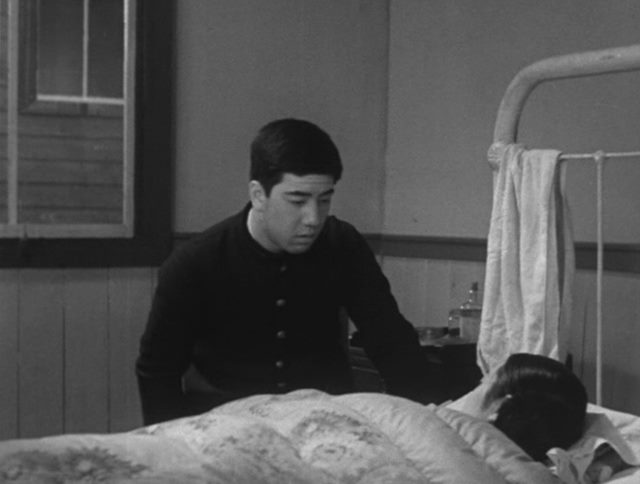
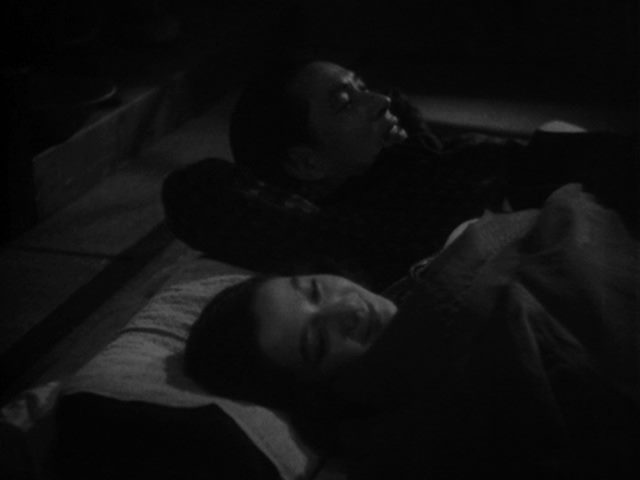
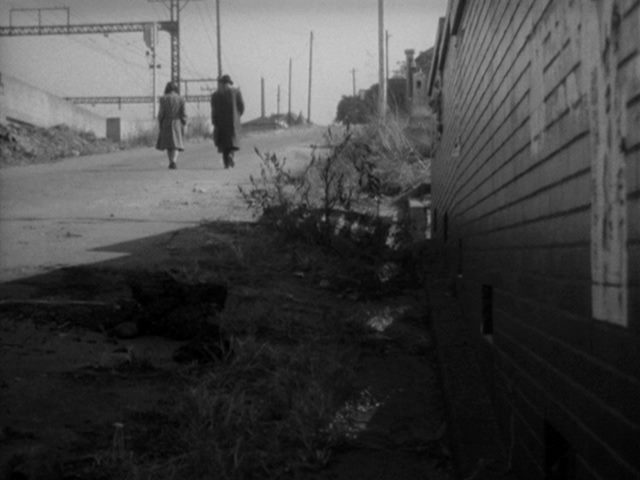
Grieving at the grave of her recently deceased father,  Takako runs into Ryukichi. Ryukichi, who is now married with two children, was one of her father’s students, and the two decide to travel together back to Tokyo. They make to Gifu and decide to stop for the night, but the housing options are limited and the two are forced to share a bed. Back in Tokyo, Takako’s flatmate, Takeda is taken away by the police for making unauthorized sales. Ryukichi offers to help Takeda in court and to let Takako stay with him. Takako becomes a maid, taking care of his kids while their mother, Tokie, battles an undisclosed illness at a beach house in Kamakura. This living arrangement is ideal, but the passion between Takako and Ryukichi starts to be inexorable.
2

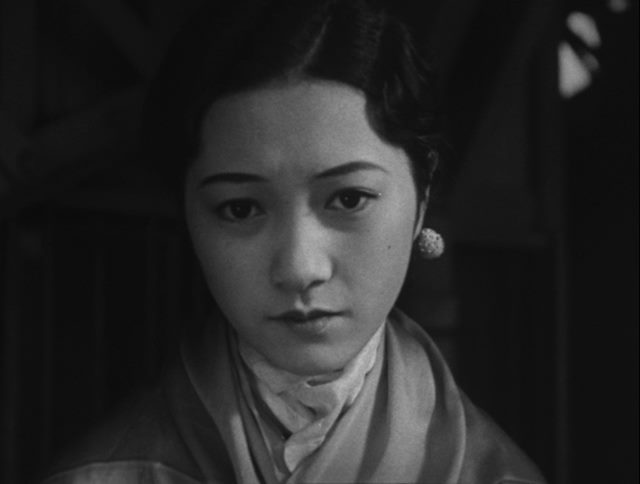
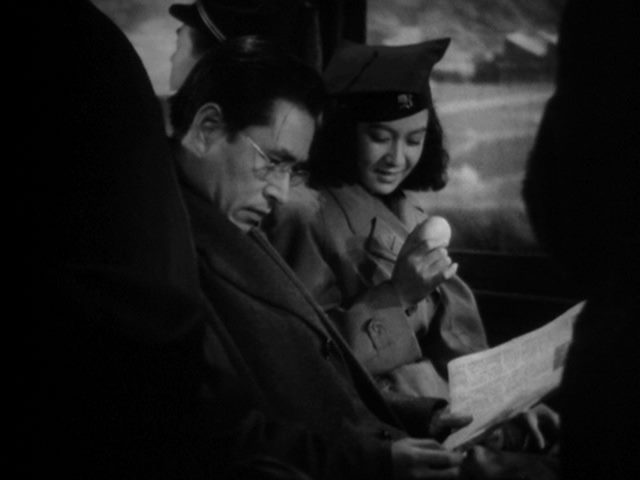
The two main players here are Setsuko Hara and Shin Saburi, who are, of course, excellent. Hara is despondent and hopeless, she moves with the weighty anxiety of a Antonioni character. She props herself up on telephone poles and railing, almost as though the sadness of her father’s death has made standing a chore. Once she’s invited to become Saburi’s maid, things shift. Yoshimura wants us to see her as irresistible so a smile seldom fades from her face. In one sequence, he photographs her face with the same closeness that Dreyer photographed Renee Falconetti. The sensation is different, Hara glows not to evoke our sympathy, but to understand Saburi’s temptation. It’s effective filmmaking, but it leads the film to its downfall: despite occupying the screen most of the time, Hara as Takako, is often reduced to a piece in a man’s moral crisis.
3

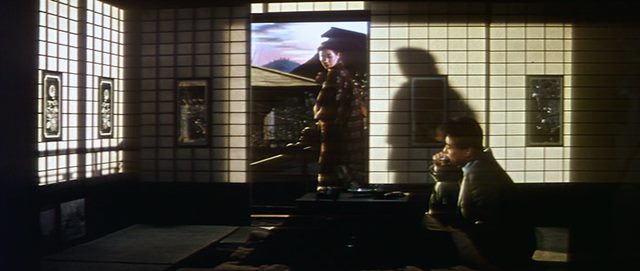
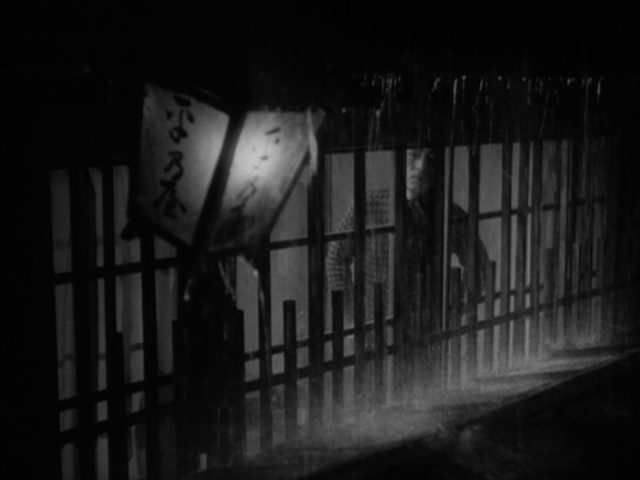
Tokie, the suffering and defenseless wife, is played with the compassion one should expect from Haruko Sugimura. Unfortunately, her suffering becomes a justification for Ryukichi. Early on, Ryukichi offers a light critique of traditional Japanese architecture to Takako, emphasizing the doors and partitions that protect them, like a fortress, from the outdoors. The next scene opens in Tokie’s beach house in Kamakura, which would look comfortable sitting on Malibu beach. The doors aren’t as imposing and the windows are wide open, the house itself feels outdoors. This is the more democratic alternative, and Yoshimura sees it as healthier. The sun feels immediately accessible and there are less structures to hide something. Something like an affair.
4

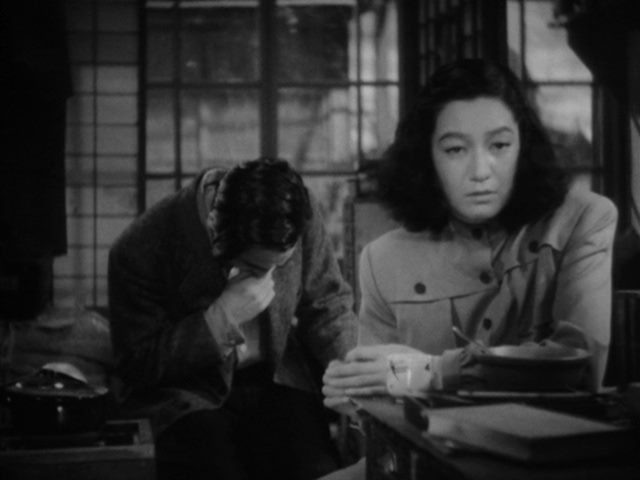
Takako and Ryukichi’s attraction for each other eventually boils over, if only for a fleeting second. Of course, that’s the very moment that Tokie walks in on them. Later, Takeda, freed by the court of his charges, proposes marriage to Takako. Her face is turned towards the camera and her back to his face. It resembles a better scene in Ozu’s Early Summer, featuring (fittingly) Haruko Sugimura and Setsuko Hara. Hara’s back is to the camera and the only face it captures is Sugimura’s, one of jubilation. Maybe that’s a sign of Temptation‘s weakness, it’s nice enough to remind you of other films (Repast also comes to mind) and maybe the connections aren’t incidental, but it all ends up like a parody of melodrama, something closer to a horror film.
5


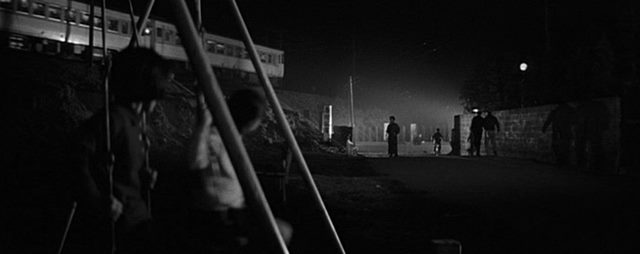
Kyûpora no aru machi / Foundry Town (1962)

3 07 2015

The history of film is so large and intractable that we, as scholars, often have to take short cuts to fit history into a narrative that we can understand. One of these short cuts is the idea of the “house style” which was birthed out of 1930s Hollywood. It is largely specific to this moment in America, but many have transposed its idea (that film studios became linked with a certain genre or style) into other moments. Nikkatsu in 1960s Japan, for example, is synonymous with edgy, crime-driven thrillers that are indicative of the country’s cinematic shift into the rougher, more energetic and more violent Japanese New Wave. Kiriro Urayama’s Foundry Town has this kind of energy and it is concerned with generational conflict (plus, Shohei Imamura is responsible for the script), yet it seems more mature than the works that became iconic for Nikkatsu around the same time. If this all sounds a little vague, that’s because it is, and maybe we shouldn’t simplify a narrative about a studio or an era.

1

Jun is a model student at the precipice of higher education. Her devotion to studying occurs in the middle of a great drama affecting her home life. Her father, Tatsugoro, is constantly in and out of work with the myriad foundries that punctuate the landscape of Kawaguchi. To make matters worse, another child has been introduced into the family. Through her friend Yoshie, she gets a job working at a pachinko parlor. Yoshie, a Korean-American is stressed about her family’s move to North Korea, especially because her mother, who isn’t Korean, shows no intention of moving with the rest of her family.

2

Foundry Town is, much like the recently reviewed Summer Clouds, a film about labor. The film opens with the scenes of foundry life, followed by a group of workers confronting their boss about poor work conditions. Tatsugoro is the oldest in this group of workers and he’s the one most resistant to the idea of worker solidarity. When a younger worker calls out their boss for spending company funds on a mistress, Tatsugoro defends his boss and says that a man with such power would be an embarrassment if he didn’t have a mistress. Tatsugoro’s labor frames the context for the entire film. The family is in Kawaguchi precisely because this is labor he is qualified to do, and when he does lose his job(s), it is Jun who has to make sacrifices for the family.

3

While we spend most of our time with the struggles of Jun’s family, it reveals itself in the end to be about her friendship with Yoshie. Their families act as parallels, Jun needs to get away from her mother and father (and their dependence on her prohibits her from leaving) while Yoshie needs to stay together with her mother, despite her protests. Yoshie’s status as Korean-Japanese is crucial to the film, even as it is never articulated to a modern, Western audience what dynamic is revealed in her identity. We see her younger brother publicly bullied by his peers. Characters repeatedly display a confusion for which Korea Yoshie “belongs to” if they even bother to consider the relationship at all.  Of course, it is in this very moment that Foundry Town makes a (successful) turn to the melodramatic. Yoshie’s brother releases a pigeon while leaving, but it causes him to cry. He can’t leave Japan, even if it hasn’t exactly welcomed him.

4


The goodbyes shared between Jun and Yoshie are played in a similar melodramatic vein, but this emotional tension is brilliant in a situation that has a highly charged political context. It is seldom that the power of friendship, especially a friendship between two young girls is granted such sincerity. The economic situation of both families has forced the girls to grow up fast. Thus, its fitting that their relationship is given the attention usually afforded for adult men and no one else. The melodramatic flashes throughout the film underscore the reality of growing up, where all decisions feel crucial. Of course, they really are for Jun and Yoshie, yet the film makes an important point to sympathize with the way adults attempt to minimize their problems.

5


In the end, we get something of a happy ending. Tatsugoro gets another job, with the help of the union he had resisted because of socialist anxiety. Jun, meanwhile, has already started a job and intends to pay for her schooling entirely on her own. Tatsugoro is flabbergasted by this revelation and it is very likely that we are too. It seems a bit too noble that Jun would make this big of a personal sacrifice, but she’s been making sacrifices for her mother and father (who greatly undervalue her) for a long time. Their is a political importance to her life choice, she wants to provide for herself because she doesn’t want to be drawn back into an abusive home life. Poignantly, Yoshie is never given such a redemptive moment. She still has her friendship, though, and that is important.

6


Iwashigumo / Summer Clouds (1958)

1 07 2015

It makes sense that Naruse’s first feature filmed in color and in Tohoscope would take place away from the city center. It wasn’t the first time he went “rural” so to speak (nor would it be his last) but the new technology offered his technique something that didn’t immediately click with the aesthetic of his “city films.” This seems like a preposterous statement to make when one considers the Tohoscope beauty of When a Woman Ascends the Stairs, which finds the filmmaker back in the urban realm. Here, though, the technology seems especially compatible with the way he opens up space. Of course, Summer Clouds is still about the city, but its conversation on “the city” uses the vocabulary of rural peasants.

1

Yae is a single mother who, when not attending to her family’s rice field, works as a freelance journalist for nearby Yokohama. Her connection to the world of journalism is Ogawa, a younger man with whom she enjoys a sly, sexual relationship. Yae is realistic, she wants something more with Ogawa, who is married, but realizes that they aren’t going to run away together anytime soon. In the midst of this, a family drama is brewing between Yae’s brother, Wasuke and his three sons. He criticizes them for their interest in escaping the rural life for one in the city, be it in Yokohama or in Tokyo. He tries to solve these complications by marrying off his sons, but things don’t go so smoothly.

2

The relationship between the rural and urban is a discursive thread running throughout Naruse’s work, but it is seldom as pointed and obvious as it is made here. Ogawa’s two youngest sons, Jun and Shinji, want to separate themselves from the traditions of farm life and relocate to the city. The concept of “tradition” is a dangerous one, especially in the loose, reductive, and Orientalist way western critics carelessly yield it around Japanese films. Both Naruse and Ozu have had the term applied to their work. It’s not an incorrect application, but the inability to expound on the idea of tradition is one that flattens and simplifies their work. The descriptions of tradition are so often viewed with an understood distant, both temporally and geographically. The patriarchy present in 1950s Japan is, at least according to western critics (everyone from Donald Richie to Noel Burch) is nowhere close to the western world in the present day. I’m not suggesting the situations depicted in a film like Summer Clouds could easily be transplanted to North America or the United Kingdom without any editing, that is just as simplistic. Instead, I am suggesting that evoking “traditions” in describing a film such as this is an Othering practice.

3

The traditions that Wasuke holds close to him are so difficult to break because they can be held up by logic. It doesn’t make sense, economically speaking, for his sons to transition into city folk or for relatives who are women to attend school. He repeatedly refers to a hope that his family remains a peasant family, and that his sons do not become employees. Peasant can evoke, to many, an image of the rural poor one that doesn’t match with the family depicted here. There are classes of peasantry, and the milieu here is that of the “middle peasant” (a term I encountered through Michael Hardt and Antonio Negri, but has origins in the writings of Lenin and Mao) or the peasant with a comfortable amount of space and agrarian equipment. Wasuke could let go to this status, but it would lead to the end of the family’s middle peasant lifestyle.

4

The work of the peasant seems to slip through the ideas of labor and value expressed through capitalism. Marx’s lumpen-proletariat (or those too disadvantaged to gain class consciousness) can be imagined as peasants, because they are, by definition, not directly exposed to capitalism’s exploitation and abusiveness. Yet, Naruse’s camera manages to render both capitalist labor and peasant labor as similarly harmful. Wasuke holds to traditions, which pressures some in his family to stay in this system. Naruse films the few scenes of labor as mechanical, not literally (though, Yae does use a mechanical plowing tool at some point, a sign of her modernity) but in how the bodies  themselves respond in machine-like unison. By extension, Wasuke’s rationale for holding on to traditions are formed by the logic and reasoning of capitalism, even as the labor itself works outside of it.

5

While Naruse was able to provide a fruitable and intriguing conversation on labor, the appeal of Summer Clouds is in the character of Yae, who is portrayed by Chikage Awashima. She takes charge in every situation, be it in her sexual relationship with Ogawa or her dealings with Wasuke’s stubborn old-fashionedness. In one of Naruse’s most subtly sensual scenes, Yae closes two sets of doors. Ogawa opens one, but Yae quickly shuts it. The image fades, and it’s the morning after. Though she dreams of a life with Ogawa and even vocalizes such desires, she’s still pragmatic. The films ends with her plowing the rice fields. Her frustration is palpable, but she does not call on us to pity her, instead her laboring suggests she’ll survive. She deserves a man who is devoted to her entirely.

6


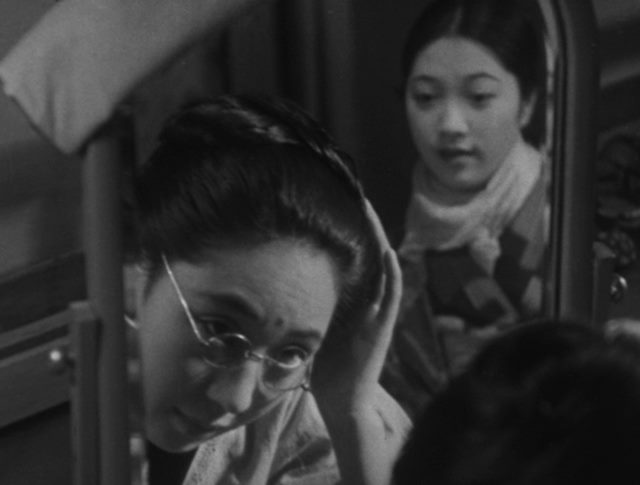
Kimi to wakarete / Apart From You (1933)

7 06 2015

Despite some critical success, Mikio Naruse was in a tough position by 1933. His peers admired his work but his studio boss, Shiro Kido, was unimpressed. We now know that the friction between these two lead to Naruse’s transfer to PCL, which later become Toho. However, in 1933, the pressure was on for him to deliver a film that doesn’t immediately echo Yasujiro Ozu’s work. Kido would remain skeptical of him, but it is hard to watch a film like Apart From You, and think that it owes any particular debt to Ozu. They do overlap in that they capture the reconfiguration of rural spaces, which would be transformed to suburbs. Ozu (literally) moved up within Tokyo to more middle class families. Naruse moved outward to the margins that so many of his characters had already called home.

1

Kikue is an aging geisha struggling to keep her most devoted client interested. Her son, Yoshio, contributes to this frustration by his truancy at school. He’s fallen into a young gang, and when asked about his disobedience, he lashes out at Kikue and says that he’s embarrassed by her profession. Kikue’s best friend, Terukiku, is also a geisha and around the same age as Yoshio. She tries to convince him that his mother is indeed very devoted to him, and that his agitation with her is misplaced. Terukiku invites Yoshio to join her on a visit to her hometown, which appears idyllic, but is revealed to be a site of abuse and anger. Seeing the familial discord has an impact on Yoshio, but he’s not quite prepared to straighten up immediately on the trip back.

2

My earlier review of this film, published in 2008, is pretty generic. I don’t want to turn this into a complete overview of my writing at the time, but while it is not a particularly offensive piece, it is not a very interesting one either. Apart From You is at its heart, a melodramatic film. One that seems to be missing the necessary dramatic syntax to make such a film work. It’s only an hour long, and so there’s little time to capture the anxiety rising up on Kikue, Terukiku, and Yoshio. While I still love this film, it might be for completely new reasons now. Perhaps it is an unintentional side effect, but Naruse’s camera does capture the liminal part of Tokyo’s transition. Other filmmakers situated their “urban dramas” in sexier, more fully developed spaces. But, in fitting with the economic plight of his characters, Naruse captures a neighborhood that still has rural residue. The trip to Terukiku’s home town sets up a narrative contrast, between the city and country, but Naruse’s camera suggests that describe the spaces in such a binary is incorrect.

3

Terukiku’s hometown remains unnamed, but we do now that she and Yoshio are able to easily access it via railroad. One might deduce that it is a present-day suburb, transitioning from its rural past, not unlike the suburb occupied by the family in I Was Born But… There is plenty of visual evidence to describe the space as “less sophisticated” but Suketaro Inokai’s camera captures a richness in the street life. Less developed and less commercial than the Tokyo the film opens with, but not reduced to the condescendingly rural. The two primary spaces of the film can’t be positioned as a binary, which works with Naruse’s handling of the characters. The plot could be described as trite, but the dramatization of their emotions is complicated. In fact, words seem especially inefficient to describe the film’s finale.

4

Terukiku and Yoshio return to Tokyo, where Kikue contemplates suicide. In one particularly impressive sequence, Kikue’s violent confrontation with her patron is paired next to a more jovial encounter between younger geishas with younger patrons. Kikue is, in the end, saved but violence is unrelenting here. Yoshio’s attempt to quit his gang leads to ridicule, which then ends with Terukiku being injured. The film’s conclusion is unclear, but we know that Terukiku, because of her selfish father’s economic wants, must leave Tokyo for a profession even less desirable than that of a geisha. Sex, of course, is not explicit in a film from 1933 Japan, but Terukiku is presumably shipped off to a brothel. I would suggest that Naruse’s entire career shows compassion to sex workers, as opposed to the anxiety evident in other such films. Terukiku and Yoshio’s farewells to each other are bittersweet but she’s already told us that “she’ll keep fighting.” The film ends with her departing, potentially, for a life of more abuse. Visually, we understand that hope is still there. For others, this would be the conclusion to the tragedy, but Naruse is more pragmatic. Terukiku leaves the frame, but her agency feels firmly intact.

5


L’inhumaine (1924)

18 05 2015

Starting in 1927, Walter Benjamin began documenting the city of Paris with his Arcades Project. Unlike such studies before or after, he was concerned with the interior of Paris’ buildings. It was not the urban outside that provided the most interesting story to him, but rather the new inside corners that acted as a controlled simulacrum of what many considered to be “real Paris.” Like Benjamin, Marcel L’Herbier wanted to tell the story of Paris through interiors, and L’inhumaine, even if it does venture outside on occassion, tells the story of a city through a gothic, art-deco set that may not have had any basis in reality. It is a fantastical film, but it talks about things that exist in reality.

1

Claire Lescot is an aging but still beloved opera singer. She lives far away from the city in a rural but post-modern fortress that is occupied by her and a group of servants who hide under grotesque paper mache masks. Claire hosts a great deal of suitors, one of which is Einar Norsen. Einar is an impulsive and emotional scientist and when his longings for Claire aren’t reciprocated, suicide seems like the only response. Leaving her mansion, his car slips off a cliff. Einar can’t be found but he is presumed to be dead, which sends Claire reeling. A few days later, she is asked to identify his mutilated body. She finds him very much alive in a mansion as imposing as her, where he labors away on an instrument that could possibly broadcast her voice across the world.

2

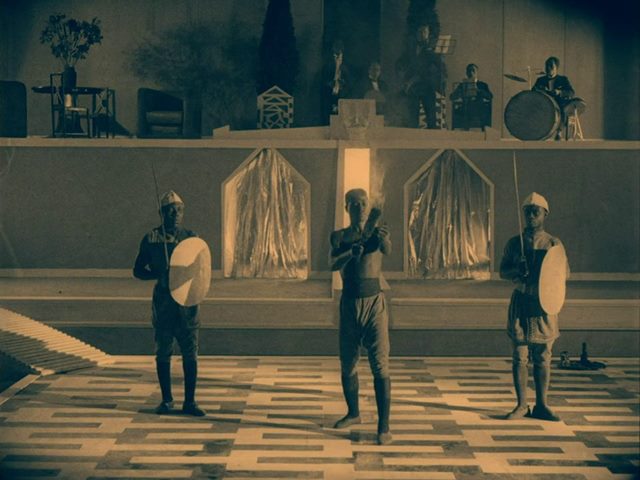
While L’Herbier’s more celebrated follow-up L’Argent is loaded with energetic camera movements, it is a film that seems to have been composed by a gymnast. L’inhumaine, on the other hand, is controlled by a steadier hand, most likely the work of an architect. The space of Claire Lescot’s mansion is somewhat fictitious, her privacy is housed in an area that comes out of a fairy tale. Her fortress is one of a solitude, visibly marked as separate from the confines of the urban. Yet, within her lies all of the things that occupy the politics of the city: capitalism, colonization, and the body all partake in a dance (literally) in Claire’s fortress. Black servants perform entertainment for her as rich men bid for access towards her sexuality. Despite the negotiations that are happening all over her body, Claire is able to maintain some control. When the camera shifts to the top of the ceiling, her performance space takes on the appearance of a chess board, which complimented by the paper mache servants, imply that can manipulate things to her desires at will.

3

Of course, all of this is done to paint Claire as the “inhumane woman” of the title. The film intends to paint Einar as a tragic figure, one who feels great pain in being rejected. Of course, the irony is everybody feels the pain of this rejection. Threatening to kill yourself is not a very smart way to endear yourself to the person you’re interested in, but L’Herbier seems to insist that all the men here are playing on the same, potentially abusive field. Claire warms to Einar, ironically only after he fakes his death which coincides with a complete personality shift. The film makes a shift as well: it becomes a film about modernity and science, specifically the implications of Einar’s new broadcasting device. In one of the film’s most crucial scenes, Claire is able to see those who are listening to her broadcasted voice. She is greeted, at first, with two images, both of what many would consider “third world” countries. The “Other” appreciating her music provides her validation, but L’Herbier wants us to know that this is a cheap moment. Minutes later, she encounters a peasant woman who appears earlier in the film. Her pain is too much for Claire to bear.

5

L’Herbier loves sequences with audiences, and they seem to provide a nice opportunity for him to comment on and subvert our expectations. In L’Argent, the trial of a banker consumed by greed is treated with applause from an audience that is just as rich. The key scene here is when Claire’s concert following Einar’s (faked) death. The audience, as the intertitles tell us directly, are conflicted by her presence. Some continue to love her, while others are disgusted by her perceived indifference. This is all silly because 1) it was not her fault and 2) she wasn’t indifferent, but rather overwhelmed with grief. The chaos of the audience cuts through all of this, Claire can’t even present herself as either “humane” or “inhumane” (an awfully demanding binary!) because the public has already decided for themselves. It doesn’t matter how rich she is, as a woman, the audience is able to quickly wrestle back control of her persona. For all the modernity of Paris (or any western city), the celebrity woman is still scrutinized. Through this interior-based “story of Paris” L’Herbier has revealed a personal one. Claire is given a happy ending, but to a more perceptive viewer, it is a bitter one. She is granted access to an ideal heterosexual relationship, but considering how she was manipulated to get there, it can’t be healthy.

6