The Kiss of Death (1977)

27 11 2008

Another very impressive early feature from Mike Leigh. This one is a bit more accessible, and by result, a bit lighter than Bleak Moments. It is a bit closer to being a formally conventional film with many of the minimalistic elements of that film replaced with a slightly more conscious “comedic” sensibility. Leigh’s insightful observations remain, though, and they are still the most essential part of his work. The characters are still rather difficult to sympathize with, but in this particular case, their interactions are quite funny. I guess some people are turned off by Leigh’s more upbeat approach here, but I don’t think it makes this film any less natural.

Considering the much more light and charming tone, this does fit closer to being Leigh’s version of an Ozu film, at least more so than Bleak Moments. Of course, the strength of both directors lies in their abilities to balance the comedic with the tragic. Here, Leigh begins to closely associate the two tones in the way that Ozu’s best work often does. Sometimes the funniest scenes are also the most heartbreaking. In other words, there are more than a few sequences that “hit close to home” here, even though I can’t help but find the characters to be slightly obnoxious at times.

That is essentially the only thing that keeps this from being a masterpiece. For a majority of its running time, I felt as though this was better than Bleak Moments. That film, for all its awkward mumbling glory, could use a smile or two. Ultimately, Leigh redeems himself with one of his most formally austere films. This film, on the other hand, is a tad bit bland, but seems to have the ever important element of humor. While I cannot relate completely to Trevor, I do find many of his attempts at human interaction to be very bittersweet. On the other hand, I find his temper, though only subtly hinted at, to be the sort of dramatic element that keeps me from calling this a masterpiece. It’s a wonderful film, no doubt, but I could have done without some of the “serious” narrative turns.


Diamonds of the Night (1964)

26 11 2008

Lately, it seems like I’ve been watching a lot of rather unique films, but this has to be the single most unique cinematic experience I’ve had in a long time. A 63 minute movie that is essentially just two guys running and walking through a forest, but of course, it is so much more than that. Jan Nemec probably had about 45 minutes worth of a footage but the groundbreaking editing extends it to a cloudy, dreamy, and completely heartbreaking hour long masterpiece. There’s literally only about one page of a dialogue in the whole film, which of course, fits in perfectly with my cinematic ideal.

I really can’t emphasize how much Nemec accomplishes with so little. Half of the film is just two guys walking through a forest. I can’t but wonder how crazy his actors thought he was when he told them what they would have to do. Honestly, I would have been a bit scared and under the impression that this guy had no idea what he was doing. Nemec probably didn’t know what he was doing, but that definitely works in his favor. When I first saw Herzog’s Aguirre two or three years ago, it was a landmark in my own movie watching career because it presented the opportunity for film to exist without any sense of a “narrative structure.” This does the exact same thing.

Plenty of the films I talk about here can be classified as “plotless” but even slow minimalistic Asian films have something of a story to them, or at least a dramatic thrust, or some context to the characters. Nemec’s film on the other hand, starts with none of these elements and only slowly reveals the past of his protagonists through carefuly composed flashes to the past. Calling these sequences “flashbacks” create a completely false impression. Some of the things Nemec cuts to have little to no signifigance, but that’s what makes them so powerful. It seems like the two protagonists are trying to retrace their steps to explain how they got into their current situation, but it all remains a mystery.

Some of the elliptical flashes are repeated throughout the entire film with either small amendments or no changes at all. One could argue that Nemec is just padding his film’s length, but this repetition seems to reinforce the importance of memories. All of these flashes are hauntingly poetic with a poignancy obtained by the current situation the two lead characters are in. I say “current” but I feel that completely disagrees with what makes the film so special and that is how flawlessly it demolishes a sense of time which corresponds to the runaway lifestyle of the two men.

If there is one problem with the movie, it is the slightly odd conclusion. After fifty minutes of pure kinetic energy, sub-Buñuel social humor begins to creep in. What is being said here is of little interest to me, but it does seem like Nemec is satirizing something. The fact that the main characters seem to be escaping from a train headed to a concentration camp implies that some statement is going to be made, but the best thing about the film is how it completely sheds that context.


Bleak Moments (1971)

24 11 2008

I caught a late afternoon / early evening showing of Mike Leigh’s latest film, Happy-Go-Lucky before returning home to a viewing of this, his very first film. Though I had seen Leigh’s Naked before and was well aware of what he was capable of, I was still completely blown away by this. The fact that it is such an accomplished film but still is Leigh’s first is jaw-dropping in and of itself, but he really takes uncomfortable and awkward scenes of dialogue to another level here. This has got to be a pretty big reference point for “modern mumblecore filmmaking” even more so than Cassavetes’ films, which are more commonly referenced alongside the recent DIY American filmmakers.

The painfully awkward pauses are the only substantial connection. On a formal level, Leigh, at least here with this film, has more in common with Bresson. He does stick to rather conventional compositions, but the length of his shots, the emphasis on sound, and the connection between the two? All that stuff is extremely Bressonian. It certainly doesn’t hurt to have a story involving a quiet, desperate, and beautiful girl who is uncomfortable with her surroundings, alienated by her way of living and so on. At the same time, Leigh’s perfect balance of sensitivity made me immediately think of Ozu. None of this is intended to downplay what a unique experience watching this film is, but it is so unique that I can’t help but proclaim it as some odd mixture of some of my favorite directors.

The film structures itself around the life of a tragic young woman named Sylvia, a secretary who is too busy tending to her mentally challenged sister to ever find a love life. Meanwhile, a poverty-striken musician moves into her garage, providing some temporary company. Things begin to complicate when a school teacher, Peter, also enters her life and begins to act as a romantic interest. This all sounds potentially socially driven, a la Leigh’s peer Ken Loach, but it really isn’t at all. Sylvia’s mentally challenged sister for instance is not some detail added in to make the film bleaker. It is never actually told whether or not she has problems or not, but it is slowly revealed.

The poor musician is handled with similar sensitivity. He comes awfully close to making a genuine connection with Sylvia. Even though he fails, his character is never reduced the simplicity of his social status. For as much as Leigh’s work is considered socially-concious, it is equally emotionally-concious. In fact, I’d say this is only a social film if one approaches it in a very surface level way. If Leigh truly had a political agenda he wouldn’t put so much time into creating such tension and cringe-worthy feelings of awkwardness among his characters. At times, their awkward moments become unbearable, creating an almost painful and truthful type of suspense.


Saddle the Wind (1958)

23 11 2008

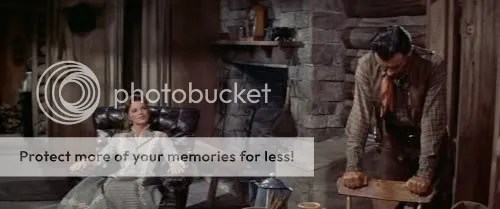
There’s two big selling points for western “outsiders” here: one is that the film features one of John Cassavetes’ earliest performances and the other is that Rod Serling, who would go on to create perhaps the single most famous television show, wrote the script. Unfortunately, the film never really transcend the novelty of these selling points. It is extremely exciting and somewhat weird to see Cassavetes act within beautiful technicolor cinemascope landscapes, but everything else is pretty unremarkable. I can’t really say its everything I dislike about “bad” westerns, but instead, it tries way too hard to be deep and complex. In all honesty, it’s extremely predictable.

Essentially, the story is built around the relationship of two brothers: Tony Sinclair and Steve Sinclair. The former, played by Cassavetes, is a young and impulsive man with an inability to relax. The latter, played by Robert Taylor, is the older sibling, the more mature and experienced one. Tony comes back home to the Sinclair valley with his wife to be, Joan Blake. When the man who owns the majority of the valley decides to claim the Sinclair land for himself, Tony is eager to fight back but Steve is willing to accept the decision. Their different outlooks on the situation lead to the decay and eventual death of their relationship.

Maybe it comes from being a big fan of Cassavetes’ work, but I really disliked how his character was written. As soon as he appears on screen it becomes pretty obvious what direction the film is headed in. The condescending tone in which the other characters speak about him is frustrating for some odd reason. It’s not at all like how James Best is spat on relentlessly in Ride Lonesome, I would have preferred that. In this case, he is basically treated like a mentally retarded child incapable of understanding anything about adults, or the “big boys.”

Cassavetes himself is still a joy to watch, even if his character is severly underwritten. The rest of the cast is equally great. Julie London from Anthony Mann’s great Man of the West plays Cassavetes’ love interest. Donald Crisp, another Mann alum, is the superficial “bad guy” i.e the owner of the valley. Oddly enough, I wasn’t really that impressed with Robert Taylor, but he didn’t really do anything wrong, either. I guess this could be called a successful actor-driven western, but that’s just a really nice way to say that it is a enjoyable film with an overwhelmingly unremarkable story.


Jonah Who Will Be 25 in the Year 2000 (1976)

22 11 2008

So it seems it was a pretty big mistake on my part to make Middle of the World my first Tanner film. While I definitely enjoyed the unrushed, gentle character study element of that film, this one is a much more accurate example of what I expected from Tanner. This is not completely unlike Godard’s films from the 1970s, but with a much more natural and less political stance. There are still plenty of sequences of characters talking about big issues in a far too eloquent manner, but Tanner meshes it into a very natural story revolving around several young adults facing a series of emotional and social obstacles.

It is sort of ironic that the Middle of the World (the only other Tanner film I’ve seen) seems to be a very obvious attempt at creating a very intimate type of cinema, in which the focus lies solely on two lovers. The scope here is the exact opposite and revolves around eight people that face a series of events that, in retrospect, are rather undramatic. Even though Tanner’s other film is very simplistic in its setup, it does have a very emotionally obvious drive to it, but this film, on the other hand, is more bizarre than anything. The first comparison that popped into my head was Rivette, especially his films from the exact same time period, but I don’t want to sell Tanner’s formally unique presentation short.

Tanner’s visuals are, unfortunately, still on the rather dull side of things, but he certainly tries to avoid this. In all honesty, it may just be the state that the film itself is physically in that prevents it from being visually appealing. Actually, the occasional black and white cinematography looks fantastic and blends together seamlessly with Tanner’s use of old riot footage and still photographs. Such elements aren’t really necessary or make sense in this case, but I really like them anyway. They don’t spark the same type of poignancy as the similar flourishes in Gummo, regardless, they are nice additions.

The acting in a film like this needs to be pretty great, and it is. Tanner seems to have an extremely close relationship with his performers, which is another thing that reminds me of Rivette. The scene where Marie reacts a knifefight with her father that he participated in many years ago is right out of Rivette’s playbook. The dinner conversations, in which the subjects range from how ticks are born to what recession is, are playfully executed but with an indescribable sense of realism. Again, much like Rivette. The only problem I have here is that the film seems to run out of steam within the final half hour or so. It’s still good at that point, but that’s a downgrade from the completely amazing opening 80 minutes. An incredibly exciting experience in any case. I can’t wait to see more from Tanner.