Notable Viewings From the Past Weeks

20 05 2009

If I’ve seemed to slow down in the past couple months that because I did. My last semester of high school has been pretty hectic, leaving me with little to no time to write my usual “capsules” or “reviews” or whatever else you want to call them. But now, I’m done! I still have all the celebratory stuff to go through, but my workload? Completely empty. It be pretty difficult, if not impossible, to go through every single film I’ve seen in 2009 but didn’t write about. Instead, I’m just going to mention a few films that I’ve seen in the past couple of weeks that were special.

Battleground (William A. Wellman, 1948)

Unfortunately, I sent the disc back to Netflix before I could get any decent screen captures from this postwar Wellman masterpiece. It’s a shame, too, because it is one of Wellman’s most visually impressive films. Easily, my favorite Classic Hollywood war film, but I definitely need to see more. This isn’t quite as impressive as Wellman’s Yellow Sky, which would come a year later, but it’s pretty close.

Stage Door (Gregory La Cava, 1937)

It seems I forgot to take screenshots for this film, too. It isn’t as great of a crime, as La Cava’s film isn’t a wonder to look at like Wellman’s is, but I was still very impressed. This is definitely one of the best movies I’ve seen about show business. Great cast, too – Katherine Hepburn, Ginger Rodgers, Lucille Ball, and Adolphe Menjou, among many others. I can’t explain why I was so taken by it, but I’d like to think that La Cava had a very close relationship with all of his actors, as they all seem comfortable. Even when the story takes a turn for the melodramatic (at the end, especially) Hepburn manages to come off as genuine, not to mention extremely lovable. It be oversimplifying things to call this merely a screwball comedy.

Three Comrades (Frank Borzage, 1938)

More great stuff from Borzage, this time Margaret Sullavan steals the show. As one would expect from Borzage, the film looks great. No notable complaints that I can think of – highly recommended!

Nadare / Avalanche (Mikio Naruse, 1937)

This early-ish Naruse is best remembered for having two giants of 50s Japanese cinema in its crew – Akira Kurosawa and Ishiro Honda. Somewhat ironically, very little has been written about the film itself. It’s a fascinating nonlinear study of a marriage, only one year old, beginning to crumble. Kusaku is married to Fukiko but is in love with Yayoi. A nice little film (runs under an hour) that features some flashes of the future Naruse. Some thriller elements, as well, which (to my knowledge) Naruse wouldn’t return to until The Stranger Within a Woman. It’s a bit more pronounced in that film, though. This is more like a warm up for Repast, less complicated and less complete.

Maria no Oyuki / Oyuki the Virgin (Kenji Mizoguchi, 1935)

Like Avalanche, there are some writings on this film and they seem to exclusively focus on its relationship with other filmmakers or films. The story is famously based on Kawaguchi Matsutaro’s adaptation of Guy de Mauspassant’s “Boule de Suit” (or Lump of Fat) which provided the inspiration for John Ford’s Stagecoach. I suppose some comparisons with Ford’s film are inevitable but not exactly overwhelmingly. Personally, I think Hiroshi Shimizu’s Arigato-san, made two years later, has more in common with Ford’s film. Mizoguchi’s film seems a little incomprehensible at times, but it might just be a side effect of the print.



Big City (1937)

16 05 2009

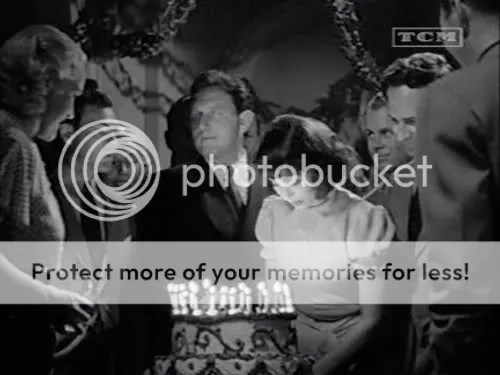
The first fifteen minutes or so of this are probably the best fifteen minutes I’ve seen in any Borzage film. Unfortunately, that tone doesn’t hold its own for much longer. The opening sequences involving Spencer Tracy and Luise Rainer are mindblowingly brilliant. There relationship, at least initially, is one of the most pleasant and “advanced” I’ve seen from a film in a long time. This could read as a criticism, but personally, I feel that Borzage is much more successful in portraying the blissful existence of successful romantics rather than the struggles of problematic and dysfunctional ones. From there, though, conventional narrative “incidents” occur pushing the film into the territory of a slightly over the top genre picture, which just happens to have a love story inside of it. When Borzage indulges in his impulses, the film is almost a revelation, but he doesn’t do that enough.

Like his much more remembered film from nine years earlier, Seventh Heaven, this film (not so gracefully) switches it original, more impressive tone involving a romantic relationship to something a bit more generic. In his earlier film, it’s a war movie, but here the gears are changed to resemble something close to the gangster films that Warner Brothers had churned out at a rapid rate during the earlier part of the 1930s. It doesn’t help that I’ve been on something of a “WB gangster” kick lately, but Borzage’s idea of a gangster film pales in comparison to the ideas of William A. Wellman.

As I’ve already mentioned, the best parts of the film are when Frank Borzage shows his true interests, in other words, when the film is a love story that has little to no care for regular plot developments. Tracy is definitely picking up where his character in Man’s Castle left off, but simply stated, he’s not as much of an asshole here. He’s still got a mean edge to him, but this only manifests in teasing his spouse rather than criticizing her as he did to Loretta Young in the aforementioned film.

Tracy, as he almost always was when working with Borzage, is brilliant here. Unfortunately, the great charactor actor Charley Grapewin is wasted here. He plays a classy mayor here, the antithesis of the characters depicted in his very best performances. On the other hand, Luise Rainer impressed me a great deal here. I wouldn’t mind seeing her a few more times, but it looks like his career wasn’t all that extensive.


Brute Force (1947)

3 05 2009

Based on the three films of his I’ve seen, I think I have developed something of a “crush” for Jules Dassin. None of his films, this one included, can be considered masterpieces, at least not by my standards. They aren’t exactly “great” films, either, but all of his films are very entertaining and all of them look absolutely amazing. Perhaps the latter element is what makes me see his work as something more than just “escapist” entertainment, but I truly believe there is something personal going on in his films, even if he was working under the extremely general standards of 1940s Hollywood.

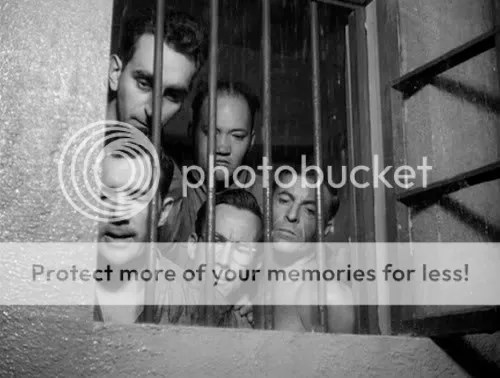
Like De Toth’s Crime Wave, I can’t help but describe the tone as cold and brutal. Both are pretty much stock phrases for describing noir so I suppose it is also interesting to point out that Dassin’s visuals are driven by gritty, sensory detailed close-ups. The dirt of every man’s face is palpable. The exception to this description is the guards of the prison, specifically Hume Cronyn’s Captain Munsey. He and his guards are (wisely) photographed with some distance, as though the prisoners and the viewers are being observed through a plate-glass window. Oddly enough, Munsey is the type of man willing to open this window, if only to spit in the faces of the inmates.

Perhaps this is where Dassin’s storytelling techniques begin to lose me. I like how he can vividly develop an atmosphere, and how he makes those that inhabit it very interesting. In this particular case, however, the film’s power is somewhat tainted by the simple characterization of Munsey as a villain. He plays by the same rule book, so to speak, as all of the prisoners, but it does seem pretty clear that we shouldn’t like him. This isn’t something new to genre cinema, but in my favorite westerns and even a few noirs, the “bad guy” is always handled gracefully. Dassin’s villain isn’t exactly over the top, but he certainly isn’t subtle, either. It’s little things like this that prevent me from loving Dassin outright, and turn his very good films into fairly decent ones.


Saraba natsu no hikari (1968)

27 04 2009

Simultaneously one of Yoshida’s lightest works and one of his most consciously “arty.” The color palette here is much more visually appealing than the one in the cringe-worthy Escape From Japan and Yoshida trades in his usual trademark transgressive sex-filled drama in for something more romantic and poetic. The result is one of his most watchable films, a brisk 90 minutes, that somehow manages to come off as one of his most pretentious and stilted pieces to date. Ultimately, it works, but this is one of the few cases where Yoshida’s cast does little to help the cause.

It’s quite a shame that such a solid concept is tainted by subpar performances from otherwise excellent actors. The always dependable Mariko Okada does her best here, but can’t overcome the stilted nature of the dialogue. In all honesty, it’s hard for anyone to give a solid performance with lines like “I am a landscape that passes before you.” Seriously? It’s so odd for a film with a very “quiet” tone to it to feature such overly-wordy and pretentious philosophical dialogue. It makes sense, though, when one takes into account that Yoshida is clearly trying to make some sort of Marienbad and Antonioni hybrid.

The montages take their cues from Resnais’ film. Every couple of minutes of so there’s a collection of faraway shots of the two protagonists, moving around like robots. This part perfectly illustrates what I find so troubling about Marienbad. It has a great premise (just as this film does) but it is executed in a way that depends almost entirely on formal qualities. Thankfully, Yoshida doesn’t let his film fall into the similar “profound” trapping. Every other sequence in the film is much more natural, even if the dialogue isn’t. There’s no way anybody ever talks the way the people in this film do, but at least Yoshida isn’t using them as “deep” symbolic chess pieces.

The result is a very uneven film, with a few lovely moments here and there. It is by no means a failure, but it be a stretch to call it an accomplishment. Yoshida can be hit or miss (especially if one takes into account his earlier work) but I think there’s something positive to take from every film of his that I’ve see. Here, it’s the nice cinematography and the poetic structure, which at best reminds me of A Man Asleep.


Crime Wave (1954)

26 04 2009

I’ve always had a little trouble with film noir, with the exception of a film or two, but there’s something really special going on here that makes me want to completely rethink the genre as a whole. The only other film that fits into this genre (or mood, or whatever noir is actually considered) and sustains a similar type of realism is Jules Dassin’s Naked City, which is formally dazzling, but a little bit exhausting from a narrative standpoint. I guess I simply don’t love crime-driven films as much as most people do, but whatever the case, I did really love this.

If there’s anything “wrong” with the film, it’s that it is a little bit too short. It doesn’t need to be any longer than it is, but its hard to feel a big impact on the strength of only one viewing. On the other hand, it does help that the story, of what little there is, is pretty straight-forward and simple, if not predictable. Ex-con Steve Lacey is trying to start over with his wife, Ellen, but some old criminal buddies drag him into a bank heist. It’s really not at all a surprise where the film goes from here. There’s an obligatory dedicated cop, played surprisingly well by Sterling Hayden.

All these conventions and clichés work in the film’s favor, though, as it manages to squeeze in more atmosphere and inconsequential sequences into its limited running length. A perfect example of the latter would be Timothy Carey’s brilliant uncredited cameo. His absurd performance probably shouldn’t work with the low-key tone of the other actors and the film as a whole, but somehow it does. He’s like the white Stepin Fetchit, which is definitely a compliment. Like Fetchit, he brings this bizarre and beautiful world to the surface, even though the characters of both actors never had much more than a few pages of dialogue.

Carey’s apperance is brief, though, and it’s not like he carries the film or anything. That honor would go to the film’s director of photography, Bert Glennon, who had a stretch of gorgeous films with John Ford during the latter part of the 1930s. Here, he keeps thing brutually cold and precise, nearing an architectural cinematic beauty on par with Antonioni. Needless to say, it fits the film perfectly. I wish I could say more than “it looks really great” but the visuals here cannot be praised enough. This is without a doubt, one of the best looking Hollywood films of the 1950s and the best effort I’ve seen from De Toth so far.