Nous ne vieillirons pas ensemble (1972)

12 03 2010

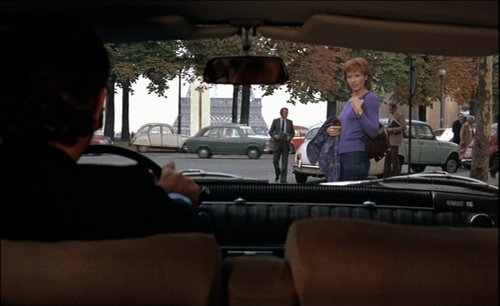
When an artist is referred to as someone who “wears their feelings on their sleeves” it usually means that their work rather overtly manages to express the sentiment that they intended. However, in Pialat’s case (lame symbolism ahead, warning) he doesn’t wear sleeves in the first place. He’s one of the few directors who is able to be completely transparent when it came to his personal life and the cinematic representations he created. This film, only his second full length feature, is perhaps the most obvious example of this quality. Based on his own highly personal novel, Pialat almost effortlessly balances the ever-delicate relationship between reality and fiction.

It’s important to mention that Pialat’s cinema is not balancing said relationship by playing with one’s idea of what constitutes “film world” and “real world” as Godard did countless times in the 60s. He achieves the balance by being completely transparent (this is in danger of becoming a personal buzz word in describing not just this film, but Pialat’s work in general) and achingly personal. I mean achingly in the most literal way. One has to think that if Pialat showed this film (or the book, I suppose) to any of his close friends, that they would feel enormously uncomfortable. No, it’s not like I haven’t seen an “honest” of “piercing” type of movie before, but there’s something in Pialat’s manner of observation that just encourages the audience to cringe.

I haven’t been keeping up the critical re-evaluation of Pialat in English-speaking countries, but I’m hoping people can begin to drop the “French Cassavetes” description as it as uncreative as it is wrong. On what basis was this claim even developed? The camera shakes? The fact that both make relationship movies? Don’t get me wrong, I love Cassavetes, but try comparing stacking A Woman Under the Influence up to this makes Gena Rowlands look like the most ham-fisted performer of all-time. In trying to think of the difference between the two filmmakers (and there definitely is one, by the way) the first thing that comes to mind is charisma. There’s plenty of it in Cassavetes’ work. Rowlands’ aforementioned performance (which I don’t mean to hate on) has the subtlety of a kabuki performance when compared to the performers in Pialat’s film. While Cassavetes’ film has dramatic action that is on par with a fistfight (literally, towards the ends) where as Pialat, though arguably more violent (literally speaking again) has the gentle observation of someone like Ozu or Leigh.

Unlike Ozu or Leigh, though, is Pialat’s trademark cynicism which shines through the character he based on himself, but is flowing throughout the film’s entire running time. It’s cynicism from a cynic who is too apathetic to proclaim himself as being a part of any movement. It’s something that’s evident not only in Pialat’s film but in his often humorous interviews. There’s a constant conflict between sentiments of indifference and sincerity which are not opposites, but just colliding feelings. In this since, it comes as no surprise that the late Manny Farber was such a big fan of Pialat’s work. While they aren’t operating within the same art form, they both beautifully create brevity in a world that requires clarity in both fiction and analysis.

I suppose it is somewhat ironic then that I feel very unsure of where to begin even talking about this movie. It’s heartbreaking, but not that in the way that builds and builds into a poignant climax but instead something that constantly builds and gets more and more upsetting along the way. There’s a line in the film that serves as a perfect symbol for the experience of watching Pialat’s work. Catherine tells Jean that she loves him less than before, and he asks when this happened. She replies, “It just did, bit by bit.” – a perfect description for the film itself. It pokes at your most sensitive area with an iron and pours salt into your wounds, yes even the ones that were masked by Cassavetes and countless others. In other words, this is absolutely a masterpiece.


Doctors’ Wives (1931)

2 03 2010

I have to preface this review by mentioning that I am a Borzage apologist. He made very few films that I cannot defend and quite frankly, this is not one of them. There’s only a handful that I feel comfortable calling outright masterpieces (Man’s Castle is at least one) but even his minor stuff (such as this film) have a tremendous impact on me. The whole “romantic” angle is probably overplayed by every critical overview of Borzage, but it simply cannot be expressed enough. Simply stated, no one in Hollywood knew how to craft a love story quite like him. Sure, he could be hokey at times, but there is no denying that he matched such moments with ones of pure cinematic bliss.

Of course, this wouldn’t be a Borzage film if there wasn’t something of a love story. Joan Bennett assists a dreamy doctor, they hopelessly fall in love, and get married. That alone sounds like the outline for some of Borzage’s best work. But it’s just the first act. From there, Bennett is neglected by her husband because of his business. She grows restless of her husband’s devotion to his profession and in the process, begins to suspect him of infidelity.

Once we get past the initial falling in love phase for the two main characters, Borzage kind of turns his own cinema on its heels. It almost feels like he’s playing off of the criticism that his films are disconnected from reality. This comes crashing down hard on Bennett immediately as she realizes that the love she feels for her husband may be mutual, but it also goes unrequited. The sorrow expressed by a failed relationship (or simply a failing one) is an emotion uncommon for Borzage. His area of expertise is mostly lovers that are divided by some physical, imposing force or at least some tragic character flaw. Here, it’s just an unmitigated failure, though by the ending, Borzage has stretched the story back into his aforementioned area of expertise.

In all honesty, this might sell more as a “pre-code melodrama” than as a young Borzage working out the kinks of his post-silent aesthetics. I might just be too partial towards him to feel like pointing out the flaws, but while I don’t completely love this movie, I have some special admiration for it. Not the same as “respect” so to speak, more of a crush. Fitting, I suppose, considering what Borzage is interested in photographing, but there’s something about nearly all of his work that just manages to get to me in some way. I might not think every film of his is perfection, but there’s something memorable in all of them. In this case, I think I am going to have a hard time forgetting Victor Varconi’s line about love. It is so earnest and sincere, like most things Borzage related.


Salute! (1929)

27 02 2010

A sweet, simple, warmhearted early talkie from Ford. It’s nothing earth-shattering, but it doesn’t really try to be. If anything, I’m glad that Ford kept everything low-key and simplistic (I’m fearing the latter adjective will be used a lot to describe this film) but still managed to add some visual flair to the otherwise predictable proceedings. Maybe I managed to watch it at the right point in time, but I think I got as much out of this as I possibly could. It’s easy to see where it’s going (once you get a grasp on who is who and what is going on) very early on, but still, it is very fun.

A timid Paul Randall is about to be sent out to the Naval Academy, and it is the first true opportunity he’ll get to escape from the shadows of his older brother and West Point cadet, John Randall. John is the outgoing, good-looking, and athletic member of the family and Paul is the antithesis. While in Annapolis, Paul becomes fond of Nancy, but his inexperience with women does anything but work to his advantage. He remains oblivious to her advances and instead, spends most of his time lamenting the upcoming Army-Navy football game.

There’s several selling points here, even if you aren’t a die hard Ford fan. Depending on one’s opinion of Stepin Fetchit, this film is either a great opportunity or an embarrassing showing. I know there’s the issue of racial stereotyping that many hold against Fetchit, but in the eyes of a modern viewer, I think his performances are subversive, arguably brilliant but frustrating reminders of our not so flattering past. It creates this almost unbearable tension between the film and the audience, especially when Fetchit is given as many lines as he is here.

The other great curiosity is the newsreel footage of the Army-Navy game. Unfortunately, I have yet to discover what year it is from, but it is still fascinating to watch. Ford struggles to blend the newsreel footage with his own football footage. It’s probably most evident by the sound, the crowd is ear-piercing during the real footage, but no attempt is made to recreate their cheering during the fictional footage. It probably requires some interest in the history of (American) football to be impressed, but it is one of the earliest examples of Ford providing historical relevance to his art. There’s also a great “pre-code” tone to Ford’s style here, perhaps more in the vein of William A. Wellman than Ford himself. The shaky, free-to-roam handheld camera movements are fun to watch, even as they are capturing events that could be considered mundane. It’s fun movie, though definitely for people who are already familiar with Ford.


Shameless plug

18 02 2010

I got an email from Joel Anderson, an intern for the Japan Society’s film program in New York. He asked me to spread the word about the upcoming screening on Kenji Misumi’s Destiny’s Son. Apologizes  to Joel for taking so long to make a post about this; the screening is tomorrow at 7:30 PM. You can buy your tickets ahead of time here. I have yet to see the film myself yet, but as a fan of Raizo Ichikawa, I would recommend everybody in the New York area to give it a shot. They’ve got plenty of other screenings forthcoming, which can be viewed on their website’s calendar.

On a similar note, Hulu.com is now showing (via Criterion) some of the films from the original Zatoichi series. The internet sure is great, isn’t it?


Brewster’s Millions (1945)

15 02 2010

The second full feature I’ve seen from Allan Dwan (in addition to his Director’s Playhouse episode, High Air) is another home run. I couldn’t really argue that it is anything unique or that Dwan himself did anything to make this particular film special, but it definitely has an in-explainable and irresistible charm. It’s pretty much an eighty minute long joke (not in the negative sense) that is more silly than it is hilarious, and it all adds up to a punchline sure to give many a smirk. Nothing overwhelming, really, but its the sort of fast-paced, easy going comedy that just hits me in the right way at the right time.

Monty Brewster returns from his military service with one thing on his mind: marrying his sweetheart, Peggy. His pals from his time overseas accompany him to the big “welcome home” party. Soon after, it is revealed that Monty may inherit up to a million dollars from an uncle. It’s not a hoax, but he can only inherit the will, which he is secretly told to be 8 million dollars if he can spend 1 million dollars by the time he reaches the age of 30. There’s only one problem: he turns 30 in two months. The will checks out completely, not only must Monty spend the 1 million, but he must also do so without revealing to anyone why he is doing so. Oh, and he can’t just give it away to charity.

Brewster meticulously maps out a way to get rid of the million within two months, but from the perspective of his family and friends, he is simply going insane. He buys extravagant amount of stock in unlikely places and places a bet on an equally unlucky horse. However, these attempts at throwing the money away backfire and he soon begins a luck streak – at least that’s how the rest of the world sees it. For Monty, it is the epitome of unluckiness.

I will admit right off the bat that this movie does have its fair share of “hijinx” which is usually something I associate with cartoony, old-time comedies that most often rub me the wrong way. The humor here might be pedestrian, it’s snappy, witty dialogue that isn’t going to force anyone to hit the pause button from extensive laughing, it is most likely just going to force a smile. It’s a silly movie, which is something that I cannot stress enough, but it takes pride in this fact and doesn’t try to slip into an unnecessary “serious” tone.

Take for example, any “screwball comedy” which usually depends on the audience’s ability to imagine that two people can be so completely different and fight to no ends but still somehow, love each other. While I am fond of many directors that dabbled in this genre, I find it a bit too old-fashioned and a bit too hard to believe. Here, though, Monty and Peggy’s relationship is only problematic because of a single legal stipulation.  I’m never for a film explaining/fixing things so easily and quickly as Dwan does here, but it is a special situation.

It’s something that we are aware of, thus no tricks are being pulled and it’s a secret we are desperate to announce. Peggy and Monty’s relationship can really just “pick back up again” because it never really changed. Sure, down the road she may have to ask him if the other women that were involved in his endeavors meant anything, but a minor quibble is the most that will produce, and it’s something that is too lowkey for Dwan to even bother photographing. Many talk about the resourceful and minimalism of cinema’s genre giants during the 30s to 50s, but they usually are referring to noirs and westerns, but the tight, rapid-fire pace of this gem is evident that Dwan could do the same for comedy.