Still reeling from the post-viewing high of Kanzashi, I decided to give this earlier Shimizu feature a try. It isn’t nearly as great and it suffers from a few narrative hiccups, but for the most part, it is further reinforcement of just how skilled Shimizu is as a filmmaker. Not only that but with this film, it is becoming more and more clear that he has his own recognizable style. Really, I got off on the wrong foot with Forget Love for Now since it seems to provide little representation of what he has going on in this and Kanzashi.

Two blind masseurs, who make a hobby of counting how many people they pass, find work in a secluded town. One of the masseurs, Tokuichi, inadvertently falls in love with the kind Michiho. The two begin a playful but infrequent relationship. All hope appears lost for Tokuichi when Michiho develops an interest in Shintaro, a lonely man who continues to prolong an uneventful vacation with his nephew.

Like Kanzashi there is no noticeable “drama” here and the sensibility is similarly carefree and happy. There’s silly comedic hijink that only deepens the theory that Shimizu’s world is one of never-ending happiness. That’s a pretty superficial assessment, though, and a false one at that. Once again, essentially nothing important happens on the surface, but Shimizu’s films seem to be more about what his characters don’t say, rather than what they do say. Perhaps it is difficult to comprehend but there really is a heartbreaking, almost tragic, would-be romance floating underneath the cutesy humor.

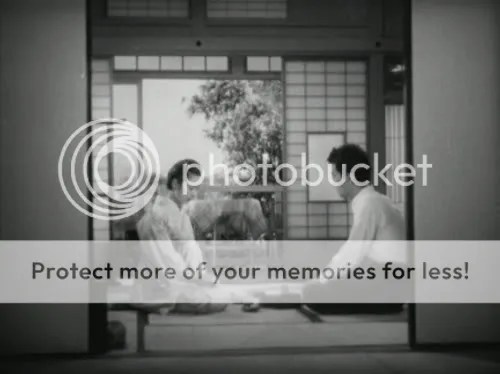
In a way, I’d like to think of this film as a poem, if not a fully-fleshed out character-driven film. The short running time (65 minutes) contributes heavily to such a feeling, but the moments of heartbreak and beauty are presented in such a fragmented way. This is not a criticism at all, in fact it is praise as really no one was making cinema like this during 30s. To say that Shimizu’s cinema is a precursor to Wong Kar-Wai’s is a bit of an exaggeration. Yet in this film, Shimizu captures some wonderful moments and does so in a way that is fleeting but memorable. A perfect example would be he sequence in which Tokuichi passes in between Shintaro and Michiho. Once again, a masterpiece from Shimizu but I still prefer Kanzashi as that one feels a bit more balanced and a lot more developed.







 Cinema Talk