A Day in the Country (1936)

26 07 2008

Well, obviously, it is a bit difficult to assess what is only a thirty nine minute-long re-assemblage of Renoir’s original film, but still, this is pretty great. Oddly enough, it is almost a complete 180 from the previous year’s Toni, which I still consider my favorite Renoir. However, the different approach is similarly successful. This isn’t a deep character study with lots of psychology and development, but instead a quicker, but equally profound, “poetic” sensibility to the narrative. This is clearly the right route considering the film is so short to begin with, but the choice is given even more support by the poignant feeling underscoring every sequence.

A Parisian ironmonger takes his family on a trip to the country side and it is there that his daughter, Henriette, becomes the object of affection for Rodolphe. He convinces his buddy, Henri, to help mingle with Henriette and her mother, Juliette. Henri remains passive and reserved, while Rodolphe brings out as many charming bits of dialogue as possible. Despite his intentions, his witty manner impresses Juliette rather than Henriette. When the group decides to go boating, Henriette decides to tag along with Henri and the result is a tragedy of two would-be lovers never quite aware of their feelings, let alone how to express them.
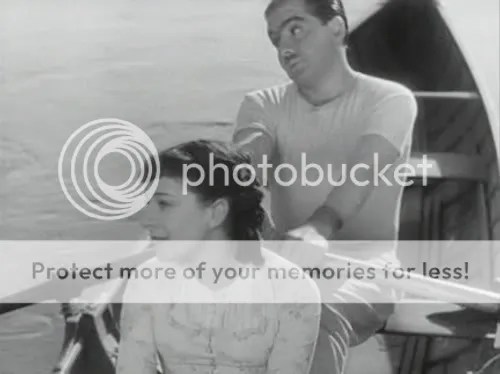
There are a few films that Renoir’s short bears a heavy resemblance to. One of the most obvious being Picnic at Hanging Rock if only for the whole “day in the country” (hence the film’s title!) set-up, but thankfully Renoir never indulges in a goofy mystery story, but instead goes the route of a lost love type narrative, which I certainly prefer. This is where the film begins to show shades of Hiroshi Shimizu’s great Kanzashi, which is obviously not a problem at all. It’s good to finally be able to see the connection between Renoir and Shimizu outside of the fact they were both formally experimental. Not only is the story the same, but the way in which Renoir achieves cinematic poetry within such a limited aesthetic is astonishing in the same way the poetic moments in Shimizu’s film are. Really, the only problem with this film is that it is short, which makes it slightly less powerful, but with that said, I actually wouldn’t want it to be any longer.



The Lady Without Camelias (1953)

25 07 2008

Like most of Antonioni’s pre-Il Grido features, this is a curious piece of filmmaking but unfortunately, nothing really special on it’s own. It’s a step up for Antonioni from his overwhelmingly unremarkable debut Story of a Love Affair but that isn’t really saying much. Like that film, one of the few positives is Lucia Bose, who once again, is trapped in a narrative that is far below her acting capabilities. It’s too bad that she had to be Antonioni’s early muse, if you can even call her that, because she would have fit in perfectly with his much more accomplished work.

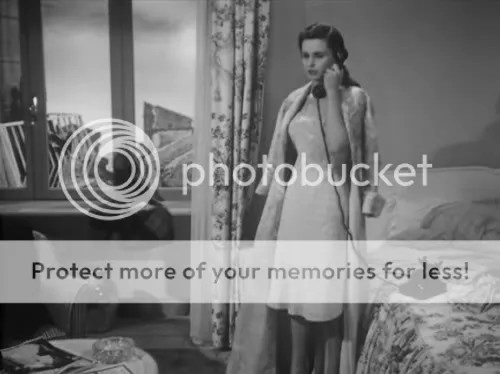
A young and naive shop clerk named Claire comes to Rome and in the process, inadvertently becomes an Italian movie star. Her newfound stardom is mostly due to the efforts of Gianni, a film producer. He inevitably falls in love with Claire and ultimately, forces her into a marriage. Once they are married, Gianni becomes more and more controlling and it seems to directly effect Claire’s movie career. She appears in a “Joan of Arc”-esque film that is met with a very negative response and now, Gianni doesn’t even want her to appear in any more movies at all. Things begin to look hopeful once she meets and subsequently falls for Nardo, but their affair is still plagued by certain personal obligations.

While the narrative is pretty standard “rise and fall” fare, it is at least a bit more daring than the setup of Antonioni’s previous film, Story of a Love Affair. Some of the “insightful” film making process stuff is a little funny, but saying comedy was Antonioni’s strong suit would be pretty silly. Most of the film’s positive attributes come from Lucia Bose, who is as stunning as ever. Again, her role isn’t even good enough for her, as she breathes life into a character that is otherwise, very one-dimensional. I have a strong feeling I wrote almost the exact same thing about Death of a Cyclist but that just goes to show how many mediocre roles she took. It really is a shame that she was never able to collaborate in a project that could compliment her beauty and grace.


Toni (1935)

25 07 2008

No question, the best Renoir film I’ve seen thus far. It’s probably no coincidence that it is also his most emotionally mature and nuanced work as well. In his defense, La bete humaine and Boudu sauvé des eaux didn’t really attempt to be deep character studies. Still, it is quite impressive to see such a delicate and well-crafted observational film handled with Renoir’s usual technical greatness. In a way, this almost resembles one of Fassbinder’s earlier films, but obviously not as cynical nor quite as accomplished. Towards the end, it becomes downright melodramatic, but even those final moments seem to come off in a rather natural and unforced manner.

An Italian immigrant nicknamed Toni (short for Antonio) moves to the French country side and quickly becomes absorbed in the lifestyle. He seems to have settled down with his landlady and wife, Marie. But as time passes, he quickly grows tired of her and shifts his focus towards an immigrant from Spain, Josefa. However, Josefa is trapped in an unpleasant marriage with Albert, by far the most (physically) brutal character in the story. Toni dreams of escaping with Josefa to a new life but it seems that too many things have to go right, an ironic thought as things begin to go totally wrong for Toni. He is kicked out of his house and forced to make his own makeshift shelter, but his enthusiasm for Josefa never declines.

This is commonly accepted as the forerunner to the neo-realism movement in Italy, which makes considering the origin of the main character and Luchino Visconti’s own involvement in the production. Renoir’s film is free of any political context, though, as he doesn’t seem to be offering any timely or cultural criticism. As a result, his film is also far less dramatic even if it does have dramatic turns located throughout the narrative. Most of these events come off quite naturally under Renoir’s helm, though, as he makes no effort to single out any plot points. The whole experience is a rather breazy experience, which isn’t to say it is fun-loving but just very tender and nuanced.

Things begin to take a turn for the melodramatic towards the end, but not enough to cancel out the much more gentle vibe that comes before it. Even then, there’s enough accomplished in the aesthetic field to warrant plenty of praise. Indeed, the way in which an extended cast of characters exist in their own society anticipates a film like Fassbinder’s Katzelmacher. Perhaps an Ozu connection can also be made, especially since the film maintains the similar proto-gluesniffing genre vibe of Ozu’s silent films. More than that though, I’m glad to see such a warm but complex character-driven drama from Renoir. I already knew he was great in the technical aspects of filmmaking, but it is great to see such talent complimenting a story equal in maturity.


The Long Night (1947)

23 07 2008

Pretty much just an American-ized version of Marcel Carne’s Le jour se léve, which is more or less, a very good thing. While I can’t give the film any points for originality, it is still nice to basically rewatch one of my favorite movies – except there’s now different actors. The casting is pretty smart, though. If there’s any one that can recapture the personality of Jean Gabin, than it is certainly Henry Fonda. It’s certainly a case of inexperience, but I still think that both are the two best actors of their respective generations. Maybe Fonda ends up coming off a bit more talky, but that might just be a result of the language barrier. There’s not really much more else to say about this, considering that I probably already said it in my review of Le jour se léve, but I will add that The Long Night probably has the technical advantage. It doesn’t have the dated over-lit look of its French predecessor, but instead, a much more “brutal” aesthetic, which underscores the story’s bleak tone much better.


Introspection Tower (1941)

22 07 2008

While I’d definitely place this on Shimizu’s lower-tier of works, I have to also give it a lot of credit for being so unique. To my knowledge, there really was no film like this in Japan at the time, or anywhere for that matter. Of course, being so different doesn’t give necessarily give it a free critical pass but the film is “interesting” enough to be inherently entertaining for almost two hours. Rather than being built upon a cohesive story as Shimizu usually does, the film features many loosely connected vignettes. There’s plenty of great moments that make the viewing worthwhile, if not downright mandatory. It’s great to see Shimizu doing some experimentation, even if the results aren’t completely successful.

The film opens to Chishu Ryu giving a tour of a boarding school to a group of parents. The camera quietly observes the daily routine of both the school’s teacher and students. On the surface, things seem perfectly fine, even if the institution is for delinquents. Then, we are introduced to Tami, who has just recently been enrolled. She is okay at first, and seems to be the most mature of the children there, but she quickly gets fed up with the school’s treatment. She befriends Masue, who along with Yoshio, makes up a problematic group of wannabe-runaways. The teachers are also frustrated, but by the children’s resistance to co-operation.

There’s many other things going on in Intospection Tower that ultimately doesn’t amount to a substantial part of the plot, but that is because Shimizu’s interests seem to lie in capturing little grains of truth from as many characters as possible, rather than focusing on any clear protagonist. One can argue that Tami is the main character as she is somewhat of a launching pad for the film’s drama, but then, it can also be argued that the teachers are the main characters because their logic is (obviously) much more rational than the children’s. The ongoing plots greatly underscore Shimizu’s occasional playful and even though this film itself isn’t a masterpiece, I do wish Shimizu would have done more “vignette” driven films.

It is probably a bit repetitive to mention that, once again, Shimizu has an amazing sense of confidence handling the camera. With the exception of the inevitable fades, this about as perfect as any film could be on a technical level. Considering the wide and open landscapes he was working with, it is great to see Shimizu avoid many close-ups. When we do see character’s faces, we really see their faces. Perhaps some see the long static shots from far away awkwardly clashing with the ridiculous close-ups, but the transition between the two is handled so gracefully under Shimizu’s direction. In other words, this is another pitch-perfect example of his filmmaking talents, but the narrative isn’t quite up to Shimizu’s usual amount of observation, heartbreak, and poignancy.