While Paris Sleeps (1932)

12 08 2013

Allan Dwan’s reputation as filmmaker, like many of the American genre titans of his time, is linked to economy. A word that can be used to describe a lot of things, but in this particular circumstance, it means an economy of storytelling. It’s a term that’s perhaps overused when describing action directors of the classic era, but here’s an instance of Dwan working outside of the genres he’d become known for said economy. At only 61 minutes, there isn’t really enough there for this film to feel like a master work, but there’s still something there. The classic cycle for both westerns and noirs were years away, but one can find artifacts of both in this early effort.

1

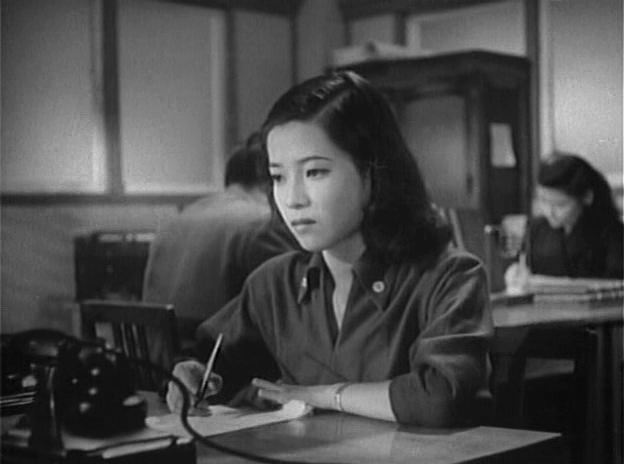
Jacques Costard, a veteran of the First World War, escapes from prison in an effort to reunite with his family. He escapes but finds out his wife has recently passed on. In a letter, she explains to him that their daughter, Manon, doesn’t remember him and believes he died in combat. Manon’s situation is similarly grim: unable to pay rent she unknowingly gets involved with a pimp. Jacques has to save her, but has to keep his identity from his daughter a secret.
2

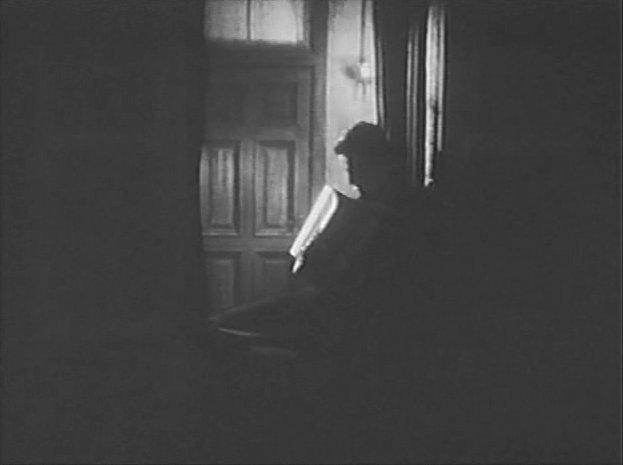
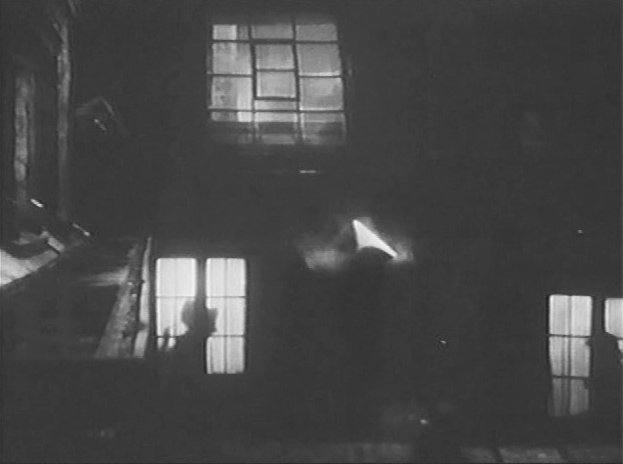
While the film does have its own unique charm (it infamously contains a sequence in which a police spy in thrown into an incinerator!) it kind of feels a little too tired from a thematic standpoint. There are interesting things about McLaglen’s Jacques, who seems to be a warmup for the Gypo Nolan character in John Ford’s The Informer. The most interesting of which is his inability to tell Manon that he’s her father. There seems to be a theme throughout the film of men hiding and disguising their motivations, as well as their feelings. It might seem ponderous when Jacques sheds a tear, but it at least suggests that all the men here are putting on something of a performance.
3

The dire tone of the film actually works against its “uplifting” ending. Jacques saves his daughter and she gets to start a new life with her musician boyfriend, Paul. In reality, Paul is something of a creep. The three main men in the film vary in likability, but they’re all ultimately trying to control Manon. Julot, the pimp, is ultimately trying to control her for his own profit and despite some superficial charm, he is obviously coded as a “bad guy.” Paul is a bit more dynamic, but perhaps unintentionally so. He presents himself as the gentlemen antithesis to Julot, a nice boy who truly cares about Manon and loves her. Maybe he does, but he exhibits behavior of a pretty miserable spouse. The couple’s big quarrel scene paints him as both manipulative and pathetic.

4

Paul’s negative qualities might be the byproduct of Basil Woon’s script, which tries to play to the pathos of hard city life. It isn’t entirely successful, and one could argue that Dwan is to blame here. The visuals are nice and functional, but the poetic touches don’t bother with the typical Paris iconography. This might speak to Dwan’s sensibilities, though, as reoccurring shots of the city’s famous landmarks would be a cheap trick, one that lesser filmmakers have resorted to using.

5


Bara kassen / Battle of Roses (1950)

4 08 2013

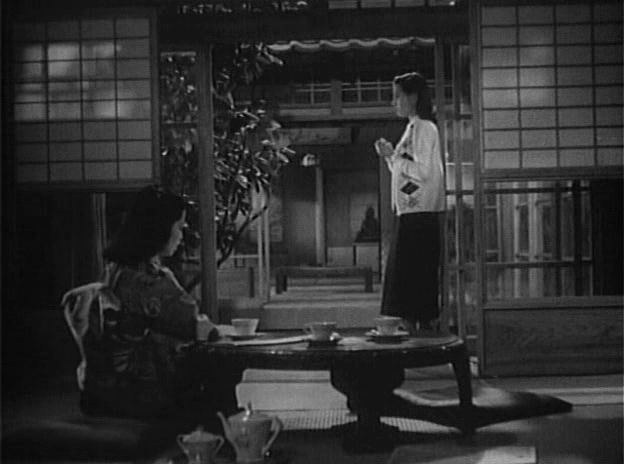
Who’s to say there was anything wrong with Mikio Naruse in 1950, but his output from this year presents a major stylistic difference from the rest of his work in the decade. He’s still working in the same thematic territory here, but the results feel like American B-pictures. That’s not to say they are bad or look cheap, but instead that they match the sensationalist tone of such a picture. The content in films like this one and White Beast fits the presentation, but the result ends up feeling a little cheap. These films are Naruse at his loudest, but also his sloppiest. They’re perversely entertaining when viewed, but lacking in the power of his best films.

1

Satomi’s husband dies while his cosmetics company is in the middle of a embezzlement investigation. Satomi inherits the company, but quickly loses it due to her husband’s debts. She joins a rival company and finds herself in charge. Meanwhile, her younger sisters, Hinako and Chisuzu, continue to struggle with their love lives. Hinako is blackmailed into marrying Satomi’s rival, which Satomi sees as an act of rebellion. Chisuzu, the youngest of the three, is star-struck and becomes infatuated with a local pimp because of his ties to the film industry.

2

Having to write a plot synopsis for this film is quite a headache, the exposition is plentiful and Naruse moves it along very quickly. Even if he were to pad things out, the story would still be frustrating simply because it is too much. It’s amusing, to me at least, that someone could accuse a more typical Naruse film of being boring on the grounds that the plot is too thin. Here, we have too much plot and film begins to feel like something of a chore. Perhaps, to the film’s benefit, it begins to resemble a conventional Hollywood melodrama, complete with sharp musical cues and ellipses that skip the “boring” parts.

3

I still find something very vital in Naruse’s films from 1950. They’re not great, and probably not even good, but they introduce a different presentation of his themes. This film in particular (paired with White Beast) represents the subtext of Naruse’s world being presented as text. In reality, these characters are too thin and simple to be the subjects of the filmmaker’s detailed portraits. Instead, they act out the ideology that is hinted at in better films. For example, one of the sisters has a particularly frank discussion with her boyfriend about the patriarchy and another talks about her sexual agency.

4

This all sounds really exciting to read, and it’s absolutely joyous to watch but the film never elevates itself beyond these moments where the performers seem to become mouth pieces. It’s a pretty classic example of showing compared to telling, the women here are telling about their oppression but the showing feels less like pathos and more like the narrative mechanics of a melodrama. It’s not that one will struggle to feel for the sisters, it’s that one will struggle to believe in their reality. To his credit, Naruse tries, but the film’s origins as a newspaper serial (written by a man) are highly visible. It’s another curiosity for Naruse fans and even non-fans might be charmed by it’s slickness, but it feels a little hollow.

5


Aki tachinu / The Approach of Autumn (1960)

3 08 2013

During the 1950s, there were very few directors more consistent than Mikio Naruse.  As he did for most of his career, his focus was on lower-middle class adults, particularly women. While the economic context of his characters shifted somewhat as his career progressed (not nearly as dramatically as Ozu’s, of course), the protagonists of his films have never been dramatically different. For this reason, it’s particularly interesting whenever Naruse’s films are centered around men (The Road I Travel With You from 1936 comes to mind) if only because of the inherent difference with the majority of his work. To mix things up further, The Approach of Autumn is strictly about children.

1

Young Hideyo moves from the country into Tokyo. Living with relatives that aren’t particularly invested in him or his interests, he struggles to fit in with his surroundings. With some bad luck, he becomes enemies with all the boys his age. He does however develop an interest in Junko. Despite being from a family with more financial stability, she faces the same problems as Hideyo. She wants her parents to adopt Hideyo, but societal pressures seem to turn them off from the idea of even having Hideyo spend time with Junko.

2

One obvious problem that the film runs into is the performances of the children, neither of which are particularly good. Naruse has a pretty good track record with young performers, but he has no luck here. In all likelihood, it’s a symptom of the story being built around them too much. They have to carry too much of the weight, and they struggle more so than any performer in a Naruse film. It’s here that one begins to take for granted the performers that populate most of the filmmaker’s world. They’re so effortlessly perfect that it takes a film where most of the interactions are so awkward and forced to remind you how crucial the performances are to Naruse’s best work.

3

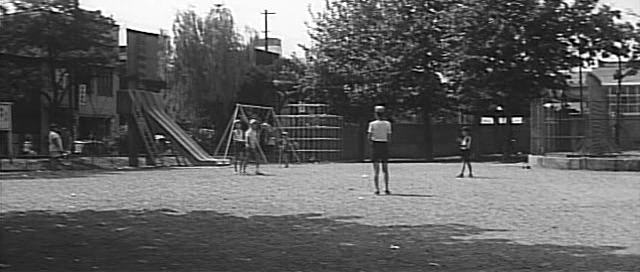
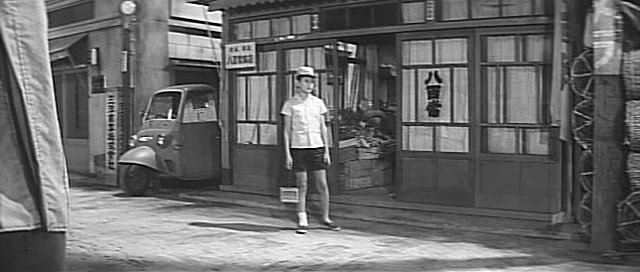
There are a lot of nice things about this film, though. The black and white, scope cinematography looks nice, especially in the sequence where Junko and Hideyo walk around the neglected parts of the city. It seems Naruse might have been aware of the limits of these young performers, which motivated him to have a scene where they do little else but walk around. This is probably the “heart” of the film, if I had to choose such a thing. It’s visually stunning, and the performances manage to not really get in the way.

4

I struggle to tag this film as even being good, as I would have quickly forgotten it had Naruse’s name not been attached. It is still his film though (and interestingly, his first as a producer) and because of this it provides an interesting shift in perspective from the rest of his work. Here, it’s the child of a struggling mother that gets the most time and how this works into the collective Naruse landscape is genuinely interesting. Particularly, in the fact that this young boy becomes numb to the cruel behavior of men (well, boys) much like any Naruse woman. The themes of the filmmaker’s best work are still there, they just take a different route.

5