Michael Winterbottom had actually been making movies for almost ten years by the time this project was released. It’s still one of his earlier (and lesser known) full-length efforts. Weirdly, it seems like the culmination of an entire career with Winterbottom touching upon things he would later explore later and with greater depth. Sure, the influence of Wong Kar Wai and Kieslowski is so obvious it is almost obnoxious, but it’s never a terrible idea to draw upon your influences when you have the technical prowess to back it up. There’s no denying the beauty of this movie, even as it takes a rather shaky turn towards being a thriller. It still feels grounded in spite of its dramatic conclusion and if it wasn’t, it would still be a enormous aesthetic accomplishment.
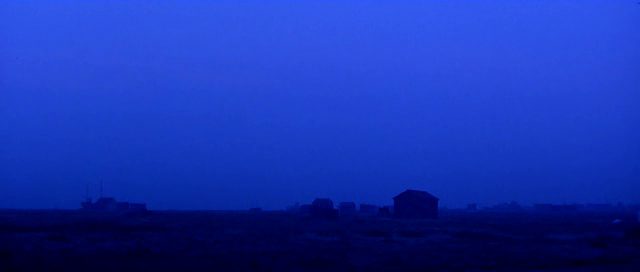
Slawomir Idziak, longtime collaborator with the aforementioned Kieslowski, is the man responsible for the visuals. They seem heavily indebted to Kieslowski even as they anticipate the art house trends of the approaching decade. The heavy blue filter look is produced here about five years before it became something of an cliche. The yellow filter that frames the country landscapes (perhaps anticipating The Trip) feels a little overdone at times, but the results are still undeniable. It’s one of those rare pieces where certain shots are absolutely framed intentionally, but the film manages to evoke a natural energy. It’s not just about juxtaposing a composition with a steadicam take, it’s about a filmmaker maintaining an intimacy with their images.
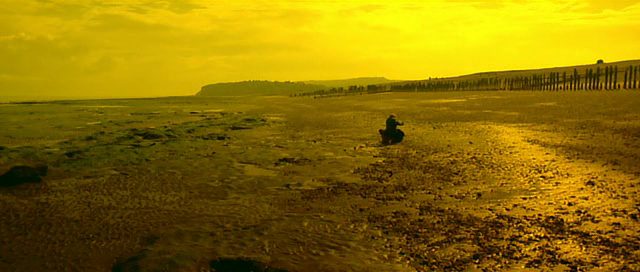
That sounds like a bunch of garbage, but it does lead to an excellent illustration and it’s where the Wong influence comes in. I hate saying things like intimate images because it treads the line of being pretentious, but the closeness of the images, within the widescreen frame takes a certain talent. In a way, this almost anticipates Wong’s own 2046, which is arguably his best looking film, but it along with In the Mood for Love definitely announced a shift: the kinetic pace of his 90s work was gone, now there was something more mature. I don’t mean to get too off-topic but that split in Wong’s work represents a line that this film is balancing on. It’s deliberate but provides a spontaneous energy, a sensation not unlike the one produced by the work of Winterbottom’s country(wo)man, Andrea Arnold. She accomplishes this in a very different way, ending up more on the “gritty” end of things, where as this is clearly more glossy.

In the review of The Woman on the Beach I mention the potential appeal of having characters with unclear motivations, or “opaque” characterizations. This is applicable here in a film where the most impressive moments are the placement of characters, not a deeper probing of their pysche. They are still interesting, mind you, but they are not a deliberate focus. There are more beautiful, individual moments that slowly connect into a narrative. This creates something of a problem as the film slowly scoots its way to becoming a thriller. It happens so subtly, it’s almost unnoticeable, and it’s not at all jarring when the “plot” stuff has to be carried out in the film’s conclusion.
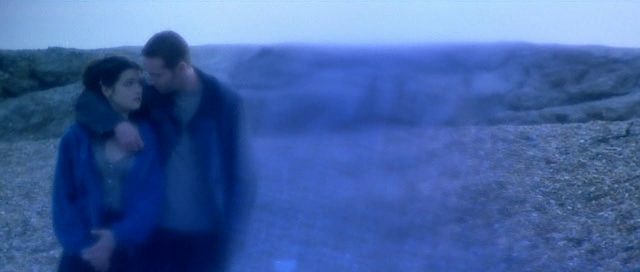
The film still ends open-ended enough, I suppose, but there is something unappealing about framing this as a neo-noir. It has genre elements, obviously, but it such a far cry from being “genre cinema.” There is something very impressive about balancing art and genre, especially if it is unexpected, but I Want You seems to be only formed from a genre template, being filled in with something more distinctly driven by its technical/visual artistry, not a storytelling one. Sometimes the pieces fit, but most of the time it feels weird.

These are really minor complaints. Most of the film’s actual content is effective. The curiosity of Honda is hard to not relate to, and his experiences have a poignancy, reaffirmed by the abstraction in which they are presented. His recording of conversations seems like such a move of the influences I’ve already mentioned, but there is still something distinct about his character, perhaps even distinctly British. The muddy countryside that houses Honda and his sister Smokey is many miles away from the nightclubs and motels of Wong, the studio apartments and cafes of Kieslowski. It’s a new poetry, even as it borrows the rhetoric from the past.


 Cinema Talk