Fue no shiratama (1929)

10 06 2008

Shimizu’s oldest surviving film is, oddly enough, also one of his longest and for my money, probably his least accessible too. It does have plenty of examples to prove just how much of an experimenter Shimizu was, at least in the technical aspects of filmmaking. On the other hand, such an archaic aesthetic is a bit hard to take seriously at times. He is a great filmmaker, and there is no doubt in my mind about that, but I’m not sure it necessarily translates in this project. It should go without saying then that this film is, at least in my mind, only for hardcore Shimizu fans. It’s an interesting entry in his catalog, no doubt, but this interest never rises above being a minor curiosity.

The passive and hard-working Toshie has fallen in love with the handsome Narita. Due to her reserved and old-fashioned sensibility, she is only seen by him as a friend. He instead has eye for romance centered on Toshie’s sister, Reiko, who simply put, is a party animal. Toshie hides her true feelings and in the process, approves the marriage of Reiko and Narita. Toshie is understandably heart-broken but her pain gets worse when Reiko returns to her old habits. In the meantime, Mr. Katayama, a widower with three children, begins displaying a romantic interest in Toshie. Their relationship goes from bad to worse when, in one of the film’s most fantastic sequence, Katayama’s children welcome Toshie in a rather rude manner. She is driven back home, where she is greeted by a emotionally battered Narita.

Shimizu, as he did in Japanese Girls at the Harbor, showcases many liberties taken within the whole “silent era” aesthetic. He is not quite as creative and playful here, but for my money, he was miles above his peers from across the sea. It’s difficult to judge him with his Japanese colleagues of the 1920s considering the fact that so very few films remain from this period but he still seems a bit more confident than Ozu did in his (somewhat indistinct) films from the 20s. If this film does anything, it reinforces just how impressive Shimizu is at handling the technical aspects of filmmaking.

In the last few weeks, I feel like I’ve repeated the above sentence at a nauseating rate. These “minor” films are interesting no doubt, but still quite disappointing when compared to Shimizu’s later and much more groundbreaking pieces. Not to mention that his later films have an emotional maturity that is very much lacking here. Then again, this is a silent film so one just has to anticipate some intrusive behavior. Considering the conditions under which this was made, it is pretty much a fantastic piece of filmmaking but it stands as nothing more than a minor footnote in Shimizu’s vast and unfortunately unexplored career. While I cannot see myself specifically recommending Fue no shiratama, I also can’t see myself specifically recommending someone to not see it.


Hideko the Bus Conductress (1941)

10 06 2008

Naruse’s first on-screen collaboration with the great Hideko Takamine comes during his so called “slump” period of the 1940s. In general, Japanese filmmakers seemed to struggle during this decade. Ozu managed to produce only five films. Mizoguchi’s output is greater but critically, is seen as less than stellar. It is surprising then that this Naruse film that came at the very start of the decade not only represents one of Japan’s best films from the 1940s, but also a stylistic transition for Naruse. It is here that we begin to see signs of the very accomplished technique that would define his most successful cinematic period – the 1950s.

A young female bus conductor by the name of Hideko, attempts to solve the bus company’s problems by providing on-going commentary to the patrons. She teams up with a co-worker, Mr. Sonoda, to help pitch the idea to the boss. He shows mild interest, but nothing noteworthy. Meanwhile, Hideko and Sonoda enlist the aid of a professional writer, Mr. Igawa. During a first-time “run-through” of the commentary, Sonoda comes dangerously close to hitting a little boy. As the gang surveys the scene, the bus begins to slip, which results in a minor injury for Hideko. It seems that the idea to help the company’s finances is doing the exact opposite, which will eventually lead to a not-so-happy resolution.

While this does show many signs of Naruse’s much more famous post-war aesthetic, it is also a bit more idiosyncratic than any of those films. Perhaps the presence of the bus is to blame, but this does evoke the same type of mood as Shimizu’s Arigato-san. Unfortunately, this does lack the hint of poetic tragedy that makes that film so fascinating but such depth might be a little too much to expect from a light comedy with a fifty minute running time. Besides, it is not as though this film ends on a particularly positive note, quite the opposite in fact. Still, there is very much an inconsequential feeling one gets while watching this film which may or may not play to Naruse’s advantage. This obviously can’t live up to the standards of later Naruse films, but I actually like it just as much as the much more critically approved 1930s period. It should go without saying that this, along with dozens of other Naruse films, should be given a proper DVD treatment. Outlook is not so good, though.


L’Amour par terre (1984)

9 06 2008

An upgrade from Va savoir and La Belle Noiseuse but some problems still remain. I suppose the whole theater production narrative can excuse the film’s overly-talkative nature. Whatever the case, I still think Rivette manages to make the film extremely interesting in spite of the fact that the whole concept is anything but. I can see how someone would see this as a predecessor to Mulholland Drive since there’s also some goofy surreal mystery sensibility going on here. It’s that particular feeling that makes me resist calling this a masterpiece.

Emily and Charlotte are performing a play inside of an apartment complex. Afterwards, a man named Clement invites them and the play’s director, Silvano, to a special audition. They all wind up in a mysterious mansion accompanied by odd personas such as Paul and Elanore. Clement immediately makes his intentions clear: he wants Emily and Charlotte to participate in a new play that will take place within his mansion. The catch is that the play must be ready to be performed in front of the public by the end of the week. Everyone dives into the production head-first, but Emily and Charlotte can’t help but be bothered my the oddities within the house.

While Rivette’s film is far from being a candidate for the “haunted house” genre, it does have a rather silly narrative lining. There’s plenty of relationship-driven drama but there’s also just as much over-the-top David Lynch-esque surreal mystery bullshit. This stuff is pretty annoying, but Rivette handles it just about as well as Jean-Paul Civeyrac does in his recent films, if not better. Thankfully, the film is never confined to this sensibility and it does a very good job of offering plenty of more naturalistic touches.

As already mentioned there is plenty of relationship type stuff for the film to live on. Perhaps this more to the credit of the actors than it is to the screenplay. Jane Birkin, as always is captivating, fantastic, and so on. Geraldine Chaplin is similarly exciting to watch. Considering the rather subpar content that they are given to work with, they both come up with wonderful and complimentary performances. Despite the fact that the narrative is completely uninteresting, the film itself goes by rather quickly. When one takes into account the fact that this an almost three hour long movie with constant talking, it is quite remarkable that it feels rather short. This is not my “type” of film per se, but it is executed in an undeniably fascinating way.


Irma Vep (1996)

8 06 2008

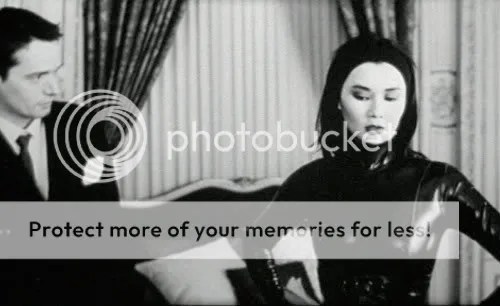
This could very well be my favorite effort (so far) from Assayas. It most definitely would be if it was a bit more emotionally dynamic than his later features. Here, it is not so much a deep character study as it is a very playful and funny satire of the film-making process. If one is vaguely interested in modern French cinema, or Maggie Cheung (alas, now retired) then this is absolutely essential. It’s not some deep, ponderous masterpiece but rather a wonderful way to spend an hour and a half.

Maggie Cheung, fresh off a recent Hong Kong action film, arrives in Paris in preparation for her role as Irma Vep in a remake of Louis Feuillade’s 1915 film Les Vampires. The film’s director, Rene Vidal, seems to have been on a downward slope in recent years. He tells Maggie that he actually had no interest in the project until he realized that he could use her. The actual production of the film seems to hit a roadblock almost immediately. Rene, frustrated, seemingly disappears off the face of the earth. To make matters worse, his replacement has no interest in using Maggie in the film.

While Assayas has yet fully embraced his current aesthetic in this film, there are some signs of early signs of it. One completely random sequence features Maggie Cheung stumbling around her hotel room with Sonic Youth’s “Tunic” in the background. This seems to come out of nowhere, but it obviously is somewhat of a prelude to Assayas’ later film Demonlover. The rest of the film is much more polished, though, which is somewhat ironic considering that his next effort, Late August, Early September is probably his most chaotic.

Similarly, the overall tone of Irma Vep differs from the other entries in Assayas’ filmography. While his subsequent films would feature more fleshed out characters and consequential narratives, it is here that one feels very easygoing and uneventful. Basically nothing serious is at risk here, even all the relationships are based on very superficial and tame meetings. I suppose I could go as far as to classify this as minimalism but that would falsely imply that the film is “colder” than it actually is. Despite the many differences, this is still very much an Olivier Assayas film and a great one at that.


The American Soldier (1970)

8 06 2008

Even by the standards of early Fassbinder, this film is remarkably cold and austere. At times, it almost becomes ridiculous just how mechanically certain events unfold. Normally, it would be easy to write the film off on the prospect of it being so close to self-parody alone, but the final fifteen minutes represent Fassbinder at his most heartbreaking. He’s working towards this for the film’s entire running time but only towards the end, does it all seem to mesh into one of the strangest yet tragic endings in all of cinema. Undeniably frustrating to those unwilling to participate in something new, but extremely rewarding for those that get over the initial uncomfortable feelings brought on by Fassbinder’s very detached style.

Ricky, a contract killer, returns to Germany after a stay in America, where he most likely served in the Vietnam War. The cops begin to use him as a hitman to take care of local criminals. In between these errands, Ricky returns to the locations of his childhood with his old buddy Franz Walsch, revisits his mother and his emotional perplexed brother. He still has plenty of free time, though, not to mention very sad and lonely. He calls up the front desk of the hotel he is residing at and asks for a woman. The cops send Rosa, who falls in love with Ricky but there’s many people standing in their way of a new life.

One needs only to look at the IMDB comments to see just frustrating the style of early Fassbinder be for an audience. Of course, anyone who expects a straight-forward gangster and/or noir flick will be tremendously disappointed and perhaps, infuriated. But even those who are conscious of the film’s artiness may end up befuddled by the mechanical performances. It’s completely reasonable to be turned off just on the acting alone, but it is important to realize that the acting isn’t mechanical and unnatural because the characters are symbols or metaphors, or anything like that. No, it’s clear that Fassbinder took more than a few (fictitious) courses on Bresson’s acting ideas. If you can’t see just how heartbreaking and painful the final fifteen minutes of this film is, then there’s a good chance you don’t have a pulse.