Weekend Viewings (4/18)

20 04 2008

Not feeling my usual talkative self lately so I’ll just provide a little rundown of what happened, in terms of film watching, this weekend.

Badlands (Terrence Malick, 1973) [rewatch]

Still the most easy-going of all of Mr. Malick films, but probably the least emotionally rewarding. Calling it simply escapist entertainment is a bit too harsh, but I can say that it felt that way by the end. Malick has always had an approach to characters that isn’t necessarily complex, but instead, something more fleeting and poetic. In this case, this flashier fleshing out of characters is not fulling developed. At times, the film crosses the line to a plot-driven sensibility if only for the overwhelmingly simple set-up. This is all meant in relation to the man’s other films which are more abstract, more profound, and more ambitious. Don’t get me wrong, I love Badlands, always have and always will but it does feel a bit more empty compared to the type of films I usually watch. Perhaps the humor is just a bit too much? Odd to think that Malick is seen as a humor-less pretentious maniac nowadays. I found myself laughing more often than I did on previous viewings.

Malu Tianshi / Street Angel (Yuan Mu-jih, 1937)

A neat little romantic comedy with aspirations to be something socially relevant but the result is a film whose tone shifts far too frequently to comprehend its own intentions. Xuan Zhou is captivating and exudes an ethereal beauty that one would expect from a young actress in an old Chinese movie. This is a perfect representation of the film as a whole. On it’s own term, it is a fun little film trying to say something profound. Instead, its age creates an almost perverse type of poetry, a film that is cooler to talk about than it is to actually watch. Deep and complex, but inherently so.

Asfalto (Daniel Calparsoro, 2000)

After a long string of older, gloomier films, it was nice to sit back and watch a newer shakycam thriller/love story from Spain. It’s pretty much impossible to avoid comparisons to Mean Streets, Cyclo, and so on but it does pretty well alongside such company. The main attraction here is (probably) the beautiful Najwa Nimri, who one may remember from Julio Medem’s messy, contrived, and overly-symbolic Sex and Lucia. She’s great here, and maybe even better in Medem’s otherwise laughable effort. A neat little fucked up romance and drug film rolled into one, but its nothing overwhelmingly great.
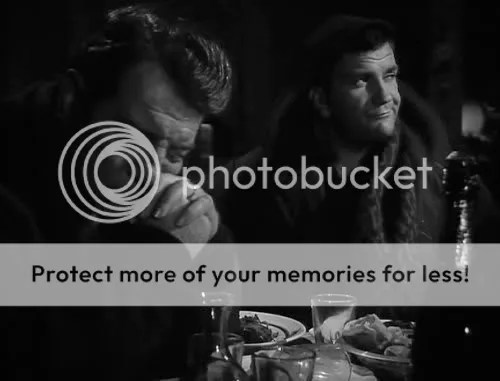


People of No Importance (1955)

19 04 2008

Not quite as gritty or accomplished as Jean Gabin’s cinematic collaborations with Marcel Carné and Jean Renoir, but still a fine film nonetheless. Certainly the theatrical setting dates the film considerably but it is still far more subdued and downbeat than Renoir or Carné’s work. In a way, one could argue that it is more cinematically advanced, perhaps even a precursor to Antonioni’s cinema. In fact, there’s a lot of things that will remind one of Antonioni’s Il Grido, which came out two years later. Just like in that film, this is ultimately a bit too tragically structured to be an overwhelmingly deep experience. Still, it is a very fine film and Gabin is, as always, amazing.

On Christmas Eve, two exhausted truck drivers take a break from their long trip at a local diner. They want and need sleep, but the diner manager is a far more festive mood. He keeps them up, and Jean, the older of the two drivers, falls for the waitress, Clo. Despite the short introduction, they become acquainted. Jean comes back home to a trouble home life. His wife is constantly nagging, and his teenage daughter drives him crazy with her ambitious dream of becoming an actress. The only thing that keeps him going is his two younger sons, and the short meetings he has with Clo. Eventually, their affair hits a roadblock and Clo simply needs more than five-minute meetings. The two plan to run away together and eventually, succeed but this leads to another problem.

Time doesn’t seem to slow down Gabin at all; he’s just as charming here as he is in his earlier performance. I’ll admit that the similarities to Angelopolous’ The Beekeeper (lonely old guy falling in love with a younger, more energetic women) does set some high standards. Of course, this film isn’t really in the same ballpark but it is somewhat of a precursor to Angelopolous, as well as to Antonioni, as previously mentioned. There’s nothing technically extravagant, but Verneuil does craft his film with a very subdued style which does lend some the film some of its funniest moments.

Perhaps I’ve watched one too many “classic” French films in the past couple of weeks, but I have to admit that I am getting tired of the convention that something really bad has to happen. In all of these films, it seems that the main character struggles, overcomes said struggle, and then ends up in an even more tragic scenario. The exception to this rule is Carné’s Daybreak, which seems to get bleaker and bleaker with each passing moment. I’ve said it before, but I really think it is Gabin that makes these films relevant. Without him, they’d be contrived and silly. This film is all of that but of course, the performances do lend a depth that may not have even been intended. A tragic love story that almost accidentally has something profound to say, but still it is a very good film.


The Ear (1970)

13 04 2008

A convincingly suspense story that is, at its core, a really great examination of a messed up relationship. It shares more similarities with Night of the Living Dead than Faces, sure, but even the suspenseful aspects of it are engaging. Some of the camera work is a bit gimmicky, especially during the cringe-worthy flashback sequences, but for whatever reason, none of that ever really bothered me. I’ll always prefer a less intrusive (in terms of plot) look at relationships, but for what this is, it is really great. A nice surprise, to say the least.

A communist official and his wife return home late one night from a political dinner to find that their house has been broken into. The power is out, but only at their home. In the house next door, light is easily detectable. Eventually, it is deduced that they are being spied on. The uncomfortable situation is only made worse by recently surfacing marital issues.

As said before, this does run the risk of being quite silly at times, especially during the gimmicky POV flashback sequences, but it amounts to something substantial by the end. It certainly helps that even the most contrived of plot elements are presented in a deadpan tone. Despite the seriousness of the situation at hand (the subject matter lead to a twenty year ban) it’s actually quite funny most of the time. The humor is sincere, though, and often leads us to a more harrowing sequence. It’s not overwhelmingly great, which perhaps explains how troubling it is to articulate my thoughts, but it is a very good film.


La Bête Humaine (1938)

12 04 2008

Not quite as great as Gabin’s collaborations with Marcel Carné but a good movie none the less. If it wasn’t obvious, this “poetic realism” has been growing on me a lot lately. Speaking of which, this is probably the most artistically ambitious film I’ve seen from period. Where this doesn’t have all the depth of Port of Shadows or Daybreak, it makes up for it in aesthetic categories. It seems that Renoir is a bit more willing to partake in some formal experimenting than his peers, but this doesn’t always yield fantastic results. Still, Jean Gabin is in this and he alone is worth giving it a try.

Jacques Lantier, a honest hard-working train conductor who gets caught in the middle of Mr. Grandmorin’s murder case, which was done by Roubad with his wife, Séverine. To keep him from talking, Séverine begins to spend time with Jacques, and eventually, they both fall in love. This is not part of Roubad’s plan, though, and he is constantly trying to win his wife back. Jacques and Séverine decide that the only way they’ll ever be able to live together in peace is if they kill Roubad. This plan, also goes wrong but results in something much more tragic.

As with Carné-Gabin collaborations, one has to be ready for a certain amount of overly-dated aspects. Fades, dissolves, overly-expressive music, a straightforward structure and so on. To make matters worse, the film begins with a excerpt from Zola’s original text with some terribly intrusive music in the background. From there on, though, it’s relatively smooth-sailing. The sequences on a real life train have a certain mystique to them. They have an odd steadicam feel brought on by the train’s organic vibrations. The fades, which are usually just a minor flaw, are practically problematic here as Renoir seems to be attempting a rapid-fire style of editing. This idea is eventually abandoned but I have to admit that it was interesting to see something new being tried in the context of a very a formal movie. This isn’t to discredit Renoir’s style, if anything, I find that this has a bit more lyrical visual style when compared to Carné’s work.

As skillful as Renoir is with the camera, he seems a bit lighter on the characters. For what it’s worth, Peter Bogdonavich recognizes this as being unusually plot-heavy for Renoir’s standards. Still, I could do without the self-conscious attempt at being film-noir. It seems that the few moments we are given to observe the characters are rushed, so much so that we can get to a scene that is more energetic. That said, all the performances do come off as very genuine with one exception, ironically enough, being a cameo performance from Renoir himself. Simone Simon, though is pretty fantastic, and of course, Gabin is magical in that inexplicable way. It seems that, regardless of the film, he is able to breath complexity into his character. He makes even the shallowest of writing seem deep and profound. Thankfully, the writing here isn’t shallow, and the film is extremely accomplished. In other words, there isn’t much to complain about.


Il Bell’Antonio (1960)

12 04 2008

While certainly tied down by some conventions of the time period, this does come off as a very good, albeit very flawed example of post Neo-realist Italy cinema. While it certainly doesn’t live up to Antonioni or Olmi (who I personally regard as the greatest directors of the period) it doesn’t seem that far off. A lot of the plot development is a bit soap-operaish but on the technical side of things, it’s a bit more polished, which makes for a very pleasing experience, regardless of the many problems.

Antonio has returned home to Cantania after a three year period in Rome, and with him, comes a wide variety of sexual rumors. At parties, women giggle behind his back and imagine being with him. He remains oddly passive, though, at least until he encounters a picture of Barbara, who his parents wish to marry. He joyfully agrees but after they wed, they have nothing to look forward to. Both attempt to show their love for one another but the result always feels awkward. It is eventually revealed that Antonio is impotent, which leads to an annulment from the church.

The tongue-in-cheek twist threatens to destroy the passive tone that haunts the lovers’ happier moments from earlier on in the film. The complexity of Antonio is attempted to be “explained” by this silly plot twist. Thankfully, the tone is never shifted to a carefree Italian comedy, which it easily could have done. Instead it gracefully attempts to pry into the reactions of Antonio’s family. Here is where I would have preferred some slightly more personal moments. The protagonist seems to disappear every now and then just so the local reaction can be observed. This is unneeded and frankly, uninteresting. In one of the more embarrassing stretches, Antonio’s cousin, played by Tomas Milian, attempts to provide solace to his neglected relative. The overly-expressive dialogue does bog down the pace as well, and makes for some laughable monologues.

Overall, though, this is still a really nice movie even though I can’t completely love it. Perhaps it’s a personal interest in 60s Italy that makes me want to try to like movies that I could easily dismiss. This is not L’Avventura, this is not Il Posto, but one gets the feelings that it’s on the way there. The enjoyment of this film comes out of a greater love for those films. If you don’t like Antonioni, there’s no reason to watch a watered-down version, but if you do, you’ll still have to overlook some things to like this.