Wolfsbergen (2007)

16 03 2008

More of the same from Nanouk Leopold, which is to say, another really well-made film. My problems with her films can’t be explained really, as a fan of both Tsai and Haneke, I’m suppose to love Leopold. To a degree, I do. She makes wonderful films and of the two I’ve seen, both are filled with hauntingly poignant and beautiful sequences. Yet, everything that I love in this simply doesn’t hit me as much as it should. I like it, but I know I should like it more and I’ll feel like punching myself in the face until I understood why I don’t love it as much as something like say, The Wayward Cloud.

Through a series of connected vignettes, the film tells the story of a dissolving modern family. An elderly man, Konraad, has written a letter to his children and grandchildren, in which he informs them of his suicidal intentions. This comes at a bad time for everyone, because everyone (really!) has their own set of personal problems. His daughter, Maria,  had recently undergone plastic surgery but she’s hiding this from her husband, Ernst, who is a dentist. Eva, one of Konraad’s granddaughters, is lonely and feels like crying every time she goes out in public. Meanwhile, the other granddaughter, Sabine, seems to be living much more peacefully. Instead, she is hiding her depression brought on by a marriage to Onno, by participating in an affair.

There’s so many great touches added by Leopold to increase that truthful pain in a scene. For example, Onno and Sabine’s daughter also seems to be going through a rough patch. We often see a long static shot of her face with her parents arguing in the background. It’s simple to add stuff like that, but it’s also completely effective. Of course, it’s also probably a result of some wonderful acting. Maria’s reaction to her father’s letter is something that really has to be seen to be believed.

So now you can understand why I’m so upset that I don’t love this. It’s beautifully observant, poignant, and has a very accessible episodic structure. Despite all this, it does seem a bit too strict in a stylistic sense. This is a completely false accusation on my part, as the camera moves more here than it does in a Tsai film, but the difference is merely in how I interpret things. In a Tsai film, it’s a bit more easy-going in an odd way, though definitely creates a tension between the viewer, usually it’s a negative one. I like Haneke for the most part as well, and I’d say Leopold’s sensibility is closer to his. The episodic structure may remind me one of 71 Fragments or Code Unknown. The problem may possibly lie in the fact that Haneke’s films are willingly “cold” (or some similar abstract adjective) and usually have a very bleak feeling towards them. He gets mixed in a lot with people like Gaspar Noe, who ironically enough, seems to have had a visual influence on this film.

Wolfsbergen is a very compassionate film about human interaction and alienation (and other big themes) but it also uses that de-saturated visual style that triggers my brain to tell me “something violent is going to happen!” This is a bit silly as criticism, though, no? The only problem I can think up is an aesthetic that my brain just automatically associates with a colder style of filmmaking: along the lines of Haneke and Noe or even David Fincher; I think Tsai, while similar, is actually compassionate, not to mention his films also look more natural. Perhaps my problem is that I really don’t like that bleached out look but other than that, I really couldn’t ask much more from a film.


Gli Sbandati (1955)

16 03 2008

While not without it’s good intentions, this ultimately amounts to nothing more than a slightly stylized Hollywood-type romance film. It’s fitting since this is the debut of one-time Antonioni assistant, Francesco Maselli, who worked only on Antonioni’s early and more conventional films. There’s some nice touches here and there, and the two leads are quite captivating but even then, in the focus to be more about crafting a wartime suspense film. This especially becomes apparent in the film’s extremely talkative second half. It’s not a complete waste of time. Get rid of the conventional plot structure and the terrible ending, make it more about the young couple and you’d probably have a pretty good movie.

Andrea and his upper-class family live in the country, and are pressured by the government to house families that have been evacuated from the war zone. Andrea agrees but only because he is intrigued by the young and beautiful Lucia. In the meantime, he becomes increasingly bored by his bourgeois buddies who find his infatuation with Lucia to be silly at best. Andrea tries multiple times to arrange meetings with Lucia, but the gap in social class distances the two even more. Their unspoken feelings for one another are finally put to the test when Italian prisoners are forced to hide inside the family’s villa.

Even with the antique style intact, I really like where this was headed. From a narrative standpoint, I really like the idea of an upper-class male bored by his surroundings, falling in love with a homeless girl. It definitely helps that the Lucia Bose is always beautiful, not to mention captivating in an intangible way. Her role in Antonioni’s Story of a Love Affair isn’t too interesting and she looks just as nice in that film so I’m going to say that there is something genuinely intriguing about the character she plays in this film. Unfortunately, she pretty much disappears around the forty-five minute mark and only comes back to provide the film with one of the worst endings I’ve ever seen. There’s a lot of promise in this film, though, and I can infer that Maselli probably got better with time. In that case, I certainly wouldn’t mind seeing his other films.


Mafioso (1962)

15 03 2008

A good-natured and easy going commedia all’italiana for a solid fourty-five minutes or so, and then it takes a really random mafia twist and ultimately, tries way too hard to be more than what it is capable of. What Alberto Lattuda is trying to say in the final scenes is indeed good, but it’s executed in the most obvious way with heavy-handed symbolism being thrown from all directions. This is a nice effort, but I guess it sort of magnifies the problem I have with a lot of Italian comedies from this period. It’s undeniably funny, but there’s no people, no feelings – just exaggerated character types stuck in awkward situations. Still, it really is a lot of fun as long as you don’t expect much.

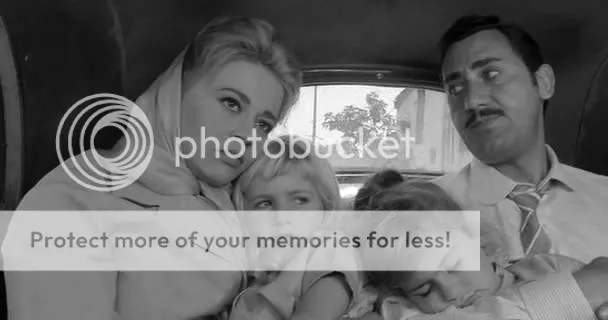
Nino now working at a white-collar job in Milan, travels back to his blue-collar roots of Sicily, along with his wife and two daughters. While he is over-joyed, his wife is slow to accept the Sicilian culture which results in some very alienating meeting between herself and Nino’s parents. Eventually, Nino catches up with everyone in town (or so it seems) and his old friend, Don Vincenzo who is secretly recruiting someone to do a “favor.”

The early sequences of Nino’s family mingling with each other are fantastic, filmed with excitement on Lattuda parts. I don’t know his own history, but I’m guessing he had to experience some of this stuff. The scene in the outdoor living room, for example, is a perfect representation of what I mean. It seems to get all the specifics right: the awkward pauses, the two families getting “use” to each other. Nino accidentally bringing up the topic of old friends who are now “evil” politicians. I suppose this film confirms that I’m not a huge fan of these Italian comedies (give me Antonioni or Olmi any day, please) but I will admit, they are really really funny at times.

Still, the minor strengths breed the eventual downfalls of all these type of films and that is: I hate everybody here. Nino is annoying and completely unlikable and every time he’s at a point of disagreement with another character, I like that other character more. This perfectly explains why his wife is by far the most interesting person in the movie: she’s given the least amount of conventional development, ridden off merely a “snobby” character and is treated as a pet by Nino. When the film finally takes its (admittedly smooth) turn towards the serious side of things, my interest just completely drops out. A very admirable effort, though, and I certainly wouldn’t mind watching it again if only for the wonderfully awkward family interaction that occurs early on.


Forget Love for Now (1937)

15 03 2008

Despite the poor condition of the film’s print, this still shows just why Shimizu is often remembered as the most technically advanced director to come out of Japan in the 1930s. I’ll have to explore more of his filmography to make a more general statement, but with this, one of his earliest talkies, he has made a film that looks and feels more directly influential to the minimalists of modern-day east Asia. Certainly, Naruse and Ozu are more written about and they deserve it (after all, they are probably my two favorite directors) but Shimizu manages to create a style that is just as observant, yet unlike the aesthetic of his peers.

Yuki is a young, single mother supporting herself and her son, Haru, with a job as a bar hostess. Haru’s group of friends (which includes the always good Tomio Aoki) are told by their parents to avoid playing with Haru because of his mother’s shady job. Meanwhile, at the bar, Yuki asks for increased pay but her bosses’ refusal makes her morale lower. In addition, Yuki discovers that Haru is skipping school. She is understandably angry but her son’s reasons are logical: no one will play with him. She enrolls him at a different school the very next day where he is accepted by a group of Chinese immigrants. In a playful juxtaposition, Yuki tells her manager that she will never entertain immigrants. Haru’s new group eventually collides with his old group and he’s left to defend his mother’s honor.

Now, I say Shimizu is the most advanced of his peers because his style is so easily identifiable with many of my favorite modern-day minimalistic directors from east Asia. There’s a more direct connection, in an aesthetic sense, than in an Ozu or Naruse film. Again, I’m not downplaying the greatness of those two but it’s mostly just that time has (unintentionally) chosen to preserve Shimizu’s technique. It’s quite important to note that I’m merely talking about Shimizu’s aesthetic because obviously there are some deeper connection between Hou and Ozu, for instance. It’s not like I don’t love the style of Ozu/Naruse either, but it’s just that Shimizu’s style is different.

I suppose Mizoguchi was also doing stuff as innovative around the same time, but his films do get a little too tragic. On paper, this story is completely tragic and yet, the performance are all downbeat and for my money, fantastic. Even the kids, despite playing in roles that border on being antagonistic, deliver subdued performances. Michiko Kuwano is really fantastic here too so it’s a bit of a bummer to know that her career was cut so short. In all honesty, this is pretty much a perfect movie in the most objective level but it’s short running time (72 minutes) and the print’s condition (not to mention the timecode!) deny any overwhelming emotional involvement. It’s still great to finally experience a Shimizu film, but I certainly hope he went on to craft films that were more emotionally fulfilling. Otherwise, a wonderful movie.


Rocco and His Brothers (1960)

14 03 2008

This was really a nice surprise. Not that I was expecting it to be bad or anything, but the fact that it basically established all Italian stereotypes of modern cinema made me fairly skeptical. The length and frequent shifts in tone will be off-putting to some, but those that stick around will find a film that is much more truthful than almost all of the American films that it influenced. It has some random blasts of violence that come off as silly, but the rest of the film shows no rush in establishing these characters’ lives.

In the film’s opening sequence, we are introduced to most of the family: Rosaria and her four sons, Rocco, Simone, Ciro, and Luca. They are all on a train headed to Milan to meet the fifth brother, Vincenzo, who is celebrating with his wife and parents in-law to be. At first, the family are polite and delighted to meet each other but eventually, Rosaria breaks and she takes her sons to begin a new life in Milan.

It’s at this point that the film establishes it’s structure. Via title cards, we are introduced to each member of the family and each member is given their own episode so to speak. The film is not a series of vignettes, though. The “Simone” episode, if anything, points our interest towards Rocco. Despite being the only name mentioned in the title, he stays in the shadows. It’s a mixed reading on my part, but I find Delon’s reserved character who lacks attention for the first hour, as the most developed character in the film. It seems almost as though Visconti is developing the other characters in a much more conventional style but still putting the real flesh on Delon’s character. No doubt, his perfectly subdued performance more than prepared him for working with Antonioni two years later in L’Eclisse.

The narrative takes a violent swing somewhere around the hour and a half mark. Returning from his military service, Rocco has fallen for Nadia, a whore and ex-lover of Simone. Perhaps it’s a cultural thing, but Simone’s response to his brother dating a girl he liked two years ago is a bit over the top to me. Without giving anything away, he basically wants to kill him. The observant and downplayed scenes leading up to it are gripping and may very well be the film’s highest peak but at the same time, I can’t fault the film for a narrative choice it makes halfway through. Especially when it regroups after an odd swing of drama, though there is indeed some excess, particularly the scene in which Nadia wants to kill herself.

As articulated earlier, this does have some “rough” patches and honestly, it probably is a bit too long but for the most part, it is really fantastic. It may require one to “unlearn” some of the Italian stereotypes brought on by The Godfather and multiple Scorsese films, but it’s probably a testament to the film’s influence that some honest character traits are now recognized as cliches in films depicting Italian-American life. Beyond all of this, is one of the most honest recreations of not only family life in Italy, but life in general. I’ll definitely need to make it a priority to see Visconti’s other films. He’s not on the cinematic level as Olmi or Antonioni, but he does puts the same amount of care into his characters.